Welcome to the EGGhead Forum - a great place to visit and packed with tips and EGGspert advice! You can also join the conversation and get more information and amazing kamado recipes by following Big Green Egg to Experience our World of Flavor™ at:
Want to see how the EGG is made? Click to Watch
Facebook | Twitter | Instagram | Pinterest | Youtube | Vimeo
Share your photos by tagging us and using the hashtag #BigGreenEgg.
Share your photos by tagging us and using the hashtag #BigGreenEgg.
Want to see how the EGG is made? Click to Watch
How do you keep your steak warm when resting in reverse sear?

Stormbringer
Posts: 2,530
Or an alternative way to phrase the question is how do you stop it losing heat.
I started doing reverse sear by cooking to an internal temp, removing the steak and double wrapping, bringing the egg up, sear both sides with the lid open, done.
It was delicious, however the only problem was that the steak wasn't hot when eating ... in fact barely warm. So I took to closing the lid whilst reverse searing, which did improve the heat but also led to a slightly uneven cook.
Now it could be that I've been doing reverse sear since November last year when it's been quite cold. But I did wonder if I am missing something about keeping the steak warm in the 8-10 minute period it takes to get the egg from 250F to 600F to sear. The steaks I have done this with are all boneless rib-eye.
I started doing reverse sear by cooking to an internal temp, removing the steak and double wrapping, bringing the egg up, sear both sides with the lid open, done.
It was delicious, however the only problem was that the steak wasn't hot when eating ... in fact barely warm. So I took to closing the lid whilst reverse searing, which did improve the heat but also led to a slightly uneven cook.
Now it could be that I've been doing reverse sear since November last year when it's been quite cold. But I did wonder if I am missing something about keeping the steak warm in the 8-10 minute period it takes to get the egg from 250F to 600F to sear. The steaks I have done this with are all boneless rib-eye.
-----------------------------------------------------------------------
| Cooking and blogging with a Large and Minimax in deepest, darkest England-shire
| My food blog ... BGE and other stuff ... http://www.thecooksdigest.com
-----------------------------------------------------------------------
| Cooking and blogging with a Large and Minimax in deepest, darkest England-shire
| My food blog ... BGE and other stuff ... http://www.thecooksdigest.com
-----------------------------------------------------------------------
Comments
-
If it's cold out, take the steaks inside while the egg heats up. You'll stay warm too. Also, I let the meat sit on a wire rack after the "roasting" part. If you put them on a plate or pan, it will suck the heat right out, since the surface will be the air temp or close to it. The steak is getting blasted by a lot of heat with the dome open, so I don't think it's as much an issue. You could also try flipping the steaks more frequently durin the sear, like every 30 seconds.
-
Ah you may be onto something. I double wrap the steaks in metal kitchen foil as I thought that this would insult them. However maybe it is sucking some heat out of the meat. I do all of this inside.
-----------------------------------------------------------------------
| Cooking and blogging with a Large and Minimax in deepest, darkest England-shire
| My food blog ... BGE and other stuff ... http://www.thecooksdigest.com
----------------------------------------------------------------------- -
I just tent them under foil on a plate After pulling them at about 130, I keep the probe in while the egg heats up it almost always continues up to about 134 and then MAYBE back down to 133. Then sear for 1-2 minutes a side. So if anything it gets warmer on inside during rest . Maybe cooler on outside but that is taken care of with the sear. No problem with that here.Upstate SC
Large BGE, Blackstone, Weber genesis , Weber charcoal classic -
Hmmm ... I have a PSWoo that I pull out as a unit ... plate setter and all. I leave the steaks setting on the grill - right above the hot plate setter - while the egg comes up to 600 degrees. My large egg only takes about 4~5 minutes to come up to 600 degrees. Having the steak right over a hot plate setter probably is why I've not experienced the steak cooling off.Eggcelsior said:If it's cold out, take the steaks inside while the egg heats up. You'll stay warm too. Also, I let the meat sit on a wire rack after the "roasting" part. If you put them on a plate or pan, it will suck the heat right out, since the surface will be the air temp or close to it. The steak is getting blasted by a lot of heat with the dome open, so I don't think it's as much an issue. You could also try flipping the steaks more frequently durin the sear, like every 30 seconds.
The searing takes place on a CI grill resting on a spider that is only a couple of inches above the coals. I hit each side twice for 20~30 seconds to get crosshatch grill marks.
Washington, IL > Queen Creek, AZ ... Two large eggs and an adopted Mini Max
-
You should be pulling the steak off at the same internal temp either way. At the end of cooking, no matter the method, your steak should end up at a gradient of 130+ If you cooked it in exactly 130 degree water bath or over a 1000 degree fire it should still end up at the same temp. (Larger gradient may make the edges seem hotter but a 5 minute rest already evens that out)
I pull my steaks at 115 then reheat them to 130 on the sear. I don't care if the steak fell to 0 degrees in the freezer between roast and sear. I'm still going to sear it to 130 internal. Are you not using internal temp to cook maybe?XL, Small, Mini & Mini Max Green Egg, Shirley Fab Trailer, 6 gal and 2.5 gal Cajun Fryers, BlueStar 60" Range, 48" Lonestar Grillz Santa Maria, Alto Shaam 1200s, Gozney Dome, Gateway 55g Drum -
trex it when its really cold
 fukahwee maineyou can lead a fish to water but you can not make him drink it
 -
My question would be why is it taking your egg so long to get up to temp? After I reverse sear, I remove the stone from the spider and replace it with the sear grid. Bottom vent WFO, daisy wheel/smokeware cap off and I 600* in a couple minutes.
The wire rack is a great suggestion.~ John - Formerly known as ColtsFan - https://www.instagram.com/hoosier_egger
XL BGE, LG BGE, Med BGE, BGE Chiminea, Ardore Pizza Oven
Bloomington, IN - Hoo Hoo Hoo Hoosiers! -
@ColtsFan - didn't explain it fully, my bad. The egg does get up to temp more quickly, however I thought that it takes 8-10 minutes for the CI grid has absorbed enough heat to give a good sear. If that's not the case, and the CI grid is ready sooner, then we're good to go after 2-3 minutes.
@Jeepster47 - I could do that with my platesetter, place a wire grid on it and tent with silver foil whilst the CI grid comes up to temp.
As usual, thanks for the insights folks, time to experiment.
-----------------------------------------------------------------------
| Cooking and blogging with a Large and Minimax in deepest, darkest England-shire
| My food blog ... BGE and other stuff ... http://www.thecooksdigest.com
----------------------------------------------------------------------- -
In my experience, a few minutes is all I need. I do use a CGS spider that puts the sear grate 2" from the lump though. If you are cooking at OEM level then I can see the extended time needed to get up to temp.Stormbringer said:@ColtsFan - didn't explain it fully, my bad. The egg does get up to temp more quickly, however I thought that it takes 8-10 minutes for the CI grid has absorbed enough heat to give a good sear. If that's not the case, and the CI grid is ready sooner, then we're good to go after 2-3 minutes.
@Jeepster47 - I could do that with my platesetter, place a wire grid on it and tent with silver foil whilst the CI grid comes up to temp.
As usual, thanks for the insights folks, time to experiment.~ John - Formerly known as ColtsFan - https://www.instagram.com/hoosier_egger
XL BGE, LG BGE, Med BGE, BGE Chiminea, Ardore Pizza Oven
Bloomington, IN - Hoo Hoo Hoo Hoosiers! -
I like to get my plates warmed up to the lowest oven setting before plating. This stops the plate from drawing out the heat of the meat.
-
Just for clarification: The spider and CI grate are installed at the beginning of the cook. Then the PSWoo and plate setter are installed. With that process, the CI is already hot when the "roast" phase is completed.
Washington, IL > Queen Creek, AZ ... Two large eggs and an adopted Mini Max
-
CI grid in the egg from the start is hot, even at the low reverse sear cook temps, it is exposed to the direct IR of the lump.
As noted above, other than the rack under the resting steak, don't let anything touch it. The easiest way I've found to hold the heat is to use a roasting pan with 2" to 3" sides, rack in the bottom, steak on the rack and foil stretched over the top. Throw a towel over the foiled pan to insulate and keep the heat in. I think the double foil wrapping will suck the juice and heat out of the meat.Delta B.C. - Whiskey and steak, because no good story ever started with someone having a salad! -
You really want to use the radiant heat from the lump to sear the steak. A thin wire grate is superior to a CI grate for searing because you don't get the hot mass that causes uneven searing. You could even do away with any grate and put the steak directly on the lump. You can use a spider with wire grate that is installed from the beginning (below the indirect stone).Stormbringer said:...
The egg does get up to temp more quickly, however I thought that it takes 8-10 minutes for the CI grid has absorbed enough heat to give a good sear. If that's not the case, and the CI grid is ready sooner, then we're good to go after 2-3 minutes. ...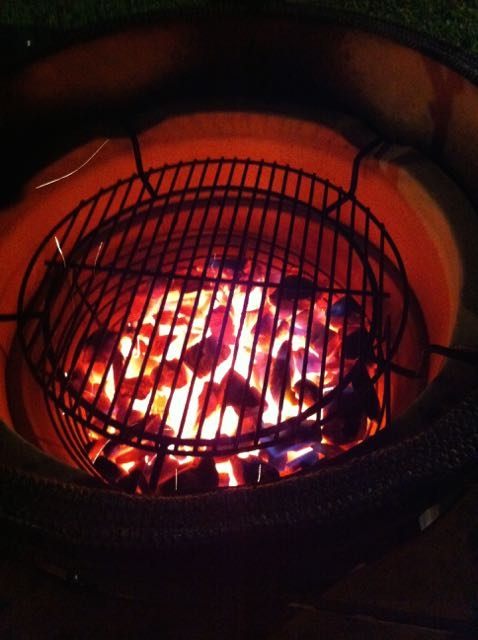
Southeast Florida - LBGE
In cooking, often we implement steps for which we have no explanations other than ‘that’s what everybody else does’ or ‘that’s what I have been told.’ Dare to think for yourself. -
When I do a reverse sear I use my CI skillet as my deflector and put my homemade raised grate over the skillet and cook at about 300 degrees. When the steak is at 115 I pull the steak, tent it with foil on a plate (if could a warmed up plate), pull raised grate, skillet and open the bottom vent all the way to get the egg over 500 which only takes a few minutes. I then put the steak back on and sear it on all sides for about a minute a side and when it reads 130 to 135 I pull and re-tent on plate and take inside to rest. I don't wrap it tight, but to me by tenting it seems to help hold the heat in.
Many ways to reverse sear, just have to figure out what works for you.
XL, WSM, Coleman Road Trip Gas GrillKansas City, Mo. -
Hi! What I've done is I used a Weber Grill for heating up the CI skillet for searing several steaks in a row, if you're not in a hurry you can put the skillet inside the Egg along the steak, then remove the steak and the indirect setup and put the skillet directly on the fire and sear it or if its raining (just once) I heat up the CI skillet on the kitchen, I'm still new at this but you might find it helpful.
-
-
Did this tonight, much better. Thanks.Skiddymarker said:The easiest way I've found to hold the heat is to use a roasting pan with 2" to 3" sides, rack in the bottom, steak on the rack and foil stretched over the top. Throw a towel over the foiled pan to insulate and keep the heat in. I think the double foil wrapping will suck the juice and heat out of the meat.
-----------------------------------------------------------------------
| Cooking and blogging with a Large and Minimax in deepest, darkest England-shire
| My food blog ... BGE and other stuff ... http://www.thecooksdigest.com
----------------------------------------------------------------------- -
I've plated them on a plate that I warmed in the oven for a few minutes..... That kept it warm enough during the ramp up.
LBGE since 2014
Griffin, GA


Categories
- All Categories
- 184.1K EggHead Forum
- 15.8K Forum List
- 460 EGGtoberfest
- 1.9K Forum Feedback
- 10.4K Off Topic
- 2.2K EGG Table Forum
- 1 Rules & Disclaimer
- 9K Cookbook
- 13 Valentines Day
- 93 Holiday Recipes
- 224 Appetizers
- 520 Baking
- 2.5K Beef
- 88 Desserts
- 167 Lamb
- 2.4K Pork
- 1.5K Poultry
- 33 Salads and Dressings
- 324 Sauces, Rubs, Marinades
- 548 Seafood
- 175 Sides
- 122 Soups, Stews, Chilis
- 44 Vegetarian
- 102 Vegetables
- 313 Health
- 292 Weight Loss Forum