Welcome to the EGGhead Forum - a great place to visit and packed with tips and EGGspert advice! You can also join the conversation and get more information and amazing kamado recipes by following Big Green Egg to Experience our World of Flavor™ at:
Want to see how the EGG is made? Click to Watch
Facebook | Twitter | Instagram | Pinterest | Youtube | Vimeo
Share your photos by tagging us and using the hashtag #BigGreenEgg.
Share your photos by tagging us and using the hashtag #BigGreenEgg.
Want to see how the EGG is made? Click to Watch
OT subject but worth a main-stream read- OT News Feeds...
Comments
-
Friday Russia-Ukraine update:
The Kremlin said yesterday that talks between Washington, Moscow, and Kyiv on ending the war in Ukraine were on a “situational pause” following the start of the Iran war. Ukrainian President Volodymyr Zelenskyy said it was time to end the pause and said a Ukrainian team was on its way to the United States for talks this weekend. Guy Faulconbridge and Dmitry Antonov report for Reuters."Louisville; Rolling smoke in the neighbourhood. Life is too short for light/lite beer! Seems I'm livin in a transitional period. CHEETO (aka Agent Orange) makes Nixon look like a saint. -
Monday IRAN WAR update:
Treasury Secretary Scott Bessent announced on Friday that sanctions on some Iranian oil will be temporarily lifted to allow the sale of shipments already in transit. Bessent said in a post on social media that the United States is granting authorization for the sale of about 140 million barrels of Iranian oil. Aaron Pellish reports for POLITICO.
Iranian air strikes on Saturday night injured about 175 people in the Israeli cities of Arad and Dimona. Israeli Defense Secretary Israel Katz said U.S.-Israeli attacks on Iran this week would “escalate significantly.” Ashley Ahn reports for the New York Times.
The Trump administration has begun initial internal discussions on what peace talks with Iran might look like, according to a U.S. official and another source. Trump’s envoys, Jared Kushner and Steve Witkoff, are involved in the discussions around potential negotiations. Officials are still considering who in Iran would be the best point of contact and which country would be the best mediator, ideally Qatar. President Trump said on Friday that he was considering “winding down” the war without resolving the closure of the Strait of Hormuz, though U.S. officials said they expected at least two or three more weeks of fighting. Barak Ravid and Marc Caputo report for Axios.
Trump on Saturday night gave Iran a 48-hour deadline to reopen the Strait of Hormuz or else the United States will start destroying Iranian power plants in a post on social media. Trump set a Monday deadline of around 7:45 p.m. ET. Iran’s Islamic Revolutionary Guard Corps said today that Iran will attack Israel’s power plants and plants supplying the U.S. bases in the Gulf if Trump carries out his threat to “obliterate” Iran’s power network. Israel launched new attacks this morning on the Iranian capital, saying it had “begun a wide-scale wave of strikes” on infrastructure targets in Tehran. Barak Ravid reports for Axios; Maayan Lubell, Alexander Cromwell, and Idrees Ali report for Reuters; Jon Gambrell and David Rising report for AP News.
Trump said today that he would postpone his deadline for attacking Iranian power plants by five days, adding that the United States and Iran were negotiating “a complete and total resolution of our hostilities in the Middle East.” Iranian state media portrayed Trump’s comments as a sign that he was backing down, saying, “Trump, out of fear of Iran’s response, backed down from his 48-hour ultimatum.” Aaron Boxerman, Julian Barnes, Isabel Kershner, and Ravi Mattu report for the New York Times.
British Prime Minister Keir Starmer and Trump spoke late last night and “agreed that reopening the Strait of Hormuz was essential to ensure stability in the global energy market,” Downing Street said in a statement today. Britain is one of 22 countries that have signed a statement saying they are ready to “contribute to appropriate efforts to ensure safe passage” through the strait. NATO Secretary-General Mark Rutte said yesterday that he is “absolutely convinced” that the alliance will be able to reopen the strait, while reiterating his support for Trump’s campaign, calling the U.S. operation “crucial” due to the “existential threat from Iran.” Helen Regan reports for CNN; Mitchell McCluskey reports for CNN.
“The export of war materiel to countries involved in the international armed conflict with Iran cannot be authorized for the duration of the conflict,” the Swiss government said on Friday. The statement reiterated, “exports of war materiel to the USA cannot currently be authorized.” Nick Cumming-Bruce reports for the New York Times.
The Trump administration declared a wartime emergency to bypass Congress and push through over $23 billion in weapons sales to the United Arab Emirates, Kuwait, and Jordan, the State Department said on Friday. This marks the second recent use of emergency authority to circumvent congressional approval since the war in Iran started. Megan Mineiro and Edward Wong report for the New York Times. "
Louisville; Rolling smoke in the neighbourhood. Life is too short for light/lite beer! Seems I'm livin in a transitional period. CHEETO (aka Agent Orange) makes Nixon look like a saint. -
Monday Russia-Ukraine update:
Ukrainian and U.S. delegations concluded a second day of talks in Florida yesterday, Ukrainian President Volodymyr Zelenskyy said, adding that it is clear that the United States is primarily focused on Iran. “There are indications that further [prisoner of war] exchanges may take place, which would indeed be very good news and confirmation that diplomacy is working,” Zelenskyy said. Pavel Polityuk reports for Reuters. "Louisville; Rolling smoke in the neighbourhood. Life is too short for light/lite beer! Seems I'm livin in a transitional period. CHEETO (aka Agent Orange) makes Nixon look like a saint. -
Tuesday IRAN WAR update:
Israel yesterday carried out a large wave of air strikes in central Tehran, targeting command centres, the Israeli military said. It said more than 50 additional targets were hit overnight, including ballistic missile storage and launch sites. Iran today launched multiple waves of missiles at Israel, damaging a multi-storey apartment building in Tel Aviv. Reuters reports.
“We’re doing a five-day period,” President Trump told reporters yesterday about his pause on hitting Iranian power plants. “We’ll see how that goes, and if it goes well, we’re going to end up with settling this. Otherwise, we’ll just keep bombing our little hearts out.” Tyler Pager, David E. Sanger, and Farnaz Fassihi report for the New York Times.
Trump told CNN yesterday that there are 15 points of agreement between the United States and Iran after talks this weekend. Trump added that the renewed talks began soon after he threatened to bomb Iran’s energy infrastructure in retribution for the closure of the Strait of Hormuz. Iran’s parliament speaker, Mohammad Baqer Qalibaf, yesterday publicly denied that any negotiations with the United States about terms to end the war were underway. In interviews, four Iranian officials said that the messages passed over recent days through intermediaries and in direct messages with U.S. envoys were simply probes on how to de-escalate the conflict. U.S. officials said the contacts were in a very early stage and not substantive. Arab mediators expressed skepticism that an agreement could be reached, noting that the two sides remained far apart. Aditi Sangal reports; Tyler Pager, David E. Sanger, and Farnaz Fassihi report for the New York Times; Summer Said, Alexander Ward, Benoit Faucon, and Laurence Norman report for the Wall Street Journal.
The Trump administration is considering Iran’s parliament speaker Qalibaf as a potential negotiating partner and future leader of Iran, according to two administration officials. The sources added that the White House is not ready to commit to any one person and is hoping to stress test multiple candidates as they look for someone willing to make a deal. An Israeli official told Axios that U.S. envoys Steve Witkoff and Jared Kushner had been in touch with Qalibaf in recent days, adding that mediating countries were trying to convene a meeting in Islamabad with Qalibaf and a team of U.S. negotiators. Dasha Burns, Eli Stokols, and Diana Nerozzi report for POLITICO; Barak Ravid reports.
Senior U.S. military officials are weighing a possible deployment of a combat brigade of about 3,000 soldiers from the U.S. Army’s 82nd Airborne Division to support operations in Iran, defense officials said. If the plan goes ahead, these forces could be used to seize Iran’s Kharg Island. Officials are also considering an attack by about 2,500 troops from the 31st Marine Expeditionary Unit, which is currently on its way to the region, to seize the island. Greg Jaffe and Eric Schmitt report for the New York Times.
Bahrain has put forward a draft U.N. Security Council resolution, backed by Gulf states and the United States, that would authorize countries to use “all necessary means” to protect commercial shipping in and around the Strait of Hormuz, according to a text seen by Reuters yesterday. The draft text also demands that Iran “immediately cease all attacks” in the strait. An alternative draft proposal put forward by France avoids naming Iran and instead calls for de-escalation and diplomacy, while encouraging defensive measures such as coordinated escorts in the strait rather than authorizing force. John Irish reports."
Louisville; Rolling smoke in the neighbourhood. Life is too short for light/lite beer! Seems I'm livin in a transitional period. CHEETO (aka Agent Orange) makes Nixon look like a saint. -
Wednesday IRAN WAR update:
Iran has received a 15-point plan for a ceasefire from the United States through Pakistani intermediaries, officials in Islamabad said today. The Pakistani officials described the plan broadly as touching on sanctions relief, civilian nuclear cooperation, a rollback of Iran’s nuclear program, monitoring by the International Atomic Energy Agency, missile limits, and access for shipping through the Strait of Hormuz. Mediators are pushing for a possible in-person negotiation in Pakistan later this week. Israeli sources said Israeli Prime Minister Benjamin Netanyahu has seen the plan and is concerned that Trump might strike a deal that falls short of Israeli objectives. Jon Gambrell, David Rising, Munir Ahmed, and Aamer Madhani report for AP News; Barak Ravid reports for Axios.
The United States is preparing to deploy about 2,000 troops from the 82nd Airborne Division to the Middle East, two Defense Department officials said yesterday. The Pentagon is also in the process of deploying two Marine units that will add about 5,000 Marines and thousands of sailors to the region. Jon Gambrell, David Rising, Munir Ahmed, and Aamer Madhani report for AP News; Francesca Regalado, Eric Schmitt, Elian Peltier, and Adam Rasgon report for the New York Times.
Iranian officials have told Pakistani, Egyptian, and Turkish mediators that U.S. military movements and Trump’s decision to deploy major troop reinforcement have increased their suspicion that his peace proposal is a trick. “Can anyone believe their claims of diplomacy or mediation are credible when they started this war and continue attacking us?” a spokesperson for Iran’s Foreign Ministry told reporters yesterday. Two regional sources said that Iranian representatives have told the Trump administration that they do not want to re-enter negotiations with U.S. envoys Steve Witkoff and Jared Kushner, and would prefer to engage with Vice President JD Vance instead. The Iranians have not yet responded to the 15-point plan, and strikes on Israel and Kuwait continued this morning. Marc Caputo and Barak Ravid report for Axios; Todd Symons reports for CNN; Kylie Atwood reports for CNN.
Iran told the U.N. International Maritime Organization that “non-hostile” ships may pass safely through the Strait of Hormuz, according to a letter circulated yesterday. Iran’s letter also said “the full restoration of security and sustainable stability in the strait is contingent upon the cessation of military aggression and threats.” Peter Eavis reports for the New York Times.
Saudi Crown Prince Mohammed bin Salman has been privately pushing Trump to continue the war in Iran in recent days, saying that the U.S.-Israeli military campaign presents a “historic opportunity” to remake the Middle East by removing Iran’s government, according to sources. Saudi officials rejected the idea that the Crown Prince has pushed to prolong the war. Julian E. Barnes, Tyler Pager, and Eric Schmitt report for the New York Times."
Louisville; Rolling smoke in the neighbourhood. Life is too short for light/lite beer! Seems I'm livin in a transitional period. CHEETO (aka Agent Orange) makes Nixon look like a saint. -
Wednesday Russia-Ukraine update:
Russian forces yesterday launched more than 550 drones across Ukraine, striking the city center, killing at least six people, and wounding around forty others, according to Ukrainian President Volodymyr Zelesnkyy. The unusual daytime strikes followed a more typical series of overnight attacks in which Russian forces launched 34 missiles and 392 attack drones. Cassandra Vinograd reports for the New York Times.
Russian air defenses downed 389 incoming Ukrainian drones overnight,Russia’s defense ministry said today. This was the largest reported overnight attack on Russian regions since the war in Ukraine started. The drones were stopped over 13 Russian regions as well as the Crimean Peninsula. Dasha Litvinova reports for AP News."
Louisville; Rolling smoke in the neighbourhood. Life is too short for light/lite beer! Seems I'm livin in a transitional period. CHEETO (aka Agent Orange) makes Nixon look like a saint. -
Thursday IRAN WAR update:
Israeli Defense Minister Israel Katz announced today that the Israeli military killed Alireza Tangsiri, the Iranian commander of the navy for the Islamic Revolutionary Guards Corps, in an airstrike in southern Iran this morning. Katz said Tangsiri was responsible for mining and blocking the Strait of Hormuz. Adam Rasgon reports for the New York Times.
The Israeli military is striking as many Iranian targets as possible, as Israel is concerned that the war could soon be brought to a halt, according to two senior Israeli officials and two other sources. Israeli Prime Minister Benjamin Netanyahu on Tuesday ordered that every effort be made over the next 48 hours to destroy as much of the Iranian arms industry as possible. The order came after Netanyahu obtained a copy of the U.S.-drafted 15-point plan to end the war, the officials said. A Pakistani source told Reuters today that Israel had agreed to take Iranian Foreign Minister Abbas Araghchi and Parliamentary Speaker Mohammad Baqer Qalibaf off its hit list following a request from Pakistan that Washington not target them. David M. Halbfinger, Ronen Bergman, Natan Odenheimer, and Adam Rasgon report for the New York Times; Ariba Shaid reports.
Iran’s state media yesterday quoted an anonymous official as rejecting the U.S. plan to end the war and responding with a counterproposal. This includes reparations for war damages, recognition of Iranian sovereignty over the Strait of Hormuz, an end to sanctions, and a wider cease-fire for the region that protects Hezbollah. Iranian officials told the New York Times that Iran does not want a pause in the fighting as they fear that Israel and the United States would take it as an opportunity to strengthen their forces before resuming strikes. Farnaz Fassihi, Shashank Bengali, and Sanam Mahoozi report; Barak Ravid reports for Axios.
“Messages being conveyed through our friendly countries and us responding by stating our positions or issuing the necessary warning is not called negotiation or dialogue,” Iranian Foreign Minister Abbas Araghchi said yesterday. He added that Iran was reviewing the U.S. proposal but had no intention of holding talks. A few hours later, Trump said Iranian leaders “are negotiating, by the way, and they want to make a deal so bad, but they’re afraid to say it because they will be killed by their own people.” An Iranian embassy official in Islamabad said talks in Islamabad were still on the table and Pakistan was the preferred destination for Tehran, although nothing had been finalized. Parisa Hafezi, Alexander Cornwell, and Kanishka Singh report for Reuters.
Russia is close to completing a phased shipment of drones, medicine, and food to Iran, according to Western intelligence reports. Two officials said the processing of deliveries began in early March and was expected to be completed by the end of the month. When asked about Moscow sending drones, a Kremlin spokesperson said, “There are a lot of fakes going around right now. One thing is true - we are continuing our dialogue with the Iranian leadership.” Jacob Judah, Henry Foy, Max Seddon, and Meri Zilbert report for the Financial Times.
Iranian strikes on U.S. bases across the Middle East have forced many U.S. troops to relocate to hotels and office spaces throughout the region, according to military personnel and U.S. officials. Iran’s Islamic Revolutionary Guards Corps has urged people to report these new locations as it plans to target the dispersed troops. Helen Cooper and Eric Schmitt report for the New York Times.
“We want to know more about what’s going on, what the options are, and why they’re being considered,” House Armed Services Committee Chair Rep. Mike Rogers (R-AL) said yesterday following a closed-door briefing from Defense officials, adding “we’re just not getting enough answers on those questions.” Several Republicans warned that the continued lack of transparency from the administration could erode congressional support. Connor O’Brien reports for POLITICO. "
Louisville; Rolling smoke in the neighbourhood. Life is too short for light/lite beer! Seems I'm livin in a transitional period. CHEETO (aka Agent Orange) makes Nixon look like a saint. -
Thursday Russia-Ukraine update:
"The United States is making its offer of security guarantees for a peace deal in Ukraine conditional on Kyiv ceding all of the eastern region of Donbas to Russia, Ukrainian President Volodymyr Zelenskyy told Reuters in an interview yesterday. “I would very much like the American side to understand that the eastern part of our country is part of our security guarantees,” he said. Zelenskyy had said in January that a security guarantees document was “100%” ready, but following weekend talks in Miami, he said there was still work to be done. Daniel Flynn and Olena Harmash report. "Louisville; Rolling smoke in the neighbourhood. Life is too short for light/lite beer! Seems I'm livin in a transitional period. CHEETO (aka Agent Orange) makes Nixon look like a saint. -
Friday IRAN WAR update:
President Trump yesterday announced that he was once again postponing his deadline for Iran to fully open the Strait of Hormuz or face devastating strikes on its power plants, saying he would give Tehran 10 more days. Trump claimed that the additional time was being given “per Iranian Government request,” adding "talks are ongoing and, despite erroneous statements to the contrary by the Fake News Media, and others, they are going very well.” Erica L. Green and Edward Wong report for the New York Times.
The Israeli military said this morning it had conducted a wave of strikes “in the heart of Tehran.” Attacks on Iran have damaged 82,000 civilian buildings, including hospitals, residential units, and the homes of 180,000 people, across 20 of Iran’s 32 provinces, the International Organization for Migration said today. Sam McNeil and Vahid Salemi report for AP News.
Iranian strikes on Gulf states continued yesterday. The United Arab Emirates said it intercepted 15 ballistic missiles and 11 drones, with debris from one interception killing two people in Abu Dhabi. Saudi Arabia said it had intercepted at least 36 drones aimed at its Eastern Province. Eve Sampson reports for the New York Times.
Trump said yesterday during a Cabinet meeting that Iran signaled willingness to negotiate by allowing 10 oil tankers through the Strait of Hormuz. The White House has not provided further details about the tankers, which Trump said he believed were flying the Pakistani flag. During the Cabinet meeting, administration officials offered few concrete details or endgame plans, highlighting a dual-track strategy of pursuing peace talks while continuing military pressure. Megan Messerly reports for POLITICO.
“Iran’s [Islamic Revolutionary Guard Corps] has imposed a de facto ‘toll booth’ regime in the Strait of Hormuz,” according to shipping information firm Lloyd’s List Intelligence. Entities that want their vessels to safely pass must submit their details to “approved intermediaries” of the IRGC, whereupon approved vessels receive a code and are escorted by an IRGC vessel. “While not all ships are paying a direct toll, at least two vessels have and the payment is settled in yuan,” Lloyd’s List said. David McHugh and Jon Gambrell report for AP News.
The White House and the Pentagon are considering sending at least 10,000 additional combat troops to the Middle East in the coming days, according to a senior U.S. defense official. The official said a decision should be made next week and said the troops will be from different combat units than the ones already sent to the region. Two U.S. officials and two other sources told Axios that the Pentagon is developing military options for a “final blow” in Iran, which could include the use of ground forces. Barak Ravid reports for Axios.
Russian Foreign Minister Sergey Lavrov said yesterday that Moscow has “supplied Iran with certain types of military products,” but added “we can’t accept the accusation that we’re helping Iran with intelligence.” Dasha Litvinova reports for AP News.
The United States has deployed uncrewed drone speedboats for patrols as part of its operations in Iran, the Pentagon said this week. This is the first time Washington has confirmed using such vessels in active conflict. David Jeans reports for Reuters.
The UAE has told allies that it would participate in a multinational maritime task force intended to reopen the Strait of Hormuz, according to three sources. Two sources added that Abu Dhabi would deploy its own navy. Senior Emirati minister Sultan al-Jaber, who discussed the issue with Vice President JD Vance in Washington this week, said that “Iran holds Hormuz hostage, every nation pays the ransom, at the gas pump, at the grocery store, at the pharmacy”. Simeon Kerr, Abigail Hauslohner, and Andrew England report for the Financial Times.
Sen. Lisa Murkowski (R-AK) is working with a group of senators to draft legislation for a formal authorization for the use of military force that would force Congress to vote on whether to approve the war in Iran, a spokesperson confirmed yesterday. Murkowski described the move as an act of desperation to try to put some parameters around the operation as the Trump administration refused to provide answers to Congress about its objectives, cost, and timeline. Megan Mineiro and Robert Jimison report for the New York Times."
Louisville; Rolling smoke in the neighbourhood. Life is too short for light/lite beer! Seems I'm livin in a transitional period. CHEETO (aka Agent Orange) makes Nixon look like a saint. -
Friday Russia-Ukraine update:
The Pentagon is considering whether to divert weapons intended for Ukraine to the Middle East, according to three sources. This would include air defense interceptor missiles, ordered through the Prioritized Ukraine Requirements List last year, the sources said. In a statement, a Pentagon spokesperson said the Defense Department would “ensure that U.S. forces and those of our allies and partners have what they need to fight and win,” but declined to comment otherwise. Noah Robertson and Ellen Francis report for the Washington Post.
Louisville; Rolling smoke in the neighbourhood. Life is too short for light/lite beer! Seems I'm livin in a transitional period. CHEETO (aka Agent Orange) makes Nixon look like a saint. -
Sunday Iran war update:
"Iran’s parliament speaker Mohammad Bagher Ghalibaf says the United States was plotting a ground attack despite publicly engaging in diplomatic efforts aimed at ending the war.
Foreign ministers from Pakistan, Turkiye, Egypt and Saudi Arabia meet in Islamabad, looking to de-escalate the US-Israel war on Iran.
Iran threatens retaliatory attacks on Israeli and US universities in the Middle East as powerful explosions hit Tehran and deaths are reported in Shaft and Bandar Khamir.
Yemen’s Houthis have launched a second missile and drone assault on Israel, saying they will continue until Israel “ceases its attacks and aggression”."Louisville; Rolling smoke in the neighbourhood. Life is too short for light/lite beer! Seems I'm livin in a transitional period. CHEETO (aka Agent Orange) makes Nixon look like a saint. -
Monday IRAN WAR update:
An Iranian strike injured 12 U.S. troops in an attack on U.S. Prince Sultan Air Base in Saudi Arabia, two U.S. officials said on Friday. At least two KC-135 aerial refueling planes also suffered significant damage in the attack. Russia took satellite images of the Prince Sultan Air Base three times in the days before Iran attacked the site and wounded U.S. troops, according to a summary of Ukrainian intelligence shared with NBC News by Ukrainian President Volodymyr Zelenskyy. Zelenskyy added that, based on Ukraine’s experience, Russia’s repeated photographing of installations over several days is an indication of attack planning. Raf Sanchez and Charlene Gubash report; Chris Cameron and Eric Schmitt report for the New York Times.
Iran-backed Houthi rebels on Saturday launched a ballistic missile at Israel. This was the first attack by the Houthis since the ceasefire in Gaza was announced last October. The Israeli military said today that Yemen had launched a second attack, but Israel had intercepted the drones. Barak Ravid reports for Axios; Trevor Hunnicutt, Asif Shahzad, Alexander Cornwell, and Sabrina Valle report for Reuters.
President Trump said yesterday that Iran had agreed to allow 20 more oil cargo ships to pass through the Strait of Hormuz, casting Tehran’s decision as a “sign of respect” to the United States. It is not clear who the 20 cargo ships belong to or where they are headed. David E. Sanger reports for the New York Times.
Foreign ministers from Saudi Arabia, Egypt, and Turkey met yesterday in Islamabad for further discussions aimed at ending the war. The United States, Israel, and Iran were not part of the talks, and it was unclear whether any progress was made. Iran’s parliament speaker Mohammad Baqer Qalibaf yesterday accused Trump of engaging in a front of diplomacy while “secretly planning a ground invasion.” Anushka Patil reports for the New York Times.
Hundreds of U.S. Special Operations forces were said to have arrived in the Middle East yesterday, according to two U.S. military officials. The commandos, including Army Rangers and Navy SEALS, have not yet been assigned specific missions, the officials said. The commandos join 2,500 Marines and another 2,500 sailors, who recently arrived in the region. Altogether, there are more than 50,000 U.S. troops in the Middle East now, roughly 10,000 more than usual. Eric Schmitt and Helene Cooper report for the New York Times.
The Pentagon is preparing for weeks of ground operations in Iran, U.S. officials said. Any potential ground operation would fall short of a full-scale invasion and could instead involve raids by a mixture of Special Operations forces and conventional infantry troops, according to the officials. The White House said over the weekend that Trump had not made a decision on any of the Pentagon’s proposals for ground forces. One source said that the objectives under consideration would probably take “weeks, not months” to complete. Another put the potential timeline at “a couple of months.” Dan Lamothe reports for the Washington Post.
Trump yesterday told the Financial Times that he wants to “take the oil in Iran” and could seize Kharg Island. “Maybe we take Kharg Island, maybe we don’t. We have a lot of options,” Trump said. He also stressed that indirect talks between the United States and Iran were going well, adding that a deal could be made quickly as the U.S. military only has “about 3,000 targets left” to bomb in Iran. Edward Luce reports.
Israel’s military said today it had launched over 140 air strikes on central and western Iran, including Tehran, over the 24 hours to Sunday evening, hitting ballistic missile launch sites and storage facilities. Trevor Hunnicutt, Asif Shahzad, Alexander Cornwell, and Sabrina Valle report for Reuters.
An Iranian attack on a power and water desalination plant in Kuwait killed an Indian worker, Kuwait’s Ministry of Electricity and Water said today. Reuters reports.
The Pentagon used missiles, previously untested in combat, in an attack that struck a sports hall and an elementary school near a military compound in Iran on Feb. 28, according to visual evidence examined by the New York Times. Local officials cited in Iranian media said this strike and others nearby in the city of Lamerd killed at least 21 people. Christiaan Triebert and John Ismay report.
Secretary of State Marco Rubio told G7 foreign ministers on Friday that the war with Iran will continue for another two to four weeks, three sources told Axios. Rubio added that the United States is communicating with Iran through mediators, adding that there are two Iranian officials who want to hold direct negotiations, but they need approval from the top leadership. One source said Rubio stressed the United States does not need G7 countries to help reopen the Strait of Hormuz, but wants allies to join a maritime task force to police the strait after the war. Barak Ravid reports."
Louisville; Rolling smoke in the neighbourhood. Life is too short for light/lite beer! Seems I'm livin in a transitional period. CHEETO (aka Agent Orange) makes Nixon look like a saint. -
Russia-Ukraine update:
"Rubio on Friday denied Zelenskyy’s assertion that the Trump administration is demanding Kyiv hand over its eastern Donbas region to Russia in exchange for U.S. security guarantees in any ceasefire plan. “I saw him say that. And it’s unfortunate he would say that because he knows that's not true and that’s not what he was told,” Rubio told reporters at Friday’s G7 meeting. David Klepper and Matthew Lee report for AP News."Louisville; Rolling smoke in the neighbourhood. Life is too short for light/lite beer! Seems I'm livin in a transitional period. CHEETO (aka Agent Orange) makes Nixon look like a saint. -
A bit OBE, but it made me laugh.
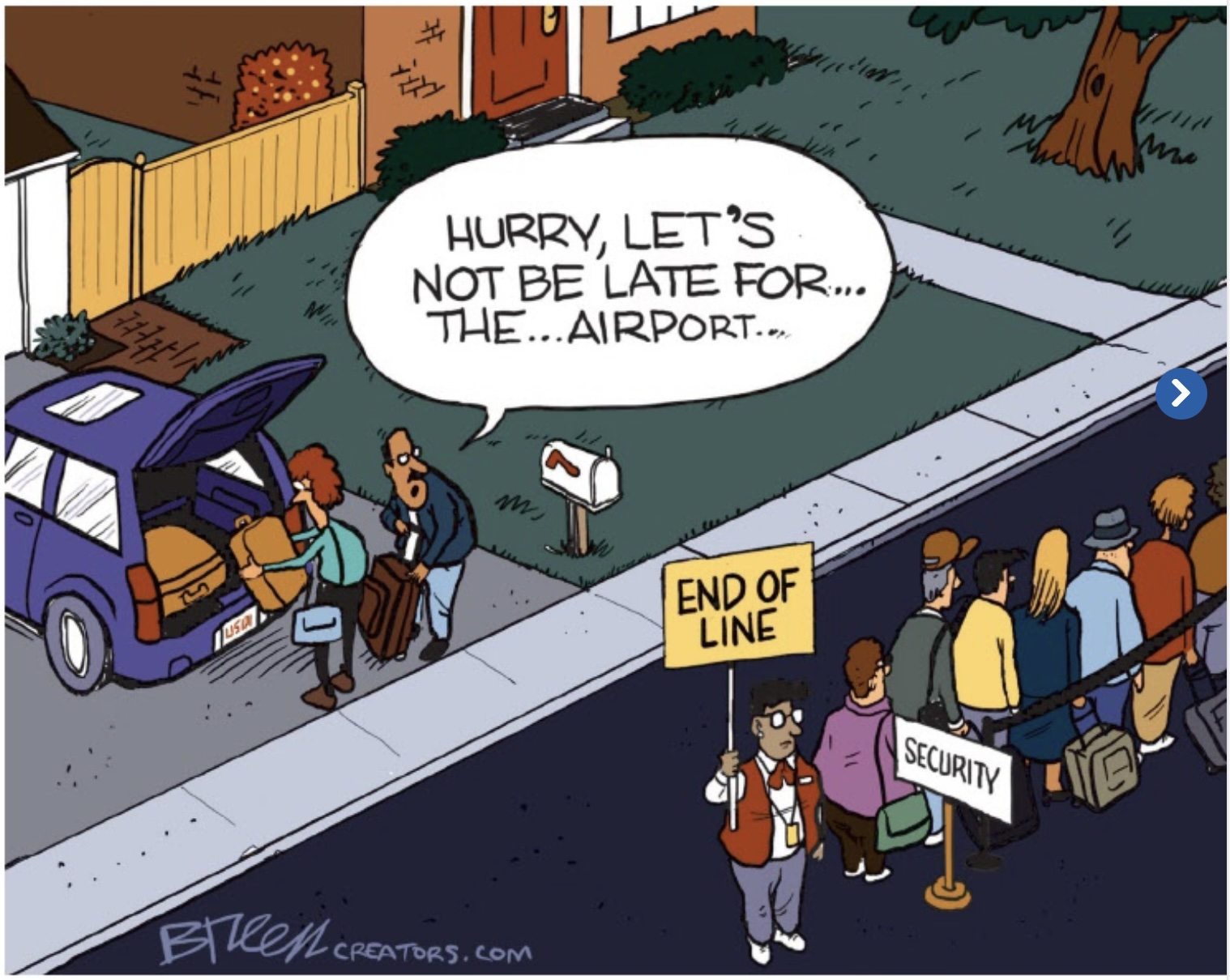
Counting to ten only makes it Premeditated.
Ogden, UT, USA
-
Tuesday IRAN WAR update:
President Trump yesterday renewed his threat to begin “completely obliterating” Iranian power plants, oil production facilities, and “possibly all desalinization plants” if Iran’s leaders did not agree to reopen the Strait of Hormuz immediately. A spokesperson for the Iranian foreign ministry yesterday maintained that Iran had held no negotiations with the United States and would not do so while the military campaign continues. Cheyanne M. Daniels reports for POLITICO; Ephrat Livni reports for the New York Times.
Trump told his aides he is willing to end the U.S. military campaign against Iran, even if the Strait of Hormuz remains largely closed,administration officials told the Wall Street Journal. In recent days, Trump and his aides assessed that prioritizing reopening the strait would push the conflict beyond his timeline of four to six weeks. Instead, he has decided the U.S. should focus on targeting Iran’s navy and missile capabilities, then begin winding down military operations while using diplomatic pressure to push Tehran to restore normal trade flows, the sources said. If that fails, Washington would press allies in Europe and the Gulf to take the lead on reopening the strait, the officials added. Alexander Ward and Meredith McGraw report.
Gasoline in the United States crossed an average of $4 a gallon today.Iran’s parliament yesterday approved an initial plan to institute a toll in the Strait of Hormuz, according to Iranian news agency Fars. Emmet Lindner reports for the New York Times.
An Iranian attack struck a Kuwaiti tanker near Dubai early this morning, according to the Kuwait Petroleum Corporation. There was no oil leakage from the loaded tanker, the authorities in the United Arab Emirates said. Francesca Regalado reports for the New York Times.
Israel and the United States launched a new wave of strikes on Iran today, hitting Tehran in the early morning hours. Trump shared a video which appeared to show a massive attack on Isfahan. Fire-tracking satellites from NASA suggest the explosion happened near Mount Soffeh, an area believed to have military positions. Jon Gambrell reports for AP News.
Ukrainian President Volodymyr Zelenskyy yesterday said that “historic” security agreements had been reached with Saudi Arabia, the United Arab Emirates, and Qatar during his tour of the Middle East. Zelenskyy’s trip was focused on sharing Ukraine’s expertise in countering Iranian-designed drones in return for “corresponding security cooperation,” he said during his nightly video address. Reuters reports.
“I only see benefits for Russia from the war with Iran continuing,”Zelenskyy told Axios yesterday. Zelenskyy said that Russia’s economy is getting a boost from surging oil prices and the loosening of U.S. sanctions, while the conflict leads to shortages of air defense interceptors and other weapons that Ukraine desperately needs. Barak Ravid reports."
Louisville; Rolling smoke in the neighbourhood. Life is too short for light/lite beer! Seems I'm livin in a transitional period. CHEETO (aka Agent Orange) makes Nixon look like a saint. -
Wednesday IRAN WAR update:
"Israeli missiles struck a major pharmaceutical company in Tehran yesterday morning, destroying its raw material production units and its research and development unit, according to Iran’s state news agency. Iran’s Foreign Minister Abbas Araghchi said that Israel is “openly and unashamedly bombing pharmaceutical companies.” The Israeli military said the factory “presented itself as a civilian company” but that it was a false front. Parin Behrooz and Ephrat Livni report for the New York Times.
A U.S. journalist has been kidnapped in Iraq with apparent involvement of an Iranian-backed militia, the State Department said yesterday. The Iraqi Interior Ministry said that Shelly Kittleson was seized from a Baghdad street and that efforts were underway to recover her. Gregory Svirnovskiy reports for POLITICO.
U.S. Central Command said yesterday that “U.S. forces did not launch any strikes at any time into the city of Lamerd during the opening of Operation Epic Fury,” refuting reports that U.S. airstrikes hit a sports hall and residential area on Feb. 28, according to a CENTCOM press release.
President Trump said yesterday that the United States would wrap up its military campaign in Iran in two or three weeks, adding that he had dealt with Iran’s nuclear program and that gasoline prices would come down as soon as the United States ended the conflict. However, there is no evidence that Iran’s stockpile of highly enriched uranium has been destroyed or removed. The White House said yesterday that Trump would address the nation this evening to provide “an important update” on the war. Tyler Pager and Edward Wong report for the New York Times; David E. Sanger reports for the New York Times.
Trump also said yesterday that the effective closure of the Strait of Hormuz was a problem for other countries to deal with themselves. “All of those countries that can’t get jet fuel because of the Strait of Hormuz, like the United Kingdom, which refused to get involved in the decapitation of Iran…build up some delayed courage, go to the Strait, and just TAKE IT.” Gregory Svirnovskiy reports for POLITICO.
China and Pakistan yesterday presented a five-point peace plan to end the war in Iran, calling for an immediate ceasefire, renewed negotiations, protection of key infrastructure, and the reopening of the Strait of Hormuz. While Trump declined to comment on the proposal, “Trump told Axios yesterday that the negotiations with Iran are going well.” Barak Ravid reports for Axios.
The United Arab Emirates is urging the United States and military powers in Europe and Asia to form a coalition to open the Strait of Hormuz by force, Arab officials told the Wall Street Journal. The UAE is lobbying for a U.N. Security Council resolution that would authorize such action, the officials said. Summer Said, David S. Cloud, and Michael Amon report.
A United Nations Development Programme report released on Monday warns that just one month of the U.S.-Israeli war with Iran could cost the Arab region about $194 billion, shrink its economy by up to 6%, and push four million more people into poverty. Erika Solomon reports for the New York Times.
When asked whether the United States was still committed to NATO’s collective defense, Defense Secretary Pete Hegseth said yesterday, “As far as NATO is concerned, that’s a decision that will be left to the president. But I’ll just say a lot has been laid bare.” In reference to U.S. tensions with France, Italy, Spain, and the United Kingdom over the war in Iran, Hegseth also said, “When we ask for additional assistance or simple access, basing and overflight, we get questions or roadblocks or hesitations.” Trump told Britain’s Daily Telegraph in an interview that he was strongly considering pulling the United States out of NATO after allies failed to back the military action against Iran. Phil Stewart reports for Reuters; Reuters reports."
Louisville; Rolling smoke in the neighbourhood. Life is too short for light/lite beer! Seems I'm livin in a transitional period. CHEETO (aka Agent Orange) makes Nixon look like a saint. -
My near daily updates may be a bit impacted by some upcoming travel. I'll be on it as technology allows.Louisville; Rolling smoke in the neighbourhood. Life is too short for light/lite beer! Seems I'm livin in a transitional period. CHEETO (aka Agent Orange) makes Nixon look like a saint.
-
Thursday IRAN WAR update
President Trump said yesterday in a televised speech that the U.S. military had nearly accomplished its goals in Iran, but offered no clear timeline for ending the war. “We're going to hit them extremely hard over the next two to three weeks,” Trump said. “We're going to bring them back to the Stone Ages where they belong,” Trump added, while stating that “in the meantime, discussions are ongoing.” Trump said the United States had destroyed Iran's navy and air force, and crippled its ballistic missile and nuclear programs, but provided little detail on opening up the Strait of Hormuz and seemed to back away from plans to dispatch special operations forces to seize highly enriched uranium. Stock futures plummeted and oil prices jumped following Trump's speech. Trevor Hunnicutt, Gram Slattery, and Steve Holland report for Reuters; Luke Broadwater and Tyler Pager report for the New York Times; Dave Lawler and Marc Caputo report for Axios.
The U.S. military this week presented Trump with a plan to seize nearly 1,000 pounds of highly enriched uranium in Iran that would involve flying in excavation equipment and building a runway for cargo planes, according to two sources. The complex plan was briefed to the president after he asked for a proposal, the sources added. Ellen Nakashima, John Hudson, Alex Horton, and Karen DeYoung report for the Washington Post.
Advisers who speak regularly with Trump told Axios this week that Trump is mostly improvising rather than following any clear plan when it comes to the war in Iran. Aides have been convinced at various points that Trump is leaning toward a major escalation, and at others that he was seeking a swift resolution. “Nobody knows in the end what he’s really thinking,” a senior adviser said. Sen. Lindsey Graham (R-SC) told Axios, “That’s the plan - for you to not have a clue.” Barak Ravid and Marc Caputo report.
Multiple U.S. intelligence agencies have assessed in recent days that the Iranian government is not currently willing to engage in substantial negotiations over ending the war in Iran, according to U.S. officials. The reports show that Iran is willing to keep channels open, but that it does not trust the United States and does not think Trump is serious about negotiations. Edward Wong and Julian E. Barnes report for the New York Times.
Three U.S. officials told Axios that the U.S. and Iran are discussing a potential deal that would involve a ceasefire in exchange for reopening the strait. Trump said on social media yesterday that Iran had asked for a ceasefire, adding he would not consider that until Iran allowed ships to cross the Strait of Hormuz safely. Iran’s foreign ministry spokesperson said Trump’s claim was “false and baseless.” Iranian President Masoud Pezeshkian yesterday released a letter addressed to the United States that suggested diplomacy might be possible, saying that the “path of confrontation is more costly and futile than ever before.” Edward Wong and Julian E. Barnes report for the New York Times; Barak Ravid reports.
The Pentagon is doubling its Middle East fleet of Air Force A-10 attack planes, which can support advancing ground troops, two Pentagon officials said yesterday. Eric Schmitt reports for the New York Times.
An Iran-backed Iraqi militia, Kataib Hezbollah, yesterday offered to negotiate with the Iraqi government for the release of kidnapped U.S. journalist Shelly Kittleson in exchange for freeing detained militia members, according to two Iraqi security officials. Erika Solomon and Falih Hassan report for the New York Times.
More than 30 countries will meet virtually today to “assess all viable diplomatic and political measures we can take to restore freedom of navigation, guarantee the safety of trapped ships and seafarers, and to resume the movement of vital commodities,” British Prime Minister Keir Starmer said. The United States is not among the countries in attendance. Jill Lawless reports for AP News.
“Let me remind you what NATO is. It is a military alliance concerned with the security of the Euro-Atlantic region. It is not designed to carry out operations in the Strait of Hormuz, which would breach international law,” French Junior Army Minister Alice Rufo said yesterday. John Irish reports for Reuters.
Over 100 international law experts have signed a statement expressing profound concerns about serious violations of international law and alarming rhetoric by the United States, Israel, and Iran in the present armed conflict in the Middle East. Tom Dannenbaum, Rebecca Hamilton, Adil Ahmad Haque, Oona A. Hathaway and Gabor Rona report for Just Security."
Louisville; Rolling smoke in the neighbourhood. Life is too short for light/lite beer! Seems I'm livin in a transitional period. CHEETO (aka Agent Orange) makes Nixon look like a saint. -
Thursday Russia-Ukraine update:
The Russian Defence Ministry yesterday claimed that Russia’s armed forces had taken control of the entire Luhansk region of Ukraine. A Kyiv military official denied the claim. Ukrainian President Volodymyr Zelesnkyy said yesterday that he would hold a video call with U.S. envoys Steve Witkoff and Jared Kushner to discuss further trilateral negotiations. AP News reports."Louisville; Rolling smoke in the neighbourhood. Life is too short for light/lite beer! Seems I'm livin in a transitional period. CHEETO (aka Agent Orange) makes Nixon look like a saint. -
Friday IRAN WAR update:
A U.S.-Israeli strike on a major bridge just outside Tehran yesterday killed at least eight people and injured around 95. President Trump said on social media that the U.S. military “hasn’t even started destroying what’s left in Iran,” adding “Bridges next, then Electric Power Plants! New Regime leadership knows what has to be done, and has to be done, FAST!” Lex Harvey, Avery Schmitz, Adam Pourahmadi, Sana Noor Haq, and Angus Watson report for CNN; Barak Ravid reports for Axios.
Iranian state media today released photos of what it claimed was the wreckage of a U.S. Air Force F-35 fighter jet downed by the Islamic Revolutionary Guard Corps. According to CNN, the photos from the wreckage show a partial logo for “US Air Forces in Europe” that appears on a F-15 tail fin. U.S. Central Command has yet to comment on the IRGC’s claims. Brad Lendon and Isaac Yee report for CNN.
Roughly half of Iran’s missile launchers are still intact and thousands of one-way attack drones remain in Iran’s arsenal after five weeks of U.S.-Israeli strikes, according to recent U.S. intelligence assessments, three sources told CNN. Two sources said that roughly 50 per cent of Iran’s drone capabilities still exist. “They are still very much poised to wreak absolute havoc throughout the entire region,” one of the sources said of Iran. In response to questions on this intelligence, a White House spokesperson said, “Here are the facts: Iranian ballistic missile and drone attacks are down 90 per cent, their navy is wiped out, two-thirds of their production facilities are damaged or destroyed.” Haley Britzky, Natasha Bertrand, and Jim Sciutto report.
Iranian human rights lawyer Nasrin Sotoudeh was detained by Iranian intelligence agents at her house in Tehran this week, her daughter said yesterday. Since the war began on Feb. 28, Iranian authorities have reportedly arrested hundreds of people, often for communicating with foreign media. Days before her arrest, Sotoudeh gave an interview to a Persian media outlet abroad in which she said the Islamic Republic’s policies “have exposed us to death” and spoke out against the government’s crackdown on protests in January. Sarah El Deeb reports for AP News.
Iran said yesterday it would seek to oversee shipping traffic through the Strait of Hormuz even after the war. An Iranian deputy foreign minister said that though Iran was drafting a protocol for his country and Oman to monitor transit through the strait, Iran would not be imposing restrictions. Yeganeh Torbati reports for the New York Times.
A U.N. Security Council effort led by Bahrain to authorize military force against Iran to reopen the Strait of Hormuz faced disagreements yesterday, with Russia, China, and France opposing the use of force, according to a diplomat and a senior U.N. official. A final draft of the proposal, obtained by AP News, authorizes defensive - but not offensive - action to ensure vessels can safely transit through the strait. China, Russia, and France’s views on the changes are not known. The vote on the resolution is expected to take place tomorrow. Farnaz Fassihi reports for the New York Times; David Brunnstrom and John Irish report for Reuters; Edith M. Lederer reports.
French President Emmanuel Macron yesterday criticized Trump for his unserious approach to the war in Iran and unhelpful attacks on NATO. “When we’re serious, we don’t say the opposite of what we said the day before,” Macron told reporters. Macron also rejected the possibility that nations could forcibly seize the Strait of Hormuz, saying “that has never been an option we have chosen, and we consider it unrealistic.” Mark Landler reports for the New York Times.IRAN WAR
A U.S.-Israeli strike on a major bridge just outside Tehran yesterday killed at least eight people and injured around 95. President Trump said on social media that the U.S. military “hasn’t even started destroying what’s left in Iran,” adding “Bridges next, then Electric Power Plants! New Regime leadership knows what has to be done, and has to be done, FAST!” Lex Harvey, Avery Schmitz, Adam Pourahmadi, Sana Noor Haq, and Angus Watson report for CNN; Barak Ravid reports for Axios.
Iranian state media today released photos of what it claimed was the wreckage of a U.S. Air Force F-35 fighter jet downed by the Islamic Revolutionary Guard Corps. According to CNN, the photos from the wreckage show a partial logo for “US Air Forces in Europe” that appears on a F-15 tail fin. U.S. Central Command has yet to comment on the IRGC’s claims. Brad Lendon and Isaac Yee report for CNN.
Roughly half of Iran’s missile launchers are still intact and thousands of one-way attack drones remain in Iran’s arsenal after five weeks of U.S.-Israeli strikes, according to recent U.S. intelligence assessments, three sources told CNN. Two sources said that roughly 50 per cent of Iran’s drone capabilities still exist. “They are still very much poised to wreak absolute havoc throughout the entire region,” one of the sources said of Iran. In response to questions on this intelligence, a White House spokesperson said, “Here are the facts: Iranian ballistic missile and drone attacks are down 90 per cent, their navy is wiped out, two-thirds of their production facilities are damaged or destroyed.” Haley Britzky, Natasha Bertrand, and Jim Sciutto report.
Iranian human rights lawyer Nasrin Sotoudeh was detained by Iranian intelligence agents at her house in Tehran this week, her daughter said yesterday. Since the war began on Feb. 28, Iranian authorities have reportedly arrested hundreds of people, often for communicating with foreign media. Days before her arrest, Sotoudeh gave an interview to a Persian media outlet abroad in which she said the Islamic Republic’s policies “have exposed us to death” and spoke out against the government’s crackdown on protests in January. Sarah El Deeb reports for AP News.
Iran said yesterday it would seek to oversee shipping traffic through the Strait of Hormuz even after the war. An Iranian deputy foreign minister said that though Iran was drafting a protocol for his country and Oman to monitor transit through the strait, Iran would not be imposing restrictions. Yeganeh Torbati reports for the New York Times.
A U.N. Security Council effort led by Bahrain to authorize military force against Iran to reopen the Strait of Hormuz faced disagreements yesterday, with Russia, China, and France opposing the use of force, according to a diplomat and a senior U.N. official. A final draft of the proposal, obtained by AP News, authorizes defensive - but not offensive - action to ensure vessels can safely transit through the strait. China, Russia, and France’s views on the changes are not known. The vote on the resolution is expected to take place tomorrow. Farnaz Fassihi reports for the New York Times; David Brunnstrom and John Irish report for Reuters; Edith M. Lederer reports.
French President Emmanuel Macron yesterday criticized Trump for his unserious approach to the war in Iran and unhelpful attacks on NATO. “When we’re serious, we don’t say the opposite of what we said the day before,” Macron told reporters. Macron also rejected the possibility that nations could forcibly seize the Strait of Hormuz, saying “that has never been an option we have chosen, and we consider it unrealistic.” Mark Landler reports for the New York Times."
Louisville; Rolling smoke in the neighbourhood. Life is too short for light/lite beer! Seems I'm livin in a transitional period. CHEETO (aka Agent Orange) makes Nixon look like a saint. -
Monday IRAN WAR update:
Saturday
Israel attacked Iran’s largest petrochemical complex on Saturday, killing at least five people and injuring 170 others, according to Iranian state media. Israeli Prime Minister Benjamin Netanyahu confirmed that the Israeli military had struck the factories, saying the targeted sites were part of a “money machine” for the Iranian government. Farnaz Fassihi reports for the New York Times.
A provider of satellite imagery, Planet Labs, said it would further withhold distribution of photos from the Iran conflict zone at the request of the U.S. government, a Planet spokesperson said on Saturday. Planet had already slowed down how quickly it released imagery from the region, citing concerns that the data could be used by U.S. adversaries. Micah Maidenberg reports for the Wall Street Journal.
Chinese private firms, some linked to the military, are using AI and open-source data to track and market detailed intelligence on U.S. military movements during the Iran conflict. “In the lead-up to the escalation of tensions in Iran in 2026, we quickly identified the locations of weapons and equipment deployed in the Middle East,” and “exposed” the refueling pattern of U.S. carrier groups, a Hangzhou-based firm called MizarVision said on its website. Cade Cadell and Lyric Li report for the Washington Post.
Sunday
The U.S. military yesterday rescued an injured U.S. airman who had been stranded in Iran after his fighter jet was shot down on Friday. The downed Air Force F-15E fighter jet had two crew members, one of whom was quickly rescued. President Trump announced yesterday on social media that U.S. Special Forces, aided by a C.I.A. deception campaign, had successfully extracted the second airman from deep inside Iran. John Sakellariadis reports for POLITICO; Eric Schmitt, Helene Cooper, Greg Jaffe, and Julian E. Barnes report for the New York Times.
The Iranian Red Crescent Society said yesterday that one of its ambulances was hit in an airstrike during an emergency mission in Fars province. The organization added that 46 of its ambulances have been damaged during the war and four of its aid workers have been killed. Eve Sampson reports for the New York Times.
Iranian drone strikes in Kuwait yesterday damaged two power and water desalination plants and started a fire at the Kuwait Petroleum Corporation’s oil complex, Kuwaiti officials said. The Gulf Petrochemical Industries Company in Bahrain said a drone attack started fires at its facilities, and the UAE reported fires at an Abu Dhabi petrochemical plant. Eve Sampson reports for the New York Times.
Monday
Israeli Defense Minister Israel Katz said today that Israel killed Major General Seyed Majid Khademi, the head of intelligence for the Islamic Revolutionary Guard Corps, in an overnight strike. Emanuel Fabian reports for the Times of Israel.
“The President of the United States, as the highest official in the country, has publicly threatened to commit war crimes,” Iranian Deputy Foreign Minister Kazem Gharibabadi said today, warning Trump not to follow through on his threats to attack Iranian civil infrastructure. Gharibabadi’s comments followed a series of social media posts by Trump over the weekend, including, “Tuesday will be Power Plant Day and Bridge Day, all wrapped up in one, in Iran. There will be nothing like it ! ! ! Open the Fuckin’ Strait, you crazy bastards, or you’ll be living in Hell - JUST WATCH. Praise be to Allah.” Edward Wong reports for the New York Times; Erika Solomon reports for the New York Times; Barak Ravid reports for Axios.
The United States, Iran, and a group of regional mediators are discussing the terms for a potential 45-day ceasefire, four U.S., Israeli, and regional sources said yesterday. The sources added that the chances of reaching a partial deal by Trump’s latest deadline of Tuesday at 8 pm ET are slim. Trump told Axios yesterday that the United States is in “deep negotiations” and that a deal could be reached in time. Barak Ravid reports.
A source told Reuters today that a Pakistani-brokered plan which emerged overnight proposes an immediate ceasefire, followed by negotiations on a broader settlement to be concluded within 15-20 days. Pakistan’s army chief, Field Marshal Asim Munir, was in contact “all night long” with Vice President JD Vance, U.S. envoy Steve Witkoff, and Iranian Foreign Minister Abbas Araghchi, the source said. A senior Iranian official said Iran would not reopen the Strait of Hormuz as part of a temporary ceasefire. Reuters reports."
Louisville; Rolling smoke in the neighbourhood. Life is too short for light/lite beer! Seems I'm livin in a transitional period. CHEETO (aka Agent Orange) makes Nixon look like a saint. -
Tuesday IRAN WAR update:
Iran yesterday sent a 10-point response to the proposals under discussion with the United States for ending the war, according to Iranian state news agency IRNA and U.S. officials. IRNA reported that the Iranian response was discussed internally for two weeks and sent to Pakistani mediators yesterday. It emphasizes the need for a permanent end to the war, not just a temporary ceasefire, calls for an end to Israeli strikes against Lebanon, and the lifting of all sanctions, according to two Iranian officials. A U.S. official who saw the Iranian response called it “maximalist.” President Trump told reporters that Iran’s response was “significant” but “not good enough,” keeping his Tuesday deadline in place. Barak Ravid reports for Axios; Max Bearak, Farnaz Fassihi, Shirin Hakim, and Erika Solomon report for the New York Times; Reuters reports.
Trump said yesterday that “every bridge in Iran will be decimated” by midnight ET on Wednesday and “every power plant in Iran will be out of business, burning, exploding, and never to be used again.” An Iranian military spokesperson warned that Iranian operations would be “carried out much more crushingly and extensively” if attacks on “civilian targets are repeated.” Iranian officials today have called on “all young people, athletes, artists, students, and university students and their professors” to form human chains around power plants. Barak Ravid reports for Axios; Ephrat Livni reports for the New York Times; Bassem Mroue, Jon Gambrell, David Rising, and Samy Magdy report for AP News.
Trump yesterday threatened to force a news organization to turn over the name of an anonymous source who revealed details about the U.S. airman who went missing in Iran last week. “[Iran] didn’t know there was somebody missing until this leaker gave the information,” Trump said yesterday. “So whoever it was, we think we’ll be able to find it out because we’re going to go to the media company that released it, and we’re going to say, national security, give it up or go to jail.” Scott Nover reports for the Washington Post.
The U.N. Security Council is expected to vote today on a resolution led by Bahrain to protect commercial shipping in the Strait of Hormuz, diplomats said. The latest iteration of the resolution, seen by Reuters, drops any explicit authorization of the use of force, following opposition from China, Russia, and others. Instead, the current text “strongly encourages States interested in the use of commercial maritime routes in the Strait of Hormuz to coordinate efforts, defensive in nature, commensurate to the circumstances, to contribute to ensuring the safety and security of navigation across the Strait of Hormuz.” David Brunnstrom and John Irish report.
The Pentagon is expanding a list of Iranian energy sites it can target for attacks to include ones that provide fuel and power to both civilians and the military, two defense officials said, adding that this is likely a workaround if the Trump administration is accused of war crimes for striking basic infrastructure. The dual-use nature of the targets would make them legitimate, the officials said. A third source said Pentagon officials have debated where to draw the line between military and civilian targets, such as water desalination plants. Trump said yesterday that the Iranian people would welcome strikes on energy infrastructure. They “would be willing to suffer that in order to have freedom,” he said. “They want us to keep bombing.” Paul McLeary and Leo Shane III report for POLITICO.
Russian satellites have made at least 24 surveys of areas in 11 Middle Eastern countries from March 21 to 31, covering 36 “objects”, including U.S. and other military bases and sites, according to an undated Ukrainian intelligence assessment reviewed by Reuters. Within days of being surveyed, military bases and headquarters were targeted by Iranian ballistic missiles, the assessment said. The conclusions also found that Russian and Iranian hackers are collaborating in the cyber domain. Tom Balmforth and John Irish report."
Louisville; Rolling smoke in the neighbourhood. Life is too short for light/lite beer! Seems I'm livin in a transitional period. CHEETO (aka Agent Orange) makes Nixon look like a saint. -
Wednesday IRAN WAR update:
“A whole civilization will die tonight, never to be brought back again,” President Trump said yesterday morning. “I don’t want that to happen, but it probably will.” At 6.32 pm ET, Trump lifted this threat, saying that an intervention by the Pakistani government had led to a two-week ceasefire between the United States, Israel, and Iran. Trump added, “We received a 10-point proposal from Iran, and believe it is a workable basis on which to negotiate.” Shortly after, Iranian Foreign Minister Abbas Araghchi said in a statement that “safe passage through the Strait of Hormuz will be possible via coordination with Iran’s Armed Forces and with due consideration of technical limitations.” A regional official said today that the ceasefire plan includes allowing Iran and Oman to charge fees on ships transiting through the strait. David E. Sanger reports for the New York Times; AP News reports; Jacob Wendler and Paul McLeary report for POLITICO.
Two sources told Axios that a first round of negotiations between the United States and Iran on an agreement to end the war is planned for Friday in Islamabad. Barak Ravid and Marc Caputo report.
Israel said today that it supports the suspension of attacks against Iran for two weeks, but added that the deal does not extend to Lebanon. Israeli strikes in Lebanon continued today. Three Lebanese sources told Reuters that Hezbollah halted fire on northern Israel and on Israeli troops in Lebanon early this morning as part of the U.S.-Iran ceasefire. Hezbollah is likely to issue a statement outlining its formal position on the ceasefire and on Israeli Prime Minister Benjamin Netanyahu’s position that Lebanon is not included, the sources added. Euan Ward and Francesco Regalado report for the New York Times; Reuters reports.
U.S. forces in the Middle East and officials in the Pentagon “had no idea what was going to happen,” a defense official said, adding that preparations for a massive bombing campaign on Iranian infrastructure continued right up until Trump announced the ceasefire. For those involved in negotiations, sources said there was a general understanding by around noon ET yesterday that the parties were converging on a two-week ceasefire. Two Iranian sources said the “breakthrough” occurred when Iranian Supreme Leader Mojtaba Khamenei gave negotiators his blessing to cut a deal. Such was the confusion around Trump’s thinking that multiple people who had spoken to him early yesterday evening still believed he would reject the ceasefire offer. Barak Ravid, Dave Lawler, and Marc Caputo report for Axios.
The United States, Israel, and Iran accelerated strikes yesterday ahead of Trump’s deadline. Vice President JD Vance said yesterday that strikes on Iran’s Kharg Island overnight did not include oil infrastructure, adding that there had been no change in U.S. strategy. “The president’s deadline…has been followed by us and everybody else,” he said. “And he said very clearly, we’re not going to strike energy and infrastructure targets until the Iranians either make a proposal we can get behind or don’t make a proposal.” Gregory Svirnovskiy reports for POLITICO; Max Bearak reports for the New York Times.
U.S. Journalist Shelly Kittleson, who was kidnapped in Iraq by Iran-backed Kataib Hezbollah last week, has been released, the State Department said yesterday. Jacob Wendler and Daniella Cheslow report for POLITICO.
Iranian hackers are exploiting cyber vulnerabilities in key software systems at U.S. water and energy providers, according to a new advisory released by the Cybersecurity and Infrastructure Security Agency yesterday. Programmable logic controllers developed by software manufacturer Rockwell Automation/Allen-Bradley are actively being exploited, and PLCs from other companies are potentially being targeted as well, the advisory said. Dana Nickel and Maggie Miller report for POLITICO.
The FBI warned U.S. state and local law enforcement of an elevated threat posed by Iran’s government to targets in the United States, including military and government personnel, Jewish and Israeli institutions, and Iranian dissidents in the United States, in a report dated March 20. The FBI and National Counterterrorism Center had not identified broad threats to the American public, the report said. Kristina Cooke and Ted Hesson report for Reuters.
China and Russia vetoed a Bahrain-led resolution at the U.N. yesterday aimed at reopening the Strait of Hormuz. Bahrain, the Democratic Republic of the Congo, Denmark, France, Greece, Latvia, Liberia, Panama, Somalia, the United Kingdom, and the United States voted in favor of the resolution. Sophie Brams reports for the Hill.
“About 15 countries are currently mobilised and are participating in the planning… to enable the implementation of this strictly defensive mission… to facilitate the resumption of traffic” through the Strait of Hormuz, French President Emmanuel Macron said this morning in a meeting with French defense advisers. Macron also welcomed the ceasefire between Iran and the United States, but called for Lebanon to be included in the deal. Reuters reports.
More than 70 U.S. Democratic lawmakers yesterday called for Trump to be removed from office and questioned his mental fitness for the presidency after he threatened to destroy “a whole civilization” in Iran. Sen. Jack Reed (D-RI) said that Trump’s threat was “comparable to genocide” and a “criminal act,” adding that Trump “seems to have lost control” and “become as fanatical as the regime leaders in Tehran.” Megan Mineiro and Michael Gold report for the New York Times."
Louisville; Rolling smoke in the neighbourhood. Life is too short for light/lite beer! Seems I'm livin in a transitional period. CHEETO (aka Agent Orange) makes Nixon look like a saint. -
Thursday U.S.-IRAN Dance
The White House said Vice President JD Vance will lead the U.S. negotiating team to Islamabad this weekend for talks with Iran, alongside special envoy Steve Witkoff and Jared Kushner. Press Secretary Karoline Leavitt said the first round is set for Saturday morning local time in Pakistan and added that senior U.S. officials had also held conversations with China as part of efforts to secure the ceasefire. Kit Maher reports for CNN.
Iran’s envoy to Pakistan briefly signaled that Tehran would send negotiators to Islamabad on Thursday night for “serious talks” with Washington, before the post appeared to be taken down. The post read: “Despite skepticism of Iranian public opinion due to repeated ceasefire violations by Israeli regime to sabotage the diplomatic initiative, invited by Hon. PM Shehbaz Sharif, Iranian delegation arrives tonight in Islamabad for serious talks based on 10 points proposed by Iran.” Golnar Motevalli reports for Bloomberg; Lex Harvey reports for CNN.
President Donald Trump said on Wednesday that U.S. military assets will remain “in, and around, Iran” until “the REAL AGREEMENT” is reached and threatened renewed attacks if Tehran does not fully honor the two-week ceasefire deal reached the day earlier. “All U.S. Ships, Aircraft, and Military Personnel, with additional Ammunition, Weaponry … will remain in place in, and around, Iran, until such time as the REAL AGREEMENT reached is fully complied with,” the president posted on Truth Social, adding, “If for any reason it is not, which is highly unlikely, then the ‘Shootin’ Starts,’ bigger, and better, and stronger than anyone has ever seen before.” Reuters reporting.
Vice President JD Vance said Wednesday that confusion over the Iran negotiations stems in part from three different “10-point” proposals circulating at different stages. He said the first proposal, “probably written by ChatGPT,” was sent to Steve Witkoff and Jared Kushner and “immediately went in the garbage.” Vance said Trump was instead referring to a second, “much more reasonable” version developed through U.S., Pakistani, and Iranian exchanges, and dismissed a third proposal circulating online as “even more maximalist” and the work of “little more than a random yahoo in Iran.” Donald Judd reports for CNN.
Iran’s lead negotiator accused Washington and Israel on Wednesday of violating three clauses of Iran’s proposed 10-point framework for talks with the United States, warning that a “bilateral ceasefire or negotiations” would be “unreasonable.” Parliament Speaker Mohammad Bagher Ghalibaf, Tehran’s principal negotiator, pointed to intensified Israeli strikes in Lebanon, an alleged drone incursion into Iranian airspace, and continuing disagreement over Iran’s nuclear program. Parisa Hafezi, Alexander Cornwell, Maya Gebeily, and Humeyra Pamuk report for Reuters. Michael Rios and Mohammed Tawfeeq report for CNN.
Israeli Prime Minister Benjamin Netanyahu warned that Israel had its “finger on the trigger” and could return to full fighting “at any moment,” amid a fraying ceasefire, continued fighting between Israel and Hezbollah in Lebanon, and further Iranian strikes elsewhere in the region. Reuters reported.
The United Arab Emirates declined to fully welcome the temporary U.S.-Iran ceasefire, instead demanding further clarification on Tehran’s compliance and the “unconditional reopening” of the Strait of Hormuz. In a statement Wednesday, the UAE foreign ministry said Iran should be held accountable for damage caused during the war and pressed for a broader strategy covering Tehran’s nuclear and missile programs, proxy networks, and wider regional threats. Mostafa Salem reports for CNN.
Washington and Tehran publicly diverged on Wednesday over whether the new deal requires Iran to stop enriching uranium. Trump said Iran had agreed to end enrichment, while Iranian Parliament Speaker Mohammad Bagher Qalibaf said the agreement still permits it, underscoring that the sides remain far apart on the deal’s core nuclear terms, Reuters reported.
Conflicting accounts over whether Lebanon is included in the U.S.-Iran ceasefire have quickly emerged as a sticking point in the fragile deal. Iran and Pakistani mediators said the truce covers Israel’s conflict with Hezbollah, but the White House and Israel said Lebanon is outside its scope. Al Jazeera, AFP, and Reuters report; Mariah Timms reports for Wall Street Journal; Mariah Timms reports for Wall Street Journal; Angus Berwick reports for the Wall Street Journal.
Vance warned Iran must reopen the Strait of Hormuz for the ceasefire to last, warning of “serious consequences” if Tehran fails to meet its side of the bargain. He said the truce remains “in a good spot,” but stressed that the Trump administration would not abide by its terms if Iran does not do the same. Riane Lumer reports for CNN."
Louisville; Rolling smoke in the neighbourhood. Life is too short for light/lite beer! Seems I'm livin in a transitional period. CHEETO (aka Agent Orange) makes Nixon look like a saint. -
Thursday STRAIT OF HORMUZ update:
Iran said later Wednesday that it was again halting oil tanker traffic through the Strait of Hormuz in response to Israel’s attacks on Lebanon, according to state-run media cited by the Associated Press. The move cast fresh doubt on the already fragile U.S.-Iran ceasefire, which had been expected to help reopen the strategic waterway.
Citing possible anti-ship mines, Iran’s navy advised commercial vessels in the Strait of Hormuz to coordinate with the Islamic Revolutionary Guard Corps and follow alternative routes until further notice. In guidance shared by Iran’s consulate in Mumbai, the navy directed inbound ships to enter north of Larak Island into the Persian Gulf and outbound vessels to pass south of the island toward the Gulf of Oman. Suha Ma’ayeh reports for the Wall Street Journal.
Vessel traffic through the Strait of Hormuz remained near a standstill on Thursday, more than a day after President Donald Trump announced a two-week U.S.-Iran ceasefire and said in a Truth Social post on Wednesday night that the strait would be “OPEN & SAFE.” MarineTraffic data showed large clusters of ships still anchored in the Persian Gulf, including more than 400 tankers, 34 LPG tankers, and 19 LNG vessels. Isaac Yee reports for CNN."
Louisville; Rolling smoke in the neighbourhood. Life is too short for light/lite beer! Seems I'm livin in a transitional period. CHEETO (aka Agent Orange) makes Nixon look like a saint. -
Friday Iran war update: (A long read)
Survivors of the deadliest Iranian attack on U.S. forces since the war began disputed the Pentagon’s account, telling CBS News that the Army unit hit in Kuwait on March 1 was “unprepared to provide any defense for itself” and not in a fortified position. The soldiers said six service members were killed and more than 20 wounded when a drone struck the Port of Shuaiba facility, undercutting Pete Hegseth’s description of a single drone slipping through defenses at a fortified site; the Pentagon declined comment, citing an active investigation. Jonah Kaplan and Michael Kaplan report for CBS News.
The Trump administration did not warn U.S.-flagged commercial vessels tied to the military before bombing Iran, leaving Merchant Marine Academy cadets aboard some of the ships stranded in the Persian Gulf for weeks, NOTUS reported, adding that about half a dozen cadets were on two of five such vessels in the region and that, without advance notice, there was no clear way to evacuate them once the war began, Anna Kramer, Jasmine Wright, and Joe Gould report.
Rebuilding U.S. missile defenses damaged during the Middle East war will require going through China, which dominates processing of gallium and other critical minerals used in interceptors, POLITICO reports. China also controls more than 90 percent of heavy rare earth processing, giving Beijing added leverage as Washington tries to restock, Daniel Desrochers writes.
Iran’s delegation was expected in the capital on Thursday night, led by chief negotiator and Parliament Speaker Mohammad Bagher Ghalibaf, alongside Iran’s foreign minister and other officials. Al Jazeera reports.
Pakistani authorities imposed tight security in Islamabad ahead of Saturday’s first U.S.-Iran peace talks, sealing off areas around the Serena Hotel, requisitioning the property through Sunday, and spreading military personnel and checkpoints across the Red Zone. Al Jazeera reporting; Saad Sayeed and Ariba Shahid report for Reuters.
Security officials said the precautions went beyond routine arrangements for a high-profile visit, underscoring fears that any disruption could derail the fragile U.S.-Iran diplomatic opening. Reuters reported that Pakistani authorities enhanced airspace surveillance and placed emergency services on standby ahead of Saturday’s talks. Reuters reports.
The U.S.-Iran ceasefire was initially understood to include Lebanon, including by President Donald Trump, before Washington shifted position after a call between Trump and Israeli Prime Minister Benjamin Netanyahu, CBS News reports. Trump had been told the truce would apply across the region and agreed that it included Lebanon, mediators believed the same, and Pakistan publicly said Lebanon was covered, Margaret Brennan, Olivia Gazis, Jennifer Jacobs, and Michal Ben-Gal report.
Iran’s parliamentary speaker and lead negotiator in truce talks on Thursday rejected U.S. and Israeli assertions that Lebanon was excluded from the two-week truce, saying Pakistan, a key mediator, had “publicly and clearly stressed the Lebanon issue.” He said the first point of Iran’s 10-point framework treated Lebanon and Iran’s allies as an “inseparable part of the ceasefire” and added that “there is no room for denial and backtracking.” Financial Times reports.
Lebanon’s prime minister asked his Pakistani counterpart in a call Thursday to confirm that Lebanon is covered by the U.S.-Iran ceasefire, after renewed Israeli attacks deepened the dispute over the truce’s scope. Financial Times reports.
Israeli attacks on Lebanon are a “clear violation” of the ceasefire and would “render negotiations meaningless,” Iranian President Masoud Pezeshkian stated early Thursday. Reuters reports.
Pakistan’s U.N. envoy said Thursday that Lebanon’s inclusion in the ceasefire deal was clear to all sides and should not distract from planned talks in Islamabad this weekend. Asim Iftikhar Ahmad said he did not understand the confusion because Lebanon had been “clearly” included in the prime minister’s statement announcing the agreement. Associated Press reporting.
European politicians pressed Thursday for Lebanon to be included in the truce after Israel’s mass bombardment of Beirut further strained the U.S.-Iran deal. The calls underscored widening international resistance to Washington and Israel’s position that the ceasefire does not extend to Israel’s conflict with Hezbollah. Financial Times reports.
The State Department will host Israel-Lebanon talks in Washington next week aimed at ending the current hostilities between Israel and Hezbollah, a U.S. official confirmed. A person familiar with the planning said the talks are expected to be led on the U.S. side by Ambassador to Lebanon Michel Issa and on the Israeli side by Ambassador Yechiel Leiter. Matthew Lee reports for Associated Press; Lex Harvey reports for CNN; Reuters reporting.
Israel will open direct talks with Lebanon but will not halt attacks on Hezbollah, Prime Minister Benjamin Netanyahu said Thursday, pairing a diplomatic opening with an insistence that the military campaign will continue, in a shift from earlier Israeli statements that negotiations would proceed only “under fire.” Netanyahu said the talks would focus on disarming Hezbollah and formalizing peaceful relations, while the Washington Post reports that a Lebanese official said a temporary truce would be needed for negotiations to proceed. Reuters reports; Sammy Westfall, Suzan Haidamous, Mohamad El Chamaa and Lior Soroka report for the Washington Post.
Lebanon’s president said he was pursuing a diplomatic track “to achieve a ceasefire between Israel and Lebanon, followed by direct negotiations between them,” an approach he said was beginning to be viewed “positively” by international actors. Lebanon had spent the previous day pressing for a temporary halt in hostilities between Israel and Hezbollah to open space for broader talks, according to a senior Lebanese official describing the effort to Reuters as “a separate track but the same model” as the U.S.-Iran truce. Reuters reports.
Hezbollah lawmaker Ali Fayyad said Thursday that the group rejects direct negotiations with Israel and that Lebanon’s government should first secure a ceasefire before taking any further steps. The statement appeared to be Hezbollah’s first public response since Netanyahu said Israel was ready to begin talks immediately. Reuters reports.
A Pakistani source said Islamabad was also working on ceasefires for Lebanon and Yemen, where Israel has struck Iran-aligned forces. “It will be discussed during the talks and we will settle it,” the source said, according to Reuters.
Iran appeared to retain a chokehold on traffic through the Strait of Hormuz on Thursday night, according to ship-tracking data. The Botswana-flagged LNG tanker Nidi turned back early Friday after attempting to exit the Gulf via a route ordered by the Revolutionary Guard, and Kpler recorded only four tankers and three bulk carriers passing through on Thursday. Associated Press reporting.
The Strait of Hormuz remains effectively choked off, with traffic still about 90 per cent below normal and roughly 600 cargo vessels trapped, Lloyd’s List Intelligence says. According to the firm’s Thursday briefing, every ship that had transited since Monday had an Iranian nexus through trade, ownership, or sanctions links. Victoria Craw reports for the Washington Post.
The head of Abu Dhabi’s state oil company said Thursday that the Strait of Hormuz is “not open,” warning that access is being “restricted, conditioned and controlled” by Iran. Sultan Al Jaber said passage through the waterway remains subject to “conditions and political leverage.” Laura Sharman reports for CNN.
NATO Secretary-General Mark Rutte said the alliance could “play a role” in a U.K.-led coalition planning to keep the Strait of Hormuz open. He said the effort would likely involve practical support such as minehunters, frigates, and radar technology. Financial Times reports.
President Donald Trump pressed NATO allies on Wednesday to spell out within days how they would support a military mission to secure shipping through the Strait of Hormuz. Bloomberg and the Financial Times report that he renewed the demand in talks with Mark Rutte, though European governments involved in U.K.-led planning have so far resisted any deployment while the fighting is ongoing. Financial Times reports.
Reuters reported Thursday that TASS, citing an unnamed senior Iranian source, said Iran would permit no more than 15 vessels a day to pass through the Strait of Hormuz under the U.S.-Iran ceasefire, signaling a limited reopening of the strait rather than a full restoration of shipping.
The European Commission urged Iran to abandon its new toll on ships transiting the Strait of Hormuz, saying international law guarantees free navigation through the waterway. The Commission said that means “no payment or toll whatsoever,” though it added that any decision on whether to pay Tehran’s $1-a-barrel charge rests with shipping companies. Financial Times reports.
In the first 24 hours of the ceasefire, only one oil-products tanker and five dry bulk carriers sailed through a strait that had typically handled around 140 ships a day before the war.
Louisville; Rolling smoke in the neighbourhood. Life is too short for light/lite beer! Seems I'm livin in a transitional period. CHEETO (aka Agent Orange) makes Nixon look like a saint. -
Monday IRAN WAR update:
Vice President JD Vance led high-stakes U.S.-Iran peace talks in Islamabad over the weekend but failed to secure any agreement after 16 hours of closed-door meetings, blaming Iran’s refusal to commit to abandoning nuclear ambitions. Vance did not say whether this meant the United States and Israel would resume their attacks on Iran or escalate them. Details remain scarce and disputed. Some Iranian officials told media outlets that the United States had agreed to unfreeze Iranian assets held in Qatar and foreign banks before the meetings began as a sign of good faith. The United States said those reports were false. A U.S. official said that despite Vance’s departure from Islamabad, the U.S. deal is still on the table, and it is up to the Iranians if they choose to take it. President Trump told reporters last night that the two-week ceasefire between the United States and Iran is “holding well.” Tyler Pager reports for the New York Times; Dan Goldberg reports for POLITICO; Megan Messerly reports for POLITICO.
Iranian parliamentary speaker and top negotiator Mohammah Bagher Ghalibaf said in a statement yesterday that Iran had approached the negotiations in Islamabad in good faith, but the U.S. team had failed to “gain the trust of the Iranian delegation.” Ghalibaf indicated that future talks were possible, adding that now is the time for Washington “to decide whether it can earn our trust or not.” His statement followed JD Vance’s comments before he departed Islamabad that the United States had put out its “final and best offer”, but Iran had “chosen not to accept our terms.” Anushka Patil reports for the New York Times.
U.S. Central Command announced on Saturday that two U.S. destroyers transited the strait as part of a mine-clearing mission. Several U.S. officials added that the U.S. military had destroyed an Iranian surveillance drone approaching one of the ships. Iran declared the move a ceasefire violation. Megan Messerly reports for POLITICO; Michael Crowley, Julian E. Barnes, Adam Rasgon, and Tyler Pager report for the New York Times.
President Trump yesterday announced that a U.S. naval blockade of the Strait of Hormuz would begin from today and threatened to destroy “the little that is left of Iran,” following the talks in Islamabad. U.S. Central Command said the blockade would begin at 10 a.m. ET and would be “enforced impartially against all vessels of all nations entering or departing Iranian ports.” Iran’s Islamic Revolutionary Guard Corps warned today that “no port in the Persian Gulf and the Sea of Oman will be safe” if its own ports are threatened. Oil prices have again topped $100 a barrel, and stock markets fell as talks collapsed and the imminent blockade threatened to disrupt the global economy further. Megan Messerly reports for POLITICO; Billy Stockwell reports for CNN; Samy Magdy reports for AP News.
U.K. Prime Minister Keir Starmer said this morning that Britain will not be part of the U.S. blockade of Iranian ports, adding that Britain is “not getting dragged into war.” France and the U.K. plan to organize a conference in the coming days with countries willing to contribute to a “peaceful, multinational mission” aimed at restoring free transit through the strait, French President Emmanuel Macron said today. Reuters reports; James Regan reports for Bloomberg.
Louisville; Rolling smoke in the neighbourhood. Life is too short for light/lite beer! Seems I'm livin in a transitional period. CHEETO (aka Agent Orange) makes Nixon look like a saint. -
Monday Russia-Ukraine update:
Russia and Ukraine yesterday accused each other of breaching the 32-hour ceasefire, reporting more than a thousand drone and shelling attacks just hours after the truce began to mark Orthodox Easter. The General Staff of Ukraine's military, in a late evening report issued as the end of the truce was approaching, said it had compiled a total of 7,696 Russian violations over the course of the truce. The Russian defence ministry said it recorded 1,971 ceasefire violations overnight into Sunday. Reuters reports.
Louisville; Rolling smoke in the neighbourhood. Life is too short for light/lite beer! Seems I'm livin in a transitional period. CHEETO (aka Agent Orange) makes Nixon look like a saint. -
Tuesday Iran update:
During weekend negotiations in Islamabad, the United States proposed a 20-year “suspension” on all nuclear activity, to which Iran responded that it would suspend nuclear activity for up to five years, according to two senior Iranian officials and one U.S. official. Pakistani, Egyptian and Turkish mediators are trying to bridge the gap and reach a deal before the ceasefire ends on April 21. David E. Sanger and Tyler Page report for the New York Times; Barak Ravid reports for Axios.
“The Iranians were pissed off about that press conference,” a source told Axios, referring to Vice President JD Vance’s announcement on Sunday morning that the United States and Iran had not reached an agreement. The source added that the Iranians thought they were close to an initial agreement and were caught off guard by Vance’s press conference. Israeli Prime Minister Benjamin Netanyahu said that Vance called him on his way back to Washington to say the main sticking point was removing all enriched material from Iran and ensuring no enrichment in the coming years. A member of Iran’s negotiating team confirmed that the two U.S. demands on the nuclear issue were the reason no deal was reached. Barak Ravid reports.
Iranian Foreign Minister Abbas Araghchi told French Foreign Minister Jean-Noël Barrot yesterday that Washington’s “excessive” and continually changing demands thwarted an agreement during negotiations over the weekend. But Aragchi also said there was “progress on many issues discussed.” Ephrat Livni reports for the New York Times.
White House officials said yesterday that another round of in-person negotiations was being discussed. An official at the Iranian embassy in Pakistan said, “The coming rounds of talks can come sometime later this week or earlier next week [in Islamabad].” Another Iranian source said that “no firm date has been set, with the delegations keeping Friday through Sunday open.” David E. Sanger and Tyler Page report for the New York Times; Ariba Shahid and Mubasher Bukhari report for Reuters.
The United States blockade of the Strait of Hormuz began yesterday. Trump said on Sunday that “numerous countries” would be helping with the blockade, but so far only Israel has publicly supported the idea. NATO allies have said they would not be drawn into the conflict by taking part in the blockade. Tyler Pager, Peter Eavis, Jenny Gross, and Thomas Fuller report for the New York Times; Michel Rose and John Irish report for Reuters.
An Iran-linked tanker appeared to travel through the Strait of Hormuz yesterday after the U.S. blockade was imposed, according to tracking data from MarineTraffic. Two tankers traveling to and from the United Arab Emirates also crossed the strait safely yesterday, and a Guyanese-flagged tanker operated by a Chinese shipping company crossed this morning, according to Kpler. Peter Eavis reports for the New York Times; Francesca Regalado reports for the New York Times.
Saudi Arabia is pressing the United States to drop its blockade and return to the negotiating table, fearing Iran could retaliate by disrupting the Bab al-Mandeb shipping route in the Red Sea, Arab officials said. Summer Said and Jared Malsin report for the Wall Street Journal."
Louisville; Rolling smoke in the neighbourhood. Life is too short for light/lite beer! Seems I'm livin in a transitional period. CHEETO (aka Agent Orange) makes Nixon look like a saint. -
Wednesday Iran war update:
President Trump said yesterday in an interview that a second round of direct negotiations with Iran could take place in Pakistan over the next two days. Trump did not say whether Vice President JD Vance would continue to lead the negotiating team. Trump also said he did not like the reports that the United States had proposed a 20-year suspension of all nuclear activity in Iran, rather than a permanent ban on enrichment. “I’ve been saying they can’t have nuclear weapons,” Trump said. “So I don’t like the 20 years.” Chris Cameron reports for the New York Times; Karen DeYoung reports for the Washington Post.
Israeli intelligence chief David Barnea said yesterday that the war in Iran had delivered a serious blow to the Iranian regime but that Israel’s mission would be complete only once the regime was replaced. Isabel Kershner and Gabby Sobelam report for the New York Times.
The first full day of the U.S. blockade on vessels calling at Iranian ports made little difference to Strait of Hormuz traffic yesterday, with at least eight ships, including three Iran-linked tankers, crossing the waterway, shipping data showed. “During the first 24 hours, no ships made it past the U.S. blockade,” U.S. Central Command claimed on social media, adding that six vessels complied with direction from U.S. forces to turn around to re-enter an Iranian port. Florence Tan, Mariko Katsumura, and Jonathan Saul report for Reuters.
Iran-linked ships are increasingly using “spoofing” tactics to evade detection in and around the Strait of Hormuz following the U.S. blockade, according to maritime intelligence experts. “Now, we are starting to see vessels going dark or using ‘zombie’ or random identification,” said Windward CEO Ami Daniel. Ephrat Livni reports for the New York Times.
Edit to add:
Chinese President Xi Jinping said yesterday that the world cannot risk reverting “to the law of the jungle,” in his first public comments on the war. Xi did not mention the United States or Trump directly, but he added that “to maintain the authority of international rule of law, we cannot use it when it suits us and abandon it when it doesn’t.” China’s foreign ministry accused the United States of a “targeted blockade” that “will only aggravate confrontation, escalate tension under the already fragile cease-fire, and further jeopardize safe passage through the Strait of Hormuz.” Lily Kuo reports for the New York Times; David E. Sanger and Tyler Pager report for the New York Times."
Louisville; Rolling smoke in the neighbourhood. Life is too short for light/lite beer! Seems I'm livin in a transitional period. CHEETO (aka Agent Orange) makes Nixon look like a saint.


Categories
- All Categories
- 184.1K EggHead Forum
- 15.8K Forum List
- 460 EGGtoberfest
- 1.9K Forum Feedback
- 10.4K Off Topic
- 2.2K EGG Table Forum
- 1 Rules & Disclaimer
- 9K Cookbook
- 13 Valentines Day
- 93 Holiday Recipes
- 224 Appetizers
- 520 Baking
- 2.5K Beef
- 88 Desserts
- 167 Lamb
- 2.4K Pork
- 1.5K Poultry
- 33 Salads and Dressings
- 324 Sauces, Rubs, Marinades
- 548 Seafood
- 175 Sides
- 122 Soups, Stews, Chilis
- 44 Vegetarian
- 102 Vegetables
- 313 Health
- 292 Weight Loss Forum