Share your photos by tagging us and using the hashtag #BigGreenEgg.
Want to see how the EGG is made? Click to Watch
OT - Dry aging rib loins - how warm is too warm?

http://blog.sausagemaker.com/2015/11/how-to-make-dry-curing-chamber.html
Everything I have read indicates that meat should be aged at between 32 - 39*F. However, last night I ate a great steak that had been aged closer to "cellar temperature", and (a) it tasted great and (b) it didn't kill me. The guy who aged the steak indicated that at warmer temps it dry ages faster and the "good bacteria" flourish better without the "bad bacteria" going bananas.
Question - Is the 40*F threshold for dry aging a health code/FDA number (see also, Pork - cook to 165*F) designed to keep food factories from killing people, or are there real concerns about aging at warmer temps? Any food scientists or Europeans in the house that can help me think about how to replicate that great steak I ate?
Joule SV
GE induction stove
Gasser by the community pool (currently unavailable)
Scale (which one of my friends refuses to use)
Friends with BGEs and myriad other fired devices (currently unavail IRL)
Occasional access to a KBQ and Webber Kettle
Charcuterie and sourdough enthusiast
Prosciuttos in an undisclosed location
Comments
-
the warmer it is, the fatser it ages... classic example is maybe prosciutto. some swear that the warmer summers (when they were aged in open air barns, not today in commercial facilities) added something that perpetually cool temps dont.
but that is cured too.
you would need some control over bacteria.
"closer to cellar temperatures" implies warmer than the 40-ish number we throw around as a guideline.
i grew up in a house where we left the frozen roast on the counter all day, and mom had us throw it in the oven when we got home from school totally thawed. strains were less virulent then i'm sure.
the big kicker for me, the fecal bacteria we are worried about are external. the dude whose SRF shipment thawed is rightfully bummed. but there is a part of me thinking that a rinse of the exterior, and you are fine.
ever kill a deer and then hang it for a few days in october?
so, i am never going to advise anyone to try it over 40.
but here's the thing. we are talking faster aging, not different. it's not different flavors, it's that the enzymes break the protein down faster.
so, we wet age and follow up with dry aging to condense the beef.
or we just suck it up and go 45 days.
if you dry age at warmer temps, you'll have less drying, more aging.
so it really come down to what you want and how long you want to wait.
i had a roast sit at 50+ degrees. that is low for cellar temp. and she starts smelling real quick.
something tells me, they are talking about curing in some way. you can cure at warmer temps
-
This steak was dry aged (as part of a full rib loin) in a meat locker. The meat locker is warmer than I was expecting. I got to go inside and it certainly had the aging meat "funk" but had no bad or spoiled smell.JustineCaseyFeldown said:something tells me, they are talking about curing in some way. you can cure at warmer temps
If I can get the same result just by waiting longer but going colder (<40*F), that can work for me. I am just trying to get smarter on this.(now only 16 stone)
Joule SV
GE induction stove
Gasser by the community pool (currently unavailable)
Scale (which one of my friends refuses to use)
Friends with BGEs and myriad other fired devices (currently unavail IRL)
Occasional access to a KBQ and Webber Kettle
Charcuterie and sourdough enthusiast
Prosciuttos in an undisclosed locationAustin, TX -
Canada Packers in Toronto was the largest meat packing (abattoir, cutting, etc.) house in Canada. For it's last few years of existence it was the largest unrefrigerated packing house in the world. It had been operating for many years, predated commercial refrigeration. Nobody died. Didn't even make anyone sick that I know of. I worked there quite a bit and took advantage of their employee pricing pretty regularly.
Steve
Caledon, ON
-
...but did it ever get over 40*F? ;-)Little Steven said:Canada Packers in Toronto was the largest meat packing (abattoir, cutting, etc.) house in Canada. For it's last few years of existence it was the largest unrefrigerated packing house in the world. It had been operating for many years, predated commercial refrigeration. Nobody died. Didn't even make anyone sick that I know of. I worked there quite a bit and took advantage of their employee pricing pretty regularly.
(now only 16 stone)
Joule SV
GE induction stove
Gasser by the community pool (currently unavailable)
Scale (which one of my friends refuses to use)
Friends with BGEs and myriad other fired devices (currently unavail IRL)
Occasional access to a KBQ and Webber Kettle
Charcuterie and sourdough enthusiast
Prosciuttos in an undisclosed locationAustin, TX -
20stone said:
...but did it ever get over 40*F? ;-)Little Steven said:Canada Packers in Toronto was the largest meat packing (abattoir, cutting, etc.) house in Canada. For it's last few years of existence it was the largest unrefrigerated packing house in the world. It had been operating for many years, predated commercial refrigeration. Nobody died. Didn't even make anyone sick that I know of. I worked there quite a bit and took advantage of their employee pricing pretty regularly.
Sometimes at the end of July and beginning of August we can hit 50* in hot years.Steve
Caledon, ON
-
John, If you're into experimenting on yourself, based on my experience with rotting meat, I might try dry aging in the 33-39F zone for a week or so until the outside of the meat is dry then moving it to a more cellar (40F+) temp location. (or changing the temp).
My reasoning is based partly on what I've read and partly from dry aging myself, cured and uncured meats - the outside of the meat is where you have bacteria, and bacteria thrive in moisture and heat. Keep it cool until you develop a dry "crust", then, presumably, at least in my mind, it won't be as susceptible to rapid bacteriological activity. And while the crust forms, any activity should be retarded by the temp.
______________________________________________I love lamp.. -
Thanks for the tip. BTW, I prefer the term "scab."nolaegghead said:John, If you're into experimenting on yourself, based on my experience with rotting meat, I might try dry aging in the 33-39F zone for a week or so until the outside of the meat is dry then moving it to a more cellar (40F+) temp location. (or changing the temp).
...
Keep it cool until you develop a dry "crust", then, presumably, at least in my mind, it won't be as susceptible to rapid bacteriological activity. And while the crust forms, any activity should be retarded by the temp.(now only 16 stone)
Joule SV
GE induction stove
Gasser by the community pool (currently unavailable)
Scale (which one of my friends refuses to use)
Friends with BGEs and myriad other fired devices (currently unavail IRL)
Occasional access to a KBQ and Webber Kettle
Charcuterie and sourdough enthusiast
Prosciuttos in an undisclosed locationAustin, TX -
Great. I have a 16.7lb rib roast at home in the fridge. When I get it out I'm going to think scab.20stone said:
Thanks for the tip. BTW, I prefer the term "scab."nolaegghead said:John, If you're into experimenting on yourself, based on my experience with rotting meat, I might try dry aging in the 33-39F zone for a week or so until the outside of the meat is dry then moving it to a more cellar (40F+) temp location. (or changing the temp).
...
Keep it cool until you develop a dry "crust", then, presumably, at least in my mind, it won't be as susceptible to rapid bacteriological activity. And while the crust forms, any activity should be retarded by the temp.They/Them
Morgantown, PA
XL BGE - S BGE - KJ Jr - HB Legacy - BS Pizza Oven - 30" Firepit - King Kooker Fryer - PR72T - WSJ - BS 17" Griddle - XXL BGE - BS SS36" Griddle - 2 Burner Gasser - Pellet Smoker -
Tell me you don't "harvest" and eat scabs. That crunchy texture, combined with the umami and salt flavor...exquisite! You should thank me.DMW said:
Great. I have a 16.7lb rib roast at home in the fridge. When I get it out I'm going to think scab.20stone said:
Thanks for the tip. BTW, I prefer the term "scab."nolaegghead said:John, If you're into experimenting on yourself, based on my experience with rotting meat, I might try dry aging in the 33-39F zone for a week or so until the outside of the meat is dry then moving it to a more cellar (40F+) temp location. (or changing the temp).
...
Keep it cool until you develop a dry "crust", then, presumably, at least in my mind, it won't be as susceptible to rapid bacteriological activity. And while the crust forms, any activity should be retarded by the temp.(now only 16 stone)
Joule SV
GE induction stove
Gasser by the community pool (currently unavailable)
Scale (which one of my friends refuses to use)
Friends with BGEs and myriad other fired devices (currently unavail IRL)
Occasional access to a KBQ and Webber Kettle
Charcuterie and sourdough enthusiast
Prosciuttos in an undisclosed locationAustin, TX -
I think John is right in thinking the scab is less gross. I found this:DMW said:
Great. I have a 16.7lb rib roast at home in the fridge. When I get it out I'm going to think scab.20stone said:
Thanks for the tip. BTW, I prefer the term "scab."nolaegghead said:John, If you're into experimenting on yourself, based on my experience with rotting meat, I might try dry aging in the 33-39F zone for a week or so until the outside of the meat is dry then moving it to a more cellar (40F+) temp location. (or changing the temp).
...
Keep it cool until you develop a dry "crust", then, presumably, at least in my mind, it won't be as susceptible to rapid bacteriological activity. And while the crust forms, any activity should be retarded by the temp.What is the medical term for Scabs?
The known medical term for scab is crust or eschar (Greek word). This is a crust formed by coagulation of blood, pus, serum, or a combination of these, on the surface of an ulcer, erosion, or other type of wound.
The edge of an eschar (crust) can keep a wound from closing by secondary intention, and an eschar is said to be a sign that a wound is too dry to heal as fast as possible.
Crusts results when serum, blood, or purulent exudate dries and it is a hallmark of pyogenic infection. Crusts are yellow when they have arisen from dried serum; green or yellow-green when formed from purulent exudate; and brown or dark red when formed from blood.
( from http://www.medicalwordmeanings.com/the-medical-term-for-scab/ )
______________________________________________I love lamp.. -
For the record, I am only a gourmand of red/brown scabs. Yellow and yellow/green are grossnolaegghead said:
I think John is right in thinking the scab is less gross. I found this:DMW said:
Great. I have a 16.7lb rib roast at home in the fridge. When I get it out I'm going to think scab.20stone said:
Thanks for the tip. BTW, I prefer the term "scab."nolaegghead said:John, If you're into experimenting on yourself, based on my experience with rotting meat, I might try dry aging in the 33-39F zone for a week or so until the outside of the meat is dry then moving it to a more cellar (40F+) temp location. (or changing the temp).
...
Keep it cool until you develop a dry "crust", then, presumably, at least in my mind, it won't be as susceptible to rapid bacteriological activity. And while the crust forms, any activity should be retarded by the temp.What is the medical term for Scabs?
The known medical term for scab is crust or eschar (Greek word). This is a crust formed by coagulation of blood, pus, serum, or a combination of these, on the surface of an ulcer, erosion, or other type of wound.
The edge of an eschar (crust) can keep a wound from closing by secondary intention, and an eschar is said to be a sign that a wound is too dry to heal as fast as possible.
Crusts results when serum, blood, or purulent exudate dries and it is a hallmark of pyogenic infection. Crusts are yellow when they have arisen from dried serum; green or yellow-green when formed from purulent exudate; and brown or dark red when formed from blood.
( from http://www.medicalwordmeanings.com/the-medical-term-for-scab/ )
(now only 16 stone)
Joule SV
GE induction stove
Gasser by the community pool (currently unavailable)
Scale (which one of my friends refuses to use)
Friends with BGEs and myriad other fired devices (currently unavail IRL)
Occasional access to a KBQ and Webber Kettle
Charcuterie and sourdough enthusiast
Prosciuttos in an undisclosed locationAustin, TX -
what is "warmer than you expected?20stone said:
This steak was dry aged (as part of a full rib loin) in a meat locker. The meat locker is warmer than I was expecting. I got to go inside and it certainly had the aging meat "funk" but had no bad or spoiled smell.JustineCaseyFeldown said:something tells me, they are talking about curing in some way. you can cure at warmer temps
If I can get the same result just by waiting longer but going colder (<40*F), that can work for me. I am just trying to get smarter on this.
i am also just trying to learn about this.
but you can't store meat mong term at ambient temps without curing, or we wouldn't have curing. are they sanitizing the meat surface with peroxide or something?
-
I know the FDA doesn't recommend washing meat because, according to their explanation, it results in contaminating other stuff (presumably the "juice" that comes off meat is HIGHLY contagious). And that run-off from washing vegetables is relatively harmless, or much less concentrated. They recommend washing vegetables. Scrubbing hard ones. (insert joke here)
Having worked in an industry that follows this sister Agency's guidelines, I can tell you that explanation is probably overly simplified because, well, collectively, people are idiots. If anything remotely weird can go wrong, it will, and heaven forbid it was misconstrued safety policy.
I have, prior to chopping up meat that I eat raw, washed the outside with vinegar. I suppose hydrogen peroxide would do a good job too with even less taste. I use star-san for beer equipment sanitizing. All these are no-rinse.
The question is, would that make a difference? A chunk of meat sitting out in a fridge with forced air - you're gonna just recontaminate it. The majority of bacteria aren't bad for us, at least in moderation. I'm not sure anything on the outside will get inside, and we cook the outside.
I love that you're experimenting John. If you continue to live, that means there's merit in your methodology. .
______________________________________________I love lamp.. -
Hydrogen peroxide is used to sanitize meat.
Was just wondering if they used it here too
kind of a moot discussion without knowing what the temps are he's talking about -
Too warm is a temperature that allows spoilage and putrefaction.
My one foray into dry aging resulted in some seriously rotten meat. But I will be trying it again.
Theres a lot of mystery behind dry aging. It's a pretty interesting rabbit hole. If you're bored here's one of the better write ups I've found:
http://www.beefresearch.org/cmdocs/beefresearch/dry Aging of beef.pdf
Chicago, IL - Large and Small BGE - Weber Gasser and Kettle -
On a similar note some of the jerky recipes I've used call for a quick soak in vinegar, if you're not going to heat the beef to pasteurizing temperatures.JustineCaseyFeldown said:Hydrogen peroxide is used to sanitize meat.
Was just wondering if they used it here too
kind of a moot discussion without knowing what the temps are he's talking about
@nolaegghead good point about recirc air. One of the studies mentioned in the above PDF used UV light to treat the recirculating air
Chicago, IL - Large and Small BGE - Weber Gasser and Kettle -
I'm going to assume somewhere above 40F. I wouldn't want to go much above that for long times. There's no magic about 39-40F as an upper limit other than some bacteria like that temp. But most that cause purification are explode in other, higher temp ranges. Be interesting to see what likes the 40-50 range, and if that's endemic to the surface of uncured meat.JustineCaseyFeldown said:Hydrogen peroxide is used to sanitize meat.
Was just wondering if they used it here too
kind of a moot discussion without knowing what the temps are he's talking about
I didn't know H2O2 was used to sanitize meat. Learn something new every day.
______________________________________________I love lamp.. -
H2O2 is nice and toxic to living cells. Bad for healing wounds.
Put a capful in your mouth. When it starts foaming like crazy find your loved ones and ask what they know about rabies. Always a hit.Chicago, IL - Large and Small BGE - Weber Gasser and Kettle -
What the hell is wrong with a warm loin??Sandy Springs & Dawsonville Ga
-
ive grown maggots at 55 degrees with a partially cured leg of lamb. would stick with the recommended 40 and under for noncured meat. the thing smelled like prosciutto, no odd smell whatsoever, probably could of ate it if i could have gotten past the fact it was squirming

here, looks good
not so good
maggots followed right up thru close to the bone
fukahwee maineyou can lead a fish to water but you can not make him drink it -
you buzzkill, you
______________________________________________I love lamp.. -
Warmer than an airport luggage storeroom?JustineCaseyFeldown said:
what is "warmer than you expected?20stone said:
This steak was dry aged (as part of a full rib loin) in a meat locker. The meat locker is warmer than I was expecting. I got to go inside and it certainly had the aging meat "funk" but had no bad or spoiled smell.JustineCaseyFeldown said:something tells me, they are talking about curing in some way. you can cure at warmer temps
If I can get the same result just by waiting longer but going colder (<40*F), that can work for me. I am just trying to get smarter on this.
i am also just trying to learn about this.
but you can't store meat mong term at ambient temps without curing, or we wouldn't have curing. are they sanitizing the meat surface with peroxide or something?Steve
Caledon, ON
-
nolaegghead said:you buzzkill, you imagine what that would have looked like just dry aging it at 55 degrees
fukahwee maineyou can lead a fish to water but you can not make him drink it -
Pepper helps keep the flies from makin' dem baby maggots.
______________________________________________I love lamp.. -
If you dry age in what's considered the FDA safe zone in your back yard, you might find it covered with wolves.
______________________________________________I love lamp.. -
salt should be enough, but yeah, pepper is the go-to. but it can fall off when the surface dries. or not adhere well to begin with after curing in salt (too dry)nolaegghead said:Pepper helps keep the flies from makin' dem baby maggots.
so it's sometimes coated in lard too. and then pepper
when i did mine, i coated the aitch bone area (point of attack for fishless' maggots) in lard first, then the rest. then peppered it. then cheese cloth.
the lard slows drying, which meant it took about two years to get firm enough to feel like proper prosciutto
i'd post a pic, but it doesn't meet the stringent pixel requirements of those who have access to phone cameras so much better than what we had back then.
i think the country ham was just left to hang in the open, salted. i think the pics are on photobucket, but again. such violently low-quality photos seem to irritate our resident food stylist.
old news anyway, I followed ruhlman/polcyn. no invention or freewheeling on my part. recipe is easily had.
@fishlessman : did you bury the leg of lamb under salt (completely, all sides, entirely) as well as put it under heavy weight? not enough to just cover in salt and hang. i think you said you did it the 'standard' way, but just figgered i'd ask
-
i think it was a matter of following directions or maybe dropping it 7 feet onto a cement slab 3 weeks innolaegghead said:Pepper helps keep the flies from makin' dem baby maggots. for the dry aging at room temp i think they did a scientific study counting dead bodies after consuming dry aged meat done at 40 to 80 degree temps many many years ago 
fukahwee maineyou can lead a fish to water but you can not make him drink it -
salt all sides with kosher and some herbs de province, cut areas and aitch bone area i packed with finer canning salt then the coarser kosher. i think the salt stage was not long enough per the directions i had. will double that next time. had cheese cloth on it loosely for 3 weeks before the chord snapped and it fell and split exposing the inner probably not salt soaked enough area. did not notice the split for another week or so, at the time it was hardened up, just had that one wet spot that the fly jumped on. packed with 7 plus boxes salt, leveled with a ss plate on top and about 30 pounds ss bricks to press it flat. i see no reason to try this with no salt as the op plans to doJustineCaseyFeldown said:
salt should be enough, but yeah, pepper is the go-to. but it can fall off when the surface dries. or not adhere well to begin with after curing in salt (too dry)nolaegghead said:Pepper helps keep the flies from makin' dem baby maggots.
so it's sometimes coated in lard too. and then pepper
when i did mine, i coated the aitch bone area (point of attack for fishless' maggots) in lard first, then the rest. then peppered it. then cheese cloth.
the lard slows drying, which meant it took about two years to get firm enough to feel like proper prosciutto
i'd post a pic, but it doesn't meet the stringent pixel requirements of those who have access to phone cameras so much better than what we had back then.
i think the country ham was just left to hang in the open, salted. i think the pics are on photobucket, but again. such violently low-quality photos seem to irritate our resident food stylist.
old news anyway, I followed ruhlman/polcyn. no invention or freewheeling on my part. recipe is easily had.
@fishlessman : did you bury the leg of lamb under salt (completely, all sides, entirely) as well as put it under heavy weight? not enough to just cover in salt and hang. i think you said you did it the 'standard' way, but just figgered i'd ask fukahwee maineyou can lead a fish to water but you can not make him drink it -
As you can see from this internet graph, the speed in which maggots move is directly influenced from the ambient temperature. Unfortunately the temperatures are metric, so only the Canadians will understand.
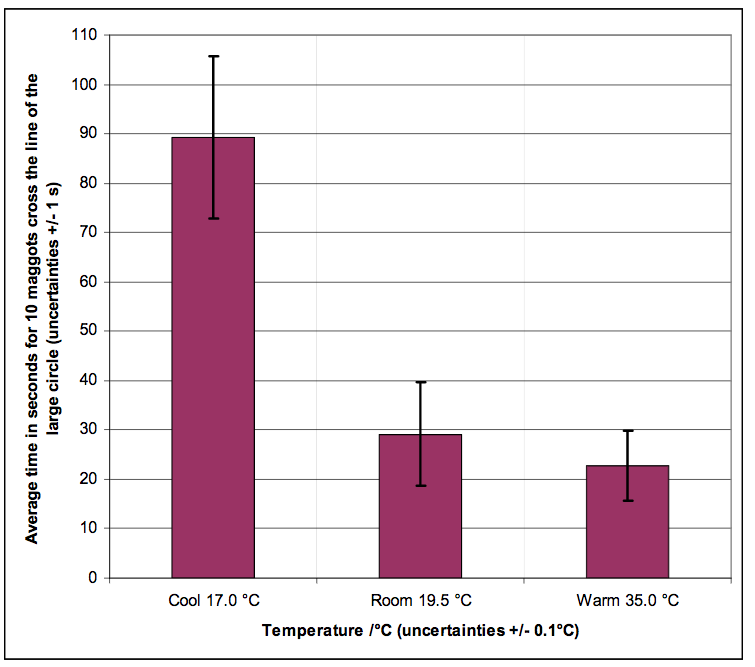
______________________________________________I love lamp.. -
wish i had a graph but from experience it takes 16 weeks to raise flies from baby maggots in a fridgenolaegghead said:As you can see from this internet graph, the speed in which maggots move is directly influenced from the ambient temperature. Unfortunately the temperatures are metric, so only the Canadians will understand. fukahwee maineyou can lead a fish to water but you can not make him drink it


Categories
- All Categories
- 184K EggHead Forum
- 16.1K Forum List
- 461 EGGtoberfest
- 1.9K Forum Feedback
- 10.5K Off Topic
- 2.4K EGG Table Forum
- 1 Rules & Disclaimer
- 9.2K Cookbook
- 15 Valentines Day
- 118 Holiday Recipes
- 348 Appetizers
- 521 Baking
- 2.5K Beef
- 90 Desserts
- 167 Lamb
- 2.4K Pork
- 1.5K Poultry
- 33 Salads and Dressings
- 322 Sauces, Rubs, Marinades
- 548 Seafood
- 175 Sides
- 122 Soups, Stews, Chilis
- 41 Vegetarian
- 103 Vegetables
- 315 Health
- 293 Weight Loss Forum