Welcome to the EGGhead Forum - a great place to visit and packed with tips and EGGspert advice! You can also join the conversation and get more information and amazing kamado recipes by following Big Green Egg to Experience our World of Flavor™ at:
Want to see how the EGG is made? Click to Watch
Facebook | Twitter | Instagram | Pinterest | Youtube | Vimeo
Share your photos by tagging us and using the hashtag #BigGreenEgg.
Share your photos by tagging us and using the hashtag #BigGreenEgg.
Want to see how the EGG is made? Click to Watch
newbie question - surface temperature vs. dome temperature

ccoffey
Posts: 21
I searched several times for a topic on this but I couldn't find it so I apologize now for asking something that's probably been asked a thousand times. Its possible I cant find a topic because I may not be using the right terminology.
My question is, when using the egg, which thermometer should I use? The built in dome thermometer or a grill surface mounted thermometer? My grill surface when cooking using the platesetter is lower than my dome temp.
So last night for example, I was cooking some chickens following a friends recipe and they were supposed to be cooked at 350 degrees. When the dome temp was at 350, my surface thermometer was at about 330. When I increased the temperature so the surface thermometer was at 350, the dome was at 390.
I ended up splitting the difference and just made sure the chickens were 165 everywhere before pulling them off but which thermometer should I use when trying to set a temperature based on a recipe?
Secondly, is the answer different when using the platesetter and going slow and low than it is when using direct high heat?
Just not sure. Thanks for the help and advice.
My question is, when using the egg, which thermometer should I use? The built in dome thermometer or a grill surface mounted thermometer? My grill surface when cooking using the platesetter is lower than my dome temp.
So last night for example, I was cooking some chickens following a friends recipe and they were supposed to be cooked at 350 degrees. When the dome temp was at 350, my surface thermometer was at about 330. When I increased the temperature so the surface thermometer was at 350, the dome was at 390.
I ended up splitting the difference and just made sure the chickens were 165 everywhere before pulling them off but which thermometer should I use when trying to set a temperature based on a recipe?
Secondly, is the answer different when using the platesetter and going slow and low than it is when using direct high heat?
Just not sure. Thanks for the help and advice.
Wesley Chapel, FL - LBGE
Comments
-
Short answer is, it does not matter, just be consistent.
Mosr recipies are dome. Also, depending on time, during indirect cooks the dome and grate eventually equalize.
With that said, I use grate if its critical.I would rather light a candle than curse your darkness.
-
Follow dome when indirect
for direct, the dome thermometer temp isn't the radiant temp of the grid level, it's not 'accurate' that way. Your lump is over a thousand degrees , and depending how close the grid is to the lump, it could be more like 1200 or more.
The dome though might only say 750 or 850
that just is an indication that the fire itself is roraing[social media disclaimer: irony and sarcasm may be used in some or all of user's posts; emoticon usage is intended to indicate moderately jocular social interaction; the comments toward users, their usernames, and the real people (living or dead) that they refer to are not intended to be adversarial in nature; those replying to this user are entering into a tacit agreement that they are real-life or social-media acquaintances and/or have agreed to or tacitly agreed to perpetrate occasional good-natured ribbing between and among themselves and others] -
If you are running at 850 or above remove your thermometer all together. Otherwise cal it afterwards.
I never use electronics for direct. That is a sure fire way to ruin equipment.I would rather light a candle than curse your darkness.
-
The crown prince of BBQ, Aaron Franklin, says to go by grate temp.
-
Just pick one and ignore the other for indirect. As @Ozzie_Isaac said, most recipes are dome. On a long cook, they'll equalize.
-
My egg came with one thermometer. They stuck it through a small hole in the dome. Same place the sending unit is in my kitchen oven. I figure they're trying to tell me something. I have never even checked my grid temp.
I hate it when I go to the kitchen for food and all I find are ingredients!
MichaelCentral Connecticut -
@ccoffey,
Pick one and cook by it consistently. I use dome for my cooks.
I will, however, put a grate probe on (Maverick) for long low and slows just so I can monitor the temperature without running out to the Egg. I set the dome temp and note the probe temp. Usually, the Maverick and dome disagree at first, but will merge as the cook progresses.
The placement of the grate probe can vary the reading widely - and this is why I don't use it. I calibrated my dome thermometer and I use it. It reads consistently every time.
Another point is to not worry about the temperature being off +/- 25 degrees or so with the coal heat. You will drive yourself nuts trying to dial it in exactly. Get it close, let it ride, and cook to the meat's internal temperature.Living the good life smoking and joking -
I made a recent post about cooking ribs direct and did a comparison of dome and grid temperatures:
http://eggheadforum.com/discussion/1188860/i-love-to-experiment-jjs-direct-ribs#latestJudy in San Diego -
Thanks! This is all good information. I mostly wanted to use the grate thermometer like SmokingPiney, to keep tabs on the cook without having to run out and check it all the time. Sounds like the consensus for indirect is to follow the dome. Thanks again.Wesley Chapel, FL - LBGE
-
I see lots of people talking about calibrating the dome thermometer. How do you do that?Wesley Chapel, FL - LBGE
-
Yes, but he doesn't use an egg. Different tools.DoubleEgger said:The crown prince of BBQ, Aaron Franklin, says to go by grate temp.Southeast Florida - LBGE
In cooking, often we implement steps for which we have no explanations other than ‘that’s what everybody else does’ or ‘that’s what I have been told.’ Dare to think for yourself. -
Boil some water and dip the thermometer tip in it. It should read right around 212 degrees. You can turn the nut on the back of the gauge to set it to the right temperature.ccoffey said:I see lots of people talking about calibrating the dome thermometer. How do you do that?
Living the good life smoking and joking -
With practice, the dome therm is adequate in all set-ups, assuming it it calibrated. I tried using grill and probe therms early on, and all it did was give me an info overload. As you become used to vent settings, between familiarity w. the size of fire each produces, and having the point sample from the dome therm, you can be fairly sure of how the food is cooking.
Fussing over temp for most foods is not necessary. If you want precise control, SV will be the way to go except for searing or baking.
Here's a quick run down of the Eggs interior heat profile.
The lump produces hot air around 1000F, depending on how much carbon is in it. But, and this is really important, more energy is being produced as IR, enough to get objects near the lump up around 2000F.
The heated air rises, and at first, the dome area gets warmer than the middle of the Egg. As mentioned above, w. time, all the ceramics heat up, and the air temp within the column is fairly even.
The strength of the IR energy falls off by the inverse square. If the whole surface of the lump is glowing, the amount of energy at the gasket line is about half of what is present just above the lump, and the dome is getting about 1/4.
IF you place something under the food, such as a platesetter, the IR effects are stopped. Depending on the indirect device, the air above will vary. Initially, a platesetter will keep the air above it cooler than the dome. As it heats to above 600F, the heat air under the food will be hotter than the dome. IF a pan w. water is used for the indirect device, the vaporizing water will keep the bottom of the chamber relatively cool. But because moisture in the air makes heat transfer stronger, the lower temperature will cook more efficiently than dry air at the same temp.
-
@ccoffey I use dome. There are some issues with using grid temps on an egg. I often find that food takes up most of the grid space - finding room for a temp probe on the grid is difficult. Placement of the grid probe makes a significant difference on the temp readings. If it is too close to the food it will read low early in the cook. If it is at the outside edge of the grid, it can be influenced by airflow pattern coming around the indirect piece (e.g. is it protected by a platesetter leg or not?).
If you want to use a remote thermometer, you can use them in the dome - they do not have to be used on the grid. Depending on the diameter of the temp probe, just remove the dial thermometer and replace it with the probe from a remote unit.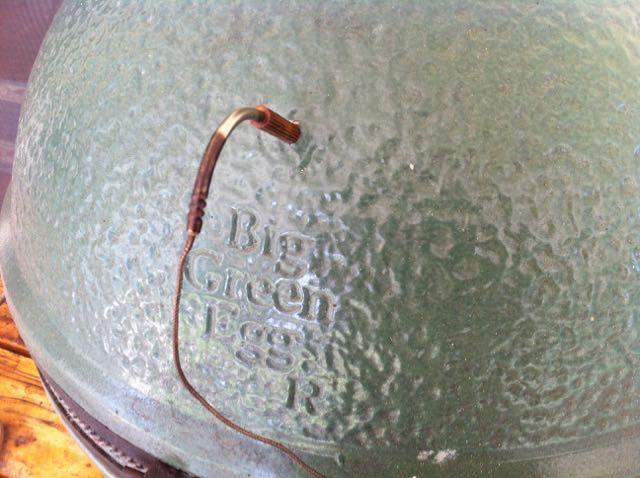
Southeast Florida - LBGE
In cooking, often we implement steps for which we have no explanations other than ‘that’s what everybody else does’ or ‘that’s what I have been told.’ Dare to think for yourself. -
Your temps were exactly what to expect with a setter in, dome is higher than grid. Without the setter it reverses, grid is higher than dome as the grid is closer to the IR of the lump. As noted above, do not use electronics when cooking direct it will shorten the probe life. If using eelectronics, it is also a good idea to run the probe wires over a setter leg to shelter from IR of lump.
Delta B.C. - Whiskey and steak, because no good story ever started with someone having a salad! -
Same principle though.jtcBoynton said:
Yes, but he doesn't use an egg. Different tools.DoubleEgger said:The crown prince of BBQ, Aaron Franklin, says to go by grate temp. -
+1SmokingPiney said:@ccoffey,
Pick one and cook by it consistently. I use dome for my cooks.
I will, however, put a grate probe on (Maverick) for long low and slows just so I can monitor the temperature without running out to the Egg. I set the dome temp and note the probe temp. Usually, the Maverick and dome disagree at first, but will merge as the cook progresses.
The placement of the grate probe can vary the reading widely - and this is why I don't use it. I calibrated my dome thermometer and I use it. It reads consistently every time.
Another point is to not worry about the temperature being off +/- 25 degrees or so with the coal heat. You will drive yourself nuts trying to dial it in exactly. Get it close, let it ride, and cook to the meat's internal temperature.LBGE - I like the hot stuff. The big dry San Joaquin Valley, Clovis, CA -
Except the cookers he uses get a lot more horizontal air flow than an egg. There is a more persistent vertical temperature gradient.DoubleEgger said:
Same principle though.jtcBoynton said:
Yes, but he doesn't use an egg. Different tools.DoubleEgger said:The crown prince of BBQ, Aaron Franklin, says to go by grate temp.Southeast Florida - LBGE
In cooking, often we implement steps for which we have no explanations other than ‘that’s what everybody else does’ or ‘that’s what I have been told.’ Dare to think for yourself. -
Yep, it is the same principle. And, Aaron makes that point in both his book and his videos. He goes so far as to advocate moving the thermometer down to the grill level on inexpensive, store-bought smokers.DoubleEgger said:
Same principle though.jtcBoynton said:
Yes, but he doesn't use an egg. Different tools.DoubleEgger said:The crown prince of BBQ, Aaron Franklin, says to go by grate temp.
The saving grace with the egg is - for our low-n-slow, indirect cooks - a temp deviation of +/- 25 degrees doesn't matter ... thus, the advice to not chase temps. Hell, we cook ribs anywhere from 200 to 375 degrees, so what's the big deal about a simple 25 degree deviation. It just means the protein is done a little earlier or later than we planned.
Most times the dome temp is within 25 degrees of the grill level, so either will work. Also note, that on a large egg, the dome probe is just a little over 5 inches above the felt line. Since I usually position the pit probe an inch or two above the grill, they're almost at the same elevation. But, having said that, I've also positioned two pit probes side-by-side and had one lag the other by 15 or so degrees for the entire cook. Where you place the pit probe and how you shield it from IR and the flow of hot gases is critical to getting consistent results ... and yes, where you place it relative to the cold protein. That goes for the dome thermometer also. It needs to be shielded or it can start reading high if the fire moves to the front of the egg on a low-n-slow ... or read low if it's too close to the cold protein.
I like having both a dome and grill temp reading during low-n-slows. The grill temp is primary, but the dome temp needs to stay within approximately 25 degrees of the pit. If it gets too far off track, then the cook is not progressing normally and something needs attention.
The last point is that lump is organic and the egg is not high tech. The fire moves around in the pit depending upon a handful of factors ... how big the lump pieces are, how they are stacked, air flow restrictions due to ash formation, etc.. The resultant airflow through the egg changes as the cook progresses and, combined with normal turbulence, creates a variable environment around the temp probes.
So, in conclusion, trying to get a consistent temperature reading is one of the reasons eggers drink so much.
Washington, IL > Queen Creek, AZ ... Two large eggs and an adopted Mini Max
-
@Jeepster47 said:
So, in conclusion, trying to get a consistent temperature reading is one of the reasons eggers drink so much.I resemble that remark. Best comment posted today.. .
 Louisville; Rolling smoke in the neighbourhood. Life is too short for light/lite beer! Seems I'm livin in a transitional period. CHEETO (aka Agent Orange) makes Nixon look like a saint.
 -
Love it! Also grateful for all the comments and advice. Thanks!!lousubcap said:@Jeepster47 said:
So, in conclusion, trying to get a consistent temperature reading is one of the reasons eggers drink so much.I resemble that remark. Best comment posted today.. .
Wesley Chapel, FL - LBGE -
Getting the temperature control down doesn't take long, @ccoffey. Once you get the hang of it, you'll be wheeling and dealing on your Egg.
Have major fun and enjoy your Egg!Living the good life smoking and joking -
Some old timer once posted a way to get the temperature down real quick when you've overshot. Put a pan of cold water on the grid and close the lid. I tried it last week and put ice cubes in the water, and it worked really fast.Judy in San Diego






Categories
- All Categories
- 184K EggHead Forum
- 16.1K Forum List
- 461 EGGtoberfest
- 1.9K Forum Feedback
- 10.5K Off Topic
- 2.4K EGG Table Forum
- 1 Rules & Disclaimer
- 9.2K Cookbook
- 15 Valentines Day
- 118 Holiday Recipes
- 348 Appetizers
- 521 Baking
- 2.5K Beef
- 90 Desserts
- 167 Lamb
- 2.4K Pork
- 1.5K Poultry
- 33 Salads and Dressings
- 322 Sauces, Rubs, Marinades
- 548 Seafood
- 175 Sides
- 122 Soups, Stews, Chilis
- 40 Vegetarian
- 103 Vegetables
- 315 Health
- 293 Weight Loss Forum