Welcome to the EGGhead Forum - a great place to visit and packed with tips and EGGspert advice! You can also join the conversation and get more information and amazing kamado recipes by following Big Green Egg to Experience our World of Flavor™ at:
Want to see how the EGG is made? Click to Watch
Facebook | Twitter | Instagram | Pinterest | Youtube | Vimeo
Share your photos by tagging us and using the hashtag #BigGreenEgg.
Share your photos by tagging us and using the hashtag #BigGreenEgg.
Want to see how the EGG is made? Click to Watch
Brining With Coke?

Rascal
Posts: 3,923
Has anyone got some feedback on brining pork butts with Coke? I'm wondering how they tasted and if you did any injecting or perhaps probed the meat to allow the brine to penetrate... Thank you![p]Rascal
Comments
-
Rascal,
I must've missed those brining posts. In order to get the osmosis to work, there must be a certain amount of salt in the brine, otherwise, it's just marinading. I can only imagine the outcome of adding all that salt to coke...fizzz city!Haha. I have marinaded deer in coke in my younger days when I could not afford better ingredients, and it tasted pretty good. It'll be interesting see how a coke brine turned out.
-
Big'un,
I marinate my butt (okay...no wise cracks!) in Jack and regular Coke...makes for a nice dark glaze![p]Sorry I missed your chili party! It sounds like y'all had a great time! I'll be looking for the spring invite!
-
Rascal,
i have brined a couple butts in coke as you seen from my response below. now i'm not sure about what big un said below about salt in the brine but what i did was take 2 two liter cokes and placed my butts in the xxl ziplock bags and put them in the fridge. i have not done it again, mostly because when i put them on the egg i did not let them sit and "dry" up a little. they made a mess under my egg. but coke has more sodium in it than people think. the buttas were very good but that was all i did to them. i like having rub on my butts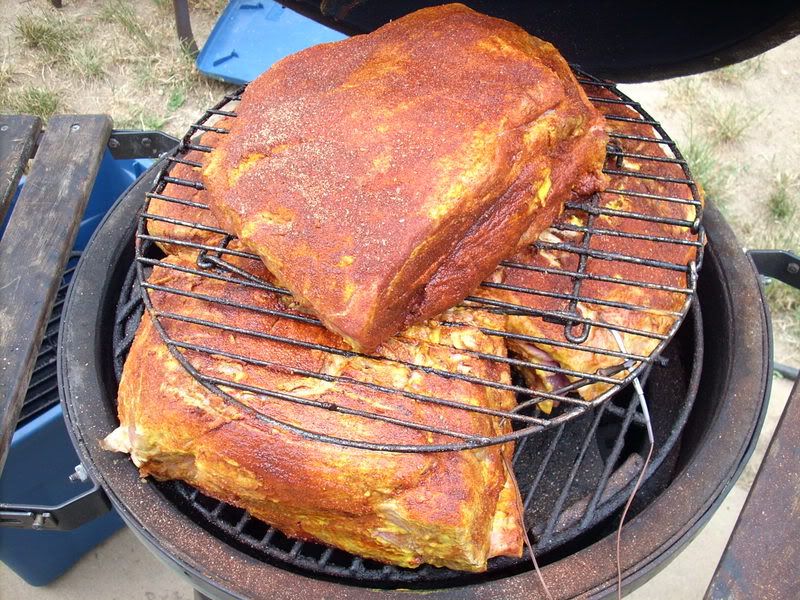
now maybe if you let them sit and dry out a little then put the rub on i may try that in the future.[p]
sorry for being so confusing![p][p]
happy eggin
tb
happy eggin
TB
Anderson S.C.
"Life is too short to be diplomatic. A man's friends shouldn't mind what he does or says- and those who are not his friends, well, the hell with them. They don't count."
Tyrus Raymond Cobb
-
GirlyEgg,
You are already invited!
-
Big'un,
Brine is a salt/water combo, so what you're saying technically about brining is correct. However, osmosis doesn't have to include salt. It happens when a solvent moves across a semi permeable membrane separating two solutions of different concentrations. Sugar and water is another easy example
-
PigsEye,
From what I read it has to include salt, to raise the specific gravity, I guess. With a higher specific gravity, the brine would be allowed to move into the meat,right. I'm glad you posted, BTW, because if there is a way to brine without all that salt, I'm all for it! Just help me to understand how and why it works.
-
Big'un,[p]How Brining Works
Moisture loss is inevitable when you cook any type of muscle fiber. Heat causes raw
individual coiled proteins in the fibers to unwind -- the technical term is denature -- and
then join together with one another, resulting in some shrinkage and moisture loss.
Normally, meat loses about 30% of its weight during cooking. But if you soak the meat in
a brine first, you can reduce this moisture loss during cooking to as little as 15%
according to Dr. Estes Reynolds, a brining expert at the University of Georgia.
Brining enhances juiciness in several ways. First of all, muscle fibers simply absorb
liquid during the brining period. Some of this liquid gets lost during cooking, but since
brined meat is in a sense more juicy at the start of cooking, it ends up juicier. Brined
meats typically weigh six to eight percent more than they did before brining -- clear proof
of the water uptake. Some meat available in the grocery store is brined, or pumped, to
increase juiciness, especially frozen turkeys or frozen skinless, boneless chicken
breasts. Another way that brining increases juiciness is by dissolving some proteins. A
mild salt solution can actually dissolve some of the proteins in muscle fibers, turning
them from solid to liquid.
Of all the processes at work during brining, the most significant is salt's ability to
denature proteins. The dissolved salt causes some of the proteins in muscle fibers to
unwind and swell. As they unwind, the bonds that had held the protein unit together as a
bundle break. Water from the brine binds directly to these proteins, but even more
important, water gets trapped between these proteins when the meat cooks and the
proteins bind together. Some of this would happen anyway just during cooking, but the
brine unwinds more proteins and exposes more bonding sites. As long as you don't
overcook the meat, which would cause protein bonds to tighten and squeeze out a lot of
the trapped liquid, these natural juices will be retained.
Brining Basics
How long to brine depends on the size and type of meat you've got. Larger meats like a
whole turkey require much more time for the brine to work. Small pieces of seafood like
shrimp shouldn't sit in a brine for more than half an hour. In fact, any meat that's brined
for too long will dry out and start to taste salty as the salt ends up pulling liquid out of the
muscle fibers. (Be sure not to brine meats that have already been brined before you buy
them, such as "extra-tender" pork, which has been treated with sodium phosphate and
water to make it juicier.)
It's vital to have a brine with the correct salt concentration, especially for lengthy brining
times. Any food-safe nonreactive food-grade container is fine for brining. Plastic food
storage bags or oven cooking bags work well - place the filled bag in a large bowl or pan
to catch any drips and refrigerate. Discard the brine after use; for safety reasons, it
should never be reused. Whatever you're brining, remember to rinse the meat or fish
well afterward to remove any surface salt. Properly brined meat shouldn't taste salty, just
very juicy with good flavor. Sugar can also be added to the brine solution for a nice,
golden color to the skin of grilled poultry (or use apple juice as the brining liquid), but salt
is the key ingredient for meat juiciness[p]
From an article by Shirley O. Corriher- FineCooking, July 2005
-
Fidel,
here is what i had saved in my file[p]happy eggin
tb[p][p]
/05
[p]
Chapter 1 ? The ?Why? and ?What? of Brining.[p]To Brine or Not to Brine ? That is the Question.[p]We?ve all had that chicken or turkey that really tasted dry and tough and chewy after smoking.? Ever had leftovers that were dry?? Brining may be one solution to help you with these problems.[p]Brining gets a lot of questions and interest and this is my attempt to try and help you learn about it.? I?m not an expert, just someone who?s been doing it a while and I?ve learned a lot through research and trial and error.? I?ll provide information and sources here hopefully to help you understand why you WANT to do this for your next piece of poultry.? [p]Give this Brining 101 a read and try it.? [p]Let me know what you think.? You can email me at brining@thebbqzone.com
If you want more information, please see my links in ?references.?[p]If you already know about brining, skip the ?background? and go to the next chapter.
Background:
Brining is not new.? Soaking food in salt water has been used by cooks and restaurants for many years.? Lately however, with the advent of the Internet, we?re able to share information and learn about new methods much easier and faster and Brining has now become a ?hot? topic.[p]According to the Food Safety and Inspection Service (note1) the verb "brine" means to treat with or steep in brine.? Brine is a strong solution of water and salt.? A sweetener such as sugar, molasses, honey, or corn syrup may be added to the solution for flavor and to improve browning.[p]The brining of meats is an old process used for food preservation. Before refrigeration, heavy amounts of salt were used to preserve meats for long periods of time.?? Now, we use much smaller quantities of salt, mixed with other spices and herbs, achieving increased flavor in the meat as well as other benefits.? Brining in a saltwater mixture before you smoke typically will add flavor, tenderness and typically reduces cooking times. Our poultry and pork have much less fat than they used to, which means they tend to dry out more quickly when cooked and to be less flavorful than in the past.[p]Brining is chemistry in action.? The chemistry behind brining is actually pretty simple.
Osmosis:
Meat already contains salt water. By immersing meats into a liquid with a higher concentration of salt the liquid is absorbed into the meat. Any flavoring added to the brine will be carried into the meat with the saltwater mixture. And because the meat is now loaded with extra moisture it will stay that way longer while it cooks.
Protein modification:
Brining alters the chemical structure of proteins by breaking some of the bonds that give proteins their shape.? The salt denatures the meat proteins, causing them to unwind and form a matrix that traps the water. According to David Krauss, a professor of biology at Boston College, those bonds are sensitive to changes in temperature, acidity and salinity, causing the proteins themselves to break down a bit in brines and allowing the salt, sugar, and other flavoring agents to permeate the food's flesh.
Salt:
Salt has a couple of efforts for poultry, it dissolves protein in muscle causing the to change and trap more moisture.? Combine Protein Modification and Salt and you get a reduced moisture loss during smoking.? [p]The results: juicier, tender and more flavorful.
Cures in Brines:
There are a lot of brines out there that include ?cures?.? Cures are also from the old school before refrigeration, you needed to cure the meat to store it.? Bacteria LOVES to grow in meats when they are in the temperature range of 40 to 140 and cures help prevent this growth.? If you are not sure you can guarantee that your brine will stay below 40 during the brining soak, you may want to use a brine with a cure in it.? Cures go by the names of Tenderquick, Prague Powder, and others.? [p]According to Morton Salt (note2):[p]Brine curing is also popular for curing meat. This method is also called a sweet pickle cure. Brine curing involves mixing the curing salt with water to make a sweet pickle solution. The meat is cured with this brine by injecting the brine using a meat pump or by soaking the meat for a specific time. Curing takes place in the refrigerator and the meat is cooked after curing. Often larger cuts of meat and poultry such as hams and turkeys are injected with a sweet pickle cure. Smaller products including whole chickens and fish may be soaked in a curing brine solution.[p]
Remember:[p]Brining actually provides a cushion for cooking, so you can even overcook by a few degrees and the item will remain moist.[p]Instead of seasoning outside ? brining puts the flavor inside.[p]Because water is a heat conductor you will typically find that a brined item will cook faster than an non-brined item
Chapter 2 ? Common Questions and Answers about Brining.[p]Below are some of the questions I?ve been asked about Brining.? Do you have any?? Send me e-mail at brining@thebbqzone.com[p]Question:? "What's the difference between brining and marinating?"
Answer:?? Brining involves salt and osmosis to exchange the fluid in the brine with the water inside the meat.? Marinating used acidity to break down the texture of the meat.? You can actually do both if your marinate has salt in it.[p]Question:? Can I adjust the amount of salt in the brine without affecting the brining process?
Answer:?? Yes.? As long as you follow the basic and have a salty solution, Osmosis will have the desired effect.? Although if you adjust it below 1 cup or ? cup, you?re just ?soaking? in salt water, not brining.? Just because a brine has salt in it, however, doesn?t mean you?re going to get a salty end product.? Try two things.?
One: rinse the meat really well to get the salt off the outside (remember, Osmosis puts the salt solution inside so you?re not washing off the flavors).?
Two: add a sugar (white, turbinado, brown) to your solution to cut the salt, try for example 2/3 cup of Kosher salt and 2/3 cup of white sugar to a gallon of water.
I recommend starting with a recipe and it?s amount of salt, try these two tricks and see if that gives you the desire effect.? Remember brining requires a specific concentration of salt to water.? Don?t cut back too far.[p]Question:? The end product, after smoking, tastes over-seasoned and looks ?mushy.? Why?
Answer:?? See the discussion about the affect of acidity on a brine solution.? Also, anything left in a brine too long will taste over-seasoned.? Keep good logs and what you brined, how long it was brined and the results.? Next time you?ll know how long is ?too long.? [p]Question:? My brine doesn?t have sugar in it and sometimes the chicken comes out so off, uh, gray looking.
Answer:?? Add some sugar to your brine.? The same reason that you use sugar for carmelization in regular cooking will work here.? But be careful, if you add too much sugar to a brine and use it on pork ? you?ll get a hammy taste.? A sugar brine is what is used by many companies to create their hams.? Now you know![p]Question:? Can you change flavors with brine? Can you add additional flavors to the brine easily? herbs spices etc.
Answer:? Once you?ve tried a brine, experiment. Just like any recipe, feel free to modify the other flavorings and spices, but the salt/water mixture/ratio shouldn?t be modified significantly.[p]Question:? If you can keep your brined fowl down below 38?the entire time, and are always cooking to an internal of 160?+ is TenderQuick necessary.
Answer:?? Possibly.? The purpose of TenderQuick is food safety.? If you keep your brine below 40?, you?re not in the Food Safety DANGER ZONE of 40? to 140?[p]Question:? Why do I have to let the solution cool before I add the meat?
Answer:?? See answer above about temperature.? Remember, remember, remember the DANGER ZONE for 40 to 140.? Avoid at all cost!? If you add a hot solution and create a brine that?s in this range (mix a hot solution and cold water and it WILL be in this range) you?re asking for trouble.? And, NO, you can?t add it to a really hot brine ? then you?re cooking![p]Question:? Why Kosher Salt?? Can?t I use table or regular sea salt?
Answer:?? There are some very significant differences in the amount of salt, by weight in kosher salt vs. regular salt.? You can?t substitute them one for one.? I suggest the larger, coarser Kosher so that you get a more consistent brine.? If you MUST use regular salt, I would recommend decreasing salt by ? the amount to start with.[p]Question:? I can't Tenderquick or Kosher Salt at the local grocery store's. I found some Morton's Pickling & Canning Salt, Will this work? What does TenderQuick do, are there replaceable products? Do I need a ?cure? in there or just use salt?
Answer:?? Cures are NOT required in brines.? I always used them early in my brining trials because that is what the recipe called for.? But in doing a lot of research, it?s not required.? It is a cure and as such, is typically used in places where you?re worried about the Food Safety DANGER ZONE of 40? to 140?.? You don?t have to have the cure if you?re sure of your temperatures.? Keep it below 40?.? Pickling Salt will work.?
Don?t use other salts than Kosher (keep reading, there is more info below).? You can find it, believe me, it?s in every store.[p]Question:? What is the cook's reason to brine, anyway?
Answer:?? See the section on Brining Background and you?ll understand why it is something you should try[p]Question:? How long to brine and is there too long?? Can you brine too long? Does the weight of the bird matter?
Answer:?? See the brine time section for recommended times.? As far as the bird just follow the directions in the basic brine times and adjust if your bird is bigger.? You can brine too long, so follow the recommended times, or less, never add more time.[p]Question:? Does the strength of the brine matter (dilution factor)?
Answer:?? Yes, if you don?t have a high enough solution of salt to liquid, you?re just soaking.? I haven?t seen a specified percentage, but the minimum I usually see is ? cup of Kosher salt to 1 gal or water.? The scientist out there can tell us if that?s 20% solution or not.[p]Question:? Can you brine a frozen bird?
Answer:?? No.? The brine and osmosis won?t be able to work on a frozen product and if you let the bird since in a salty solution longer than recommended, you?ll have a less than good quality bird ? mushy and over-seasoned.[p]Question:? Should I use a rub if I brined my bird?
Answer:?? You don?t have too.? It will depend on the flavorings of the brine.? A lot of times I do, so that the outside gets a nice flavor from the rub and the insides gets more flavors from the brine.[p]Question:? How scared should I be brining & cooking a bird for a party of 15 if I've never brined before? In other words, how hard is it? And, is it easy to screw up?
Answer:?? I?ve seen you cook and you should be real scared.? No, really.? Okay, I?m teasing.? I always recommend practicing before any large party.? You may not like the particular herbs/seasonings in a particular rub.? Get to know the effects and flavors of brining before your party.? Remember the first time you smoked a brisket ? would you feed that to your friends.? Practice, but don?t tell them when you do it and see if they notice ? they will.[p]Question:? Can you brine and inject?
Answer:?? You don?t need to, if you?re going to inject the brine.? Osmosis works for you ? so you don?t have to.? Now, if you want to inject your own flavorings after the brine, feel free.[p]Question:? Should you pay attention to lowering the salt in your rub, if you use a traditional salt brine??
Answer:?? Good Question.? Many cooks don?t realize how much salt is in everything they?re using.? By using a brine, you?re adding more.? As I always recommend, you?ll have to be the judge, so if you?re worried about being too ?salty?, cut back the salt somewhere.? Most of my rub recipes have little to no salt in them for this reason, so I can add salt as needed.[p]Question:? Food nutritionists say honey breaks down at 160?,so should you wait till after you boil the brine and it cools some to add the honey?
Answer:? I?m not a food nutritionists, but I haven?t notice a lack of honey taste in my Honey Brine because I put the honey in when it was too hot.? I mix my brines by putting the salts and sugars into solution and bring it to a rolling boil.? Then I take it off the heat and add the honey. If you want, wait until you solution cools below 160? before adding your honey.[p]Question:? Can the brine be used for a second time for the same food type?
Answer:?? Food Safety 101 ? Don?t every reuse a brine once it?s had food in it.? I?m sure the food scientists out there can tell us how and when and why you might be able to, but I don?t recommend doing it.? The whole issue is cross-contamination, do you want to get food poisoning?? Nope, not me.? If you feel you can accomplish food safety and reuse a brine, it?s all up to you.
?
Question:? Instead of water, can I use something else, like Coca-Cola, Orange Juice, Apple Juice, Beer, Etc)
?????????
Answer:?? Trick question, but a good one.? Yes you can substitute other liquids for the water that is the base for a brine ? BUT ? and this is a big but, don?t make the solution Acidic.? Remember that a brine uses Osmosis and Marinades use Acid.? If you make your solution acidic (like using a Orange/Citrus juice) you?ll actually get a mushy exterior on the meat.? The reason is the length of time your brine works vs. the length of time for a marinade.? You can use a little acid, but if you add too much, watch out for the effect that acid has on your meat.? If you do add acid, reduce your brining time accordingly.[p]Question:? My refrigerator isn?t big enough to hold the brine in a big bucket, what do I do?
Answer:?? Get another refrigerator! (sorry, bad humor).? Be creative, but remember two things.? Temperature and Air are your enemies.? Keep the temperature below 40 and the meat completely covered by brine.? Once the solution is made, you can break it up into smaller quantities, for example, take a zip lock back, put 4 to 6 chicken breast in there and add brine to cover, close it after squeezing out the air and you?ll do fine.? For turkey, I?ve see people add the brine to a larger garbage bag (clean one of course) add the turkey, seal it.? Then place this inside a larger bag, incase the first one leaks.? Just keep temperature and air in mind.[p]Question:? Can I brine Pork?
Answer:?? Since the worm that causes Trichinosis is no longer present in American pork, it is now safe enough that it doesn't have to be cooked well done. However, Jim McKinney, chef-owner of Club Grotto in Louisville, Ky., couldn't convince his customers of that. "If they see pink in a pork chop, they think they're going to get sick," he says. By brining his 12-ounce pork chop for 24 hours in a mixture of kosher salt, brown sugar, fresh rosemary and juniper berries, some of the blood is drawn out and McKinney can cook it to just 140 degrees without hearing any complaints. "And the flavor it packs is incredible," he says. His brine is 28 percent salt and 10 percent brown sugar(Note3).[p]
Chapter 3 ? Basic Times for Brines[p]How Long to Brine?
It all depends (don?t you love that answer)?? The size of the item your brining, the relative strength of the brine and your individual preferences will all make a difference.? I highly recommend you experiment, keep good notes and you?ll determine your own answer.? Before you experiment, read the Questions and Answers chapter for some ideas and concerns about changing times and solutions.[p]These are ?sample? times.? Feel free to adjust ?SLIGHTY- but remember:[p]If you?re worried about your first brine, go with a time in the middle of the range.? If that was too salty, try lowering your time.? After than, you can adjust your solution if you still think it?s too salty (see the Q&A section for more).[p]Item Brine Time
Whole Chicken (4-5 Pounds) 8 to 12 hours
Chicken Parts 1 ? hours
Chicken Breasts 1 hour
Whole Turkey 24 -- 48 hours
Turkey Breast 5 ? 10 hours
Cornish game hens 2 hours
Shrimp 30 minutes
Pork chops 12-24 hours
Pork Tenderloin (whole) 12-24 hours[p]
Chapter 4 ? Brining Recipes[p]Preparation:
If you?re new to brining, read all the information in the Q&A section for some of the common mistakes and concerns.[p]To prepare your solution, there are two methods.? Remember that whatever your mixing needs to be thoroughly into solution before using.[p]Method 1:? Cold.? Dissolve salt in a cold or room temperature water, add other ingredients and mix thoroughly.? All solution to set overnight.? Then use.[p]Method 2:? Heated.? Mix salt, sugar and water in a pot and bring to a low/rolling boil.? Take off the heat and add other flavorings.? Let cool.[p]When brining, always use stainless steel, glass or food-grade plastic containers.[p]Totally submerge in solution and store in a refrigerator for the recommended time.[p]As a general starting point, take one gallon of water and add ? (preferable - but you can use up to a cup) of salt (kosher is best !), 1/2 cup of sugar and then the rest is up to you. Sliced onions are nice, a few cloves of crushed garlic add a nice flavor and then there's the spices and herbs.
Simple Brine I:
? cup Kosher Salt
? cup Sugar
1 Gallon Water[p]Simple Brine II:[p]? cup Kosher Salt
? cup Brown Sugar
1 Gallon Water
? cup Coarse Black Pepper
Smokin? Okie?s Holiday Turkey Brine:
1 gal. water
1 c. coarse kosher salt
? c. soy sauce
? c. white sugar
? c. brown sugar
? c. honey
? c. apple cider vinegar
4 Tbsp. black pepper
3 - 4 Tbsp. chopped garlic
1 tsp. Allspice
1 oz. Morton?s Tenderquick (optional)[p]Measurements ?How much is an Ounce??
2 tablespoons = ounce
6 teaspoons = ounce
Heat water/salt/sugars to rolling boil.? Take off burner, add other ingredients.? Allow mixture to cool before placing meat into solution? Place 10 - 12 lb. turkey in non-reactive container and cover with brine. Refrigerate for minimum of 24 hours, preferably 48 hours. Load smoker?s wood box with 4 oz. hickory wood. Remove turkey from the refrigerator and discard brine.? Rinse turkey three times, pat dry and lightly rub skin with mayonnaise.? Apply light coating of Cookshack Spicy Chicken Rub.? Place turkey in smoker and smoke cook at 200 degrees F for one hour per lb.? I like cherry or apple wood for my turkey.? Smoke until internal temperature of breast reaches 160 to 165. Remove from smoker and allow to sit for 30 minutes before slicing.
Note: ?About the ?optional? Tenderquick.? If you smoke a turkey at temperatures of 180? to 225? F., you might want to consider using the Tenderquick.? The turkey will be spending a lot of time in the DANGER ZONE of 40? to 140?, so just be aware of this.? If in doubt, use the Tenderquick.? [p]Others:
National Turkey Federation Brined Turkey
BBQ FAQ Brining Recipes
Shake?s Honey Brine & Fried turkey:
1/2 Gallon (64 oz) will do 2 turkeys; 2 oz each leg, 2 oz each thigh, 4 oz each breast.
1 gallon water
1 cup pickling salt
1 oz tender quick (2 tbsp)
1 cup honey
3 bay leaves
1/4tsp ground cloves
1/2tsp pickle spice
Smokin Okie?s Original Brine
1 gal water
1 cup kosher salt
1 ounce tender quick
1 cup honey
3 bay leaves
1/4 tsp. ground cloves
1/2 tsp pickling spices
Simple Brine III:
1 cup Kosher salt
? cup Molasses
? cup Maple Syrup
? cup Lemon Juice
? cup Cracked Black pepper
? cup Crushed Red Peppers
2 Tablespoons minced garlic
Simple Pork Brine:
1 gal. Water
?? c. coarse kosher salt
? cup white sugar
3 Bay leaves
1 Whole Onion, cut-up[p]Rub:
3 Tablespoons Garlic
2 Sprigs, fresh Rosemary
3 Tablespoon Whole Peppercorns[p]Try this with Pork Chops.? Brine for 8 hours, using the largerst Pork Chops you can find (reduce for smaller Pork Chops).? After Brining, sprinkle the pork chops with the rub and let sit for one hour.? Smoke or Grill to an internal of 130 to 135.[p]Option 1:[p]Use a piece of flattened out Tenderloin (or even Chicken tenderloin).? Since you?re using a smaller piece of meat, brine for 2 hours.? Bread and cook as you would a normal tenderloin ?delicious.[p]Option 2:[p]Add ? of Bourbon to your brine.[p]
Chapter 5 ? Brining ?Tips & Tricks?[p]Tip:? Because water is a heat conductor you will typically find that a brined item will cook faster than an non-brined item[p]Tip:? If you want your poultry to have a golden and crispy skin it needs to sit in the refrigerator for several hours after you remove it from the brine so that the meat can absorb the moisture from the skin.? Whole poultry is the exception however. To get a crispy, brown skin whole birds should be removed from the brine, wrapped in foil or plastic and put in the refrigerator overnight or for at least 12 hours.[p]Tip:? The saltier the brine, the shorter time is required. And the brine will penetrate a chicken breast or pork chop much faster than a large thick muscle like a whole pork loin or turkey.[p]Tip:? Water is optional. Any liquid will do for brining; just keep in mind my discussion about being too acid. You can substitute some or all of the water with whatever you heart desires. Wine, beer, fruit juices (especially good is apple), or vinegars all make a good liquid base for your brine.? Just remember our discussion about making the brine to acidic.? If you add more acid to your mixture, I would decrease the brining time.[p]Tip:? Any herb, spice, sweetener, fruit, vegetable will work; let your imaginations run wild.? Think of a brine as a soup, there can be a lot of complexity in soup or just simple ones. [p]Tip:? You need enough brine to completely submerge the meat without any part being out of the liquid. Some items might need to be weighted down to stay under.[p]Tip:? How much liquid will you need?? Take the meat you plan to brine and place it in the container.? Cover with liquid.? Now you know!? Measure the amount and you?ll know how much brine to make. [p]Tip:? Almost any container will work as long as it?s non-reactive to salt. [p]Tip:? You don't want the brine cooking the meat, always add your meat to a cold brine, not a hot one. [p]Tip: ?You don?t need to boil the entire gallon of liquid to create your brine.? Start with a quart, add your salts and sugars and create a super saturated solution.? After boiling, mix your remaining liquid, thoroughly; this way you don?t have to use a really big pot to boil with. If you need to cool this super solution down quickly, mix with ice water.? [p]Tip:? Lighter more tender meats needs less brining time[p]Tip:? Denser meats like pork, need longer times.[p]Tip:? Remember that the longer you brine the stronger the flavor will be. [p]Tip:? You do not need to rinse unless you were using a high salt concentration in the brine.[p]Tip:? Want to preserve the color of the meat.? Add 1 Tablespoon of Cure (Saltpeter, Tenderquick, Prague Powder) per gallon of liquid.? This will help Another trick used by chefs is to add 1 tablespoon of saltpeter per gallon of liquid.? If the color is important to you, consider the cure.
Chapter 6 ? References[p]There are so many people throughout the Internet that have ?helped? in the production of this, by asking me questions and providing information.? I?d like to thank them all, but I can?t.? I have tried to credit those who have provided significant information.[p]Special thanks to the Members of the Cookshack Forum for all their questions and help![p]A Great resource for Brining, and the original inspiration for this ?update? on brining, is the BBQ FAQ Brining article.? See this information, by Mikey Lulejian at: http://www.bbq-porch.org/brining00.asp[p]Special Thanks to Shake for my very first brine was :
Shake?s Honey Brine Info (PDF File)[p][p]Note 1:?
Food Service.? http://www.fsis.usda.gov/OA/pubs/bastebrine.htm[p]Note 2:
Morton Salt: http://www.mortonsalt.com/recp/speb1recp.htm[p]Note 3:
Janet Fletcher, Chronicle Staff Writer n article: ? READY FOR BRINE TIME?[p]Notice:? Please contact the author, SmokinOkie, if you have any questions or corrections.
? TheBBQZone.com
nullbrining@thebbqzone.com (remove the NULL)[p]
happy eggin
TB
Anderson S.C.
"Life is too short to be diplomatic. A man's friends shouldn't mind what he does or says- and those who are not his friends, well, the hell with them. They don't count."
Tyrus Raymond Cobb
-
Big'un,
I agree with what you are saying. I was just saying that osmosis isn't isolated to salt. Brining is defined as using salt. Osmosis could occur with coke, but it wouldn't be brining. Using coke, you could get the osmotic effect. I guess it could be defined as marinating. I feel like I'm talking in circles. Gist of what I'm trying to say is brining involves osmosis, but all osmosis isn't with brine.
-
PigsEye,[p]But Coke contains salt, thereby fitting the definition of a brine. A brine is not necessarily limited to NaCl, but any solution containing a salt.[p]And the circle continues......


Categories
- All Categories
- 184K EggHead Forum
- 16.1K Forum List
- 461 EGGtoberfest
- 1.9K Forum Feedback
- 10.5K Off Topic
- 2.4K EGG Table Forum
- 1 Rules & Disclaimer
- 9.2K Cookbook
- 15 Valentines Day
- 118 Holiday Recipes
- 348 Appetizers
- 521 Baking
- 2.5K Beef
- 90 Desserts
- 167 Lamb
- 2.4K Pork
- 1.5K Poultry
- 33 Salads and Dressings
- 322 Sauces, Rubs, Marinades
- 548 Seafood
- 175 Sides
- 122 Soups, Stews, Chilis
- 40 Vegetarian
- 103 Vegetables
- 315 Health
- 293 Weight Loss Forum