Welcome to the EGGhead Forum - a great place to visit and packed with tips and EGGspert advice! You can also join the conversation and get more information and amazing kamado recipes by following Big Green Egg to Experience our World of Flavor™ at:
Want to see how the EGG is made? Click to Watch
Facebook | Twitter | Instagram | Pinterest | Youtube | Vimeo
Share your photos by tagging us and using the hashtag #BigGreenEgg.
Share your photos by tagging us and using the hashtag #BigGreenEgg.
Want to see how the EGG is made? Click to Watch
72 hour pizza dough
Comments
-
Can you describe your shaping / stretching process? Is the dough tearing on very thin parts (uneven stretching) or randomly (underdeveloped dough)? Is the dough difficult to handle? Sticking?Eggpharmer said:@paqman - thanks for the help
I've used Caputo red (https://amzn.to/2WB6dGd) and Anna Napoletana (https://bit.ly/37wQy0V) with that recipe with no noticeable difference.
Shaping - slowly getting better on being consistently round vs an odd shape
Stretching - right now, about every 3rd or 4th pie I'll tear slightly and have to reball and start over
I think I just need more practice, just got an Ooni and have only made about a dozen
I've been happy with that dough, just wondering if I could take it to another level
Caputo red at 65% should be silky smooth and easy to stretch. 60% hydration is on the low end IMHO.____________________Entrepreneurs are simply those who understand that there is little difference between obstacle and opportunity and are able to turn both to their advantage. •Niccolo Machiavelli -
That's right on order. You have to get the right cheese as well. After making Detroit two times in a row my kids politely asked me to stop making the "upside down" pizza. I was disappointed, but realized it was a compliment they only want me to make pizza regular way.paqman said:
The crust is similar with one exception, Detroit style has crunchy cheese baked all around the edges of the pizza. That brown layer in the middle of the crust (and everything above) is basically crunchy fried cheese. That’s, in my opinion, what makes Detroit style so good. Also, I think that you are supposed to have the dough, cheese, toppings and then the sauce on top. I go with pepperoni on dough, cheese, toppings, and sauce on top.SonVolt said:I'm starting to think Pizza Hut's pan pizza is technically Detroit style instead of Chicago, but round. -
Yes, brick cheese! It is fairly common here. Detroit style is surprisingly good and a good fit for the egg, better than the traditional styles IMHO. Every time I do it indoor, I trigger the fire alarm because of the high temp and fat splatter burning in smoke; I avoid that with the egg. Works well in the Roccbox too but it is a bit more work because you need to rotate the pan.RyanStl said:
That's right on order. You have to get the right cheese as well. After making Detroit two times in a row my kids politely asked me to stop making the "upside down" pizza. I was disappointed, but realized it was a compliment they only want me to make pizza regular way.paqman said:
The crust is similar with one exception, Detroit style has crunchy cheese baked all around the edges of the pizza. That brown layer in the middle of the crust (and everything above) is basically crunchy fried cheese. That’s, in my opinion, what makes Detroit style so good. Also, I think that you are supposed to have the dough, cheese, toppings and then the sauce on top. I go with pepperoni on dough, cheese, toppings, and sauce on top.SonVolt said:I'm starting to think Pizza Hut's pan pizza is technically Detroit style instead of Chicago, but round.____________________Entrepreneurs are simply those who understand that there is little difference between obstacle and opportunity and are able to turn both to their advantage. •Niccolo Machiavelli -
Is a deflector and a pizza stone both use at the same time? I am asking because some of the pizza flours are made for temps of 700 degrees or higher. Does raising the stone higher in the dome help ie using the adjustable rig from cgw
-
paqman said:Eggpharmer said:Questions for you dough experts - I've been using the following recipe (https://ooni.com/blogs/recipes/classic-pizza-dough) and been very happy with it. Usually doing a 48-72 hr cold ferment after mixing.
I've used two different 00 flours and did not notice an appreciable difference between the two. I've also tried 50/50 00/AP and like the 100% 00 much better.
Any tips/recommendations to make better?
Seems like most of you are using higher hydration. What are the advantages of the higher hydration?
I'm already having some trouble with shaping/stretching the above recipe so I'm not sure if I'm ready for that yet. Slowly getting better with practice so may be able to attempt that soon.
Thanks for the help.
@eggpharmer
For me, the main benefit of higher hydration is that I get better rise and bigger bubbles at bake time. The dough also doesn’t require as much kneading.
00 is a mill size standard and means nothing about the other characteristics of the flour that are critical to good pizza. Some 00 flours are pasta flours and some others are pizza flours. This will have an impact on optimal water absorption and fermentation time. I use 65% hydration with my typical mixture (80% Caputo red bag/20% Caputo Nuvola Super). I typically do 14 hours room temperature bulk fermentation, followed by a couple of days cold fermentation (balled).
607 g flour (486 g 00 Caputo red / 121 g Caputo Nuvola Super)
395 g room temperature water (65% hydration)
17 g salt
0.5 g Instant Dry Yeast (IDY)
I mix the flour, salt, and yeast together. Add the water. Mix with the dough hook in the Kitchen Aid for 5-10 minutes.
I make a big ball and transfer to a bowl sprayed with oil and cover. Let ferment at room temperature for 14 hours until at least doubled in size (assuming that the temp is 20C/68F).
Split the dough and shape it into balls, transfer to deli containers sprayed with oil. Store in fridge for a couple of days until ready to use. Take out 2-3 hours before using the dough. It is best after 2-3 days but good for a week.
Before stretching, I cover the dough with flour (rice flour or semola) to prevent sticking.
I adjust the yeast based on temperature and fermentation time but above is pretty much my typical recipe.
Technically, the optimal room temperature fermentation time for the mix of flour that I am using is 24 hours but with the added cold fermentation, it is good.
AP flour doesn’t hydrate as well so you are probably better sticking to 60% hydration but definitely try higher.
What gives you trouble when stretching/shapping?
What's the deal with some pizza doughs having oil and some not? Is that a NY vs Neapolitan thing?South of Nashville - BGE XL - Alfresco 42" ALXE - Alfresco Versa Burner - Sunbeam Microwave -
My opinion is that the egg is not the best option for doughs requiring temps above 500F. Raising the stone helps but I’m pretty sure that it contributes to ruining gaskets and the bands.ThrasherIII said:Is a deflector and a pizza stone both use at the same time? I am asking because some of the pizza flours are made for temps of 700 degrees or higher. Does raising the stone higher in the dome help ie using the adjustable rig from cgw
____________________Entrepreneurs are simply those who understand that there is little difference between obstacle and opportunity and are able to turn both to their advantage. •Niccolo Machiavelli -
Fat in the dough changes the texture, it softens the dough. It also reduces tolerance to eat. Traditional Neapolitan doesn’t have oil. Milk is another dough conditioner commonly used.SonVolt said:paqman said:Eggpharmer said:Questions for you dough experts - I've been using the following recipe (https://ooni.com/blogs/recipes/classic-pizza-dough) and been very happy with it. Usually doing a 48-72 hr cold ferment after mixing.
I've used two different 00 flours and did not notice an appreciable difference between the two. I've also tried 50/50 00/AP and like the 100% 00 much better.
Any tips/recommendations to make better?
Seems like most of you are using higher hydration. What are the advantages of the higher hydration?
I'm already having some trouble with shaping/stretching the above recipe so I'm not sure if I'm ready for that yet. Slowly getting better with practice so may be able to attempt that soon.
Thanks for the help.
@eggpharmer
For me, the main benefit of higher hydration is that I get better rise and bigger bubbles at bake time. The dough also doesn’t require as much kneading.
00 is a mill size standard and means nothing about the other characteristics of the flour that are critical to good pizza. Some 00 flours are pasta flours and some others are pizza flours. This will have an impact on optimal water absorption and fermentation time. I use 65% hydration with my typical mixture (80% Caputo red bag/20% Caputo Nuvola Super). I typically do 14 hours room temperature bulk fermentation, followed by a couple of days cold fermentation (balled).
607 g flour (486 g 00 Caputo red / 121 g Caputo Nuvola Super)
395 g room temperature water (65% hydration)
17 g salt
0.5 g Instant Dry Yeast (IDY)
I mix the flour, salt, and yeast together. Add the water. Mix with the dough hook in the Kitchen Aid for 5-10 minutes.
I make a big ball and transfer to a bowl sprayed with oil and cover. Let ferment at room temperature for 14 hours until at least doubled in size (assuming that the temp is 20C/68F).
Split the dough and shape it into balls, transfer to deli containers sprayed with oil. Store in fridge for a couple of days until ready to use. Take out 2-3 hours before using the dough. It is best after 2-3 days but good for a week.
Before stretching, I cover the dough with flour (rice flour or semola) to prevent sticking.
I adjust the yeast based on temperature and fermentation time but above is pretty much my typical recipe.
Technically, the optimal room temperature fermentation time for the mix of flour that I am using is 24 hours but with the added cold fermentation, it is good.
AP flour doesn’t hydrate as well so you are probably better sticking to 60% hydration but definitely try higher.
What gives you trouble when stretching/shapping?
What's the deal with some pizza doughs having oil and some not? Is that a NY vs Neapolitan thing?
I personally don’t use them except for Detroit style where the dough is basically folded in the oil so some of it is incorporated in the dough.
Eggs are another one. I would LOVE to find a good egg dough recipe. There is a local pizza joint that adds egg yolks to their dough. It is yellow and delicious.____________________Entrepreneurs are simply those who understand that there is little difference between obstacle and opportunity and are able to turn both to their advantage. •Niccolo Machiavelli -
Reduces tolerance to eat?South of Nashville - BGE XL - Alfresco 42" ALXE - Alfresco Versa Burner - Sunbeam Microwave
-
HeatSonVolt said:Reduces tolerance to eat?______________________________________________I love lamp.. -
Oh, duh. Nevermind, the last Pizza Bible chapter was going on about "digestibility" of pizza and some other hokey nonsense.South of Nashville - BGE XL - Alfresco 42" ALXE - Alfresco Versa Burner - Sunbeam Microwave
-
That's funny, I did the same. I also always set off the smoke detector when I wok indoors.paqman said:
Yes, brick cheese! It is fairly common here. Detroit style is surprisingly good and a good fit for the egg, better than the traditional styles IMHO. Every time I do it indoor, I trigger the fire alarm because of the high temp and fat splatter burning in smoke; I avoid that with the egg. Works well in the Roccbox too but it is a bit more work because you need to rotate the pan.RyanStl said:
That's right on order. You have to get the right cheese as well. After making Detroit two times in a row my kids politely asked me to stop making the "upside down" pizza. I was disappointed, but realized it was a compliment they only want me to make pizza regular way.paqman said:
The crust is similar with one exception, Detroit style has crunchy cheese baked all around the edges of the pizza. That brown layer in the middle of the crust (and everything above) is basically crunchy fried cheese. That’s, in my opinion, what makes Detroit style so good. Also, I think that you are supposed to have the dough, cheese, toppings and then the sauce on top. I go with pepperoni on dough, cheese, toppings, and sauce on top.SonVolt said:I'm starting to think Pizza Hut's pan pizza is technically Detroit style instead of Chicago, but round. -
Yes heat 😂nolaegghead said:
HeatSonVolt said:Reduces tolerance to eat?
When you add oil/milk/sugar to dough, I feel it has tendency to burn____________________Entrepreneurs are simply those who understand that there is little difference between obstacle and opportunity and are able to turn both to their advantage. •Niccolo Machiavelli -
SonVolt - also on the quest to make a good NY Style pizza, using All Trumps and have a copy of the Pizza Bible. His basic recipe/process is a good starting point. I don't use diastatic malt and have been making pizza every Friday since the "shelter in place" started. I go between a 1-day and 3-day cold ferment (more based on available time and/or room in the fridge) but honestly have noticed the largest change in my dough when I started to have the kitchen aid mixer "kneed" the dough for 10 minutes like paqman indicated.SonVolt said:Oh, duh. Nevermind, the last Pizza Bible chapter was going on about "digestibility" of pizza and some other hokey nonsense.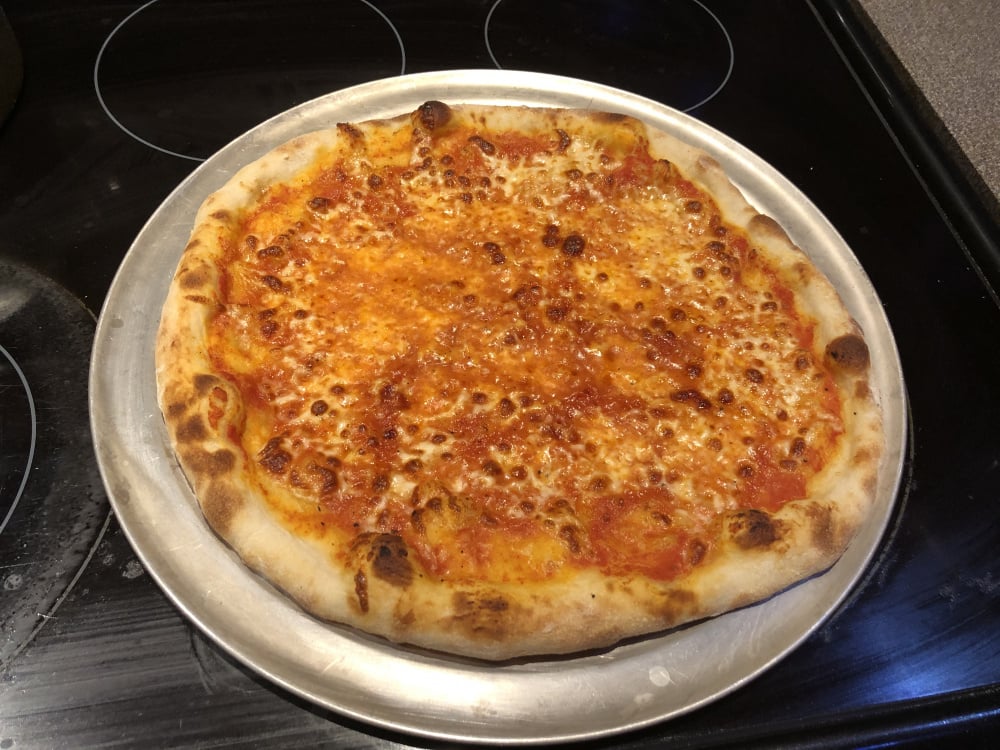
-
@avale many flours have diastatic malt already added, I guess that’s why it is rarely mentioned. It helps quite a bit when adding to 00 or organic flours that don’t already have it as an additive. I never add diastatic malt when doing Neapolitan dough, I usually keep it for detroit style and bread.avale said:
SonVolt - also on the quest to make a good NY Style pizza, using All Trumps and have a copy of the Pizza Bible. His basic recipe/process is a good starting point. I don't use diastatic malt and have been making pizza every Friday since the "shelter in place" started. I go between a 1-day and 3-day cold ferment (more based on available time and/or room in the fridge) but honestly have noticed the largest change in my dough when I started to have the kitchen aid mixer "kneed" the dough for 10 minutes like paqman indicated.SonVolt said:Oh, duh. Nevermind, the last Pizza Bible chapter was going on about "digestibility" of pizza and some other hokey nonsense.____________________Entrepreneurs are simply those who understand that there is little difference between obstacle and opportunity and are able to turn both to their advantage. •Niccolo Machiavelli -
If I understand correctly, you only need diastatic malt for home oven temps <=550F right? I think it's already an additive to All Trumps so no need to add more, but if I'm cooking at ~750F there's no need for it regardless of flour correct?South of Nashville - BGE XL - Alfresco 42" ALXE - Alfresco Versa Burner - Sunbeam Microwave
-
Yes, malt sugar is sugar and sugar burns. The enzymes in the malt convert more starches to sugars. Nice for browning and the foam but reduces temperature tolerance. At least that's my assumption not having used it as an adjunct.SonVolt said:If I understand correctly, you only need diastatic malt for home oven temps <=550F right? I think it's already an additive to All Trumps so no need to add more, but if I'm cooking at ~750F there's no need for it regardless of flour correct?______________________________________________I love lamp.. -
Yes - The author of the Pizza Bible book, Tony Gemignani, based his book around making pizza in a home oven and so most of his recipes call for adding additional diastatic malt. I'm also cooking in the 650 to 750 range.
-
On the egg? You will ruin your bands and gasket. I had to replace my bands twice and I’m pretty sure it is because of pizza at high temperature. Better stick to a recipe that calls for 500-550F.avale said:Yes - The author of the Pizza Bible book, Tony Gemignani, based his book around making pizza in a home oven and so most of his recipes call for adding additional diastatic malt. I'm also cooking in the 650 to 750 range.____________________Entrepreneurs are simply those who understand that there is little difference between obstacle and opportunity and are able to turn both to their advantage. •Niccolo Machiavelli -
No, I use the egg for low and slow. I’m using a BakerStone with their dedicated burner for pizza.



Categories
- All Categories
- 184.1K EggHead Forum
- 15.8K Forum List
- 460 EGGtoberfest
- 1.9K Forum Feedback
- 10.4K Off Topic
- 2.2K EGG Table Forum
- 1 Rules & Disclaimer
- 9K Cookbook
- 13 Valentines Day
- 93 Holiday Recipes
- 224 Appetizers
- 520 Baking
- 2.5K Beef
- 88 Desserts
- 167 Lamb
- 2.4K Pork
- 1.5K Poultry
- 33 Salads and Dressings
- 324 Sauces, Rubs, Marinades
- 548 Seafood
- 175 Sides
- 122 Soups, Stews, Chilis
- 44 Vegetarian
- 102 Vegetables
- 313 Health
- 292 Weight Loss Forum