Welcome to the EGGhead Forum - a great place to visit and packed with tips and EGGspert advice! You can also join the conversation and get more information and amazing kamado recipes by following Big Green Egg to Experience our World of Flavor™ at:
Want to see how the EGG is made? Click to Watch
Facebook | Twitter | Instagram | Pinterest | Youtube | Vimeo
Share your photos by tagging us and using the hashtag #BigGreenEgg.
Share your photos by tagging us and using the hashtag #BigGreenEgg.
Want to see how the EGG is made? Click to Watch
Open fire cooking tips needed

onpoint456
Posts: 204
Hey all, next week we are taking the fam camping with another family and I need some tips for cooking over a fire. I am responsible for cooking one night and the consensus is steak.
How should I approach cooking them over a fire? Try reverse sear? Directly over coals? I'll be bringing my CI and will have a propane stove if necessary. My concern is temp control, I plan to bring I a meat probe and therma pen.
Any tips appreciated
How should I approach cooking them over a fire? Try reverse sear? Directly over coals? I'll be bringing my CI and will have a propane stove if necessary. My concern is temp control, I plan to bring I a meat probe and therma pen.
Any tips appreciated
Comments
-
I would say directly over coals, especially if you have someway of adjusting your grid height.
@SciAggie (bat signal)Lawrenceville, GA -
With unknown equipment, I would go with a two zone fire. That way you have a landing space if things get out of control. You are camping, so I wouldn’t worry about gourmet techniques. It will be great just being outdoors with family, friends and an open flame. I normally reverse sear, but in this case, I would just make it simple and get a bed of coals going, S&P the steaks and put them on. If fire flares up, move them to the safe zone. Enjoy and have fun. Just my opinion though.Memphis, TN
LBGE, 2 SBGE, Hasty-Bake Gourmet -
A while ago, I became obsessed with live fire cooking. Since then, I've been cooking on a Santa Maria Grill a couple of times/week. It's damn challenging. Fire defies control; the heat dispersal resists prediction; the wood needs regular replenishing. That said, when you get it right, it beats every other method. There's just something about wood, fire, and meat that can't be topped. Anyway, here are some pointers...
1) The quality of your fire will determine the quality of your dinner. I can't emphasize this enough. If you don't have a great fire from the start, you won't have great food at the end. Build a big fire. Bigger than you think you need. Roaring wood piles may look huge at first, but they burn down fast, and if you don't have enough fuel, your coal bed will be patchy, leading to uneven heat. Do your best to build a fire that burns hot and even from the moment it catches (if you're new to building fires, let me know, and I'll give instructions).
2) Start your fire early, an hour or more before you plan to cook. Let the wood burn until it turns scaly, approaching coals, then bust it up with a shovel or some other fire tool. Rake the resulting coals into an even bed beneath your cooking grate. You can start cooking now, but if you've got time, throw more wood on. Burn it to coals. Throw more on. Burn it to coals. Rinse and repeat. The bigger the bed, the better the heat and the stronger the flavor.
3) It's hard to know exactly how to guide your heat level (steaks vary by cut and thickness too much for me to say), but if you're after a seared rib eye or filet, you'll want the fire hot enough so that when you place your palm an inch above the cooking surface, you can't hold it there for more than 3 seconds. If you're doing a roast of some sort, then you'll want the fire set so that you can't hold your hand above the grate for more than 5-7 seconds.
4) Don't use a skillet. Get your meat over the fire. You worked your donkey off to build it. Don't squander all of that work by shoving an iron buffer beneath your food.
5) In addition to seasoning them, coat your steaks in a neutral-flavored oil and keep the oil handy for spot applications. Used surgically, the oil will prevent dry edges and rough char. It will also enhance smoke retention. But be delicate; oil can cause flare-ups. Hit the oil with seasonings and vinegar (vinegar helps reduce flare-ups) if you want.
6) If you need to throw more wood on mid-cook, be careful; fresh smoke turns food into a bitter ashtray. Consider removing your food while the wood catches and burns. Likewise, be careful about blowing on ashy coals; doing so can smother your dinner in a hurricane of ash.
7) If you want to cook veggies, make sure you've only got coals beneath them. Fresh smoke will destroy vegetables. I usually cook veggies after meats.
As for cuts, any steak will do, but if you can get your hands on tri-tip, that's my live-fire favorite (it's a big thing here in California). Tri-tips are large, so they can hang above the fire for long stretches, which results in great smoke flavor. They also develop a ridiculously good crust.
Bring your themapen.
Bring some crusty bread to grill.
Bring wine and beer. Whiskey to sip by the embers.
Take pics and report back.Southern California -
-
Fantastic, many thanks for this. The plan is filets, I'll ditch the CI and opt for the grate.bicktrav said:A while ago, I became obsessed with live fire cooking. Since then, I've been cooking on a Santa Maria Grill a couple of times/week. It's damn challenging. Fire defies control; the heat dispersal resists prediction; the wood needs regular replenishing. That said, when you get it right, it beats every other method. There's just something about wood, fire, and meat that can't be topped. Anyway, here are some pointers...
1) The quality of your fire will determine the quality of your dinner. I can't emphasize this enough. If you don't have a great fire from the start, you won't have great food at the end. Build a big fire. Bigger than you think you need. Roaring wood piles may look huge at first, but they burn down fast, and if you don't have enough fuel, your coal bed will be patchy, leading to uneven heat. Do your best to build a fire that burns hot and even from the moment it catches (if you're new to building fires, let me know, and I'll give instructions).
2) Start your fire early, an hour or more before you plan to cook. Let the wood burn until it turns scaly, approaching coals, then bust it up with a shovel or some other fire tool. Rake the resulting coals into an even bed beneath your cooking grate. You can start cooking now, but if you've got time, throw more wood on. Burn it to coals. Throw more on. Burn it to coals. Rinse and repeat. The bigger the bed, the better the heat and the stronger the flavor.
3) It's hard to know exactly how to guide your heat level (steaks vary by cut and thickness too much for me to say), but if you're after a seared rib eye or filet, you'll want the fire hot enough so that when you place your palm an inch above the cooking surface, you can't hold it there for more than 3 seconds. If you're doing a roast of some sort, then you'll want the fire set so that you can't hold your hand above the grate for more than 5-7 seconds.
4) Don't use a skillet. Get your meat over the fire. You worked your donkey off to build it. Don't squander all of that work by shoving an iron buffer beneath your food.
5) In addition to seasoning them, coat your steaks in a neutral-flavored oil and keep the oil handy for spot applications. Used surgically, the oil will prevent dry edges and rough char. It will also enhance smoke retention. But be delicate; oil can cause flare-ups. Hit the oil with seasonings and vinegar (vinegar helps reduce flare-ups) if you want.
6) If you need to throw more wood on mid-cook, be careful; fresh smoke turns food into a bitter ashtray. Consider removing your food while the wood catches and burns. Likewise, be careful about blowing on ashy coals; doing so can smother your dinner in a hurricane of ash.
7) If you want to cook veggies, make sure you've only got coals beneath them. Fresh smoke will destroy vegetables. I usually cook veggies after meats.
As for cuts, any steak will do, but if you can get your hands on tri-tip, that's my live-fire favorite (it's a big thing here in California). Tri-tips are large, so they can hang above the fire for long stretches, which results in great smoke flavor. They also develop a ridiculously good crust.
Bring your themapen.
Bring some crusty bread to grill.
Bring wine and beer. Whiskey to sip by the embers.
Take pics and report back.
Thank you all for the other posts as well. -
@bicktrav Solid advice right there. When I’m cooking over coals I have my “mother fire” separate from the cooking fire for sure.When cooking you can add coals from the mother fire, or take them away from the food back to the mother fire. Coupled with raising or lowering food above the coals you have nice control over the heat on your food.I agree to NEVER add fresh wood under a food product. Also I generally NEVER want flames under my food - just coals.Live fire cooking is certainly fun and demands constant attention. It is one way to be totally immersed in the act of cooking.Coleman, Texas
Large BGE & Mini Max for the wok. A few old camp Dutch ovens and a wood fired oven. LSG 24” cabinet offset smoker. There are a few paella pans and a Patagonia cross in the barn. A curing chamber for bacterial transformation of meats...
"Bourbon slushies. Sure you can cook on the BGE without them, but why would you?"
YukonRon -
@SciAggie Thanks! Agree about the mother fire!
This thread has me itching to fire up my Santa Maria tonight, but it's smoky as a chimney flu here in California. Not the best time to haze up the neighborhood.Southern California -
Bump as I need to focus on this from @bicktrav. Pearls of wisdom right there. Many thanks.Louisville; Rolling smoke in the neighbourhood. Life is too short for light/lite beer! Seems I'm livin in a transitional period. CHEETO (aka Agent Orange) makes Nixon look like a saint.
-
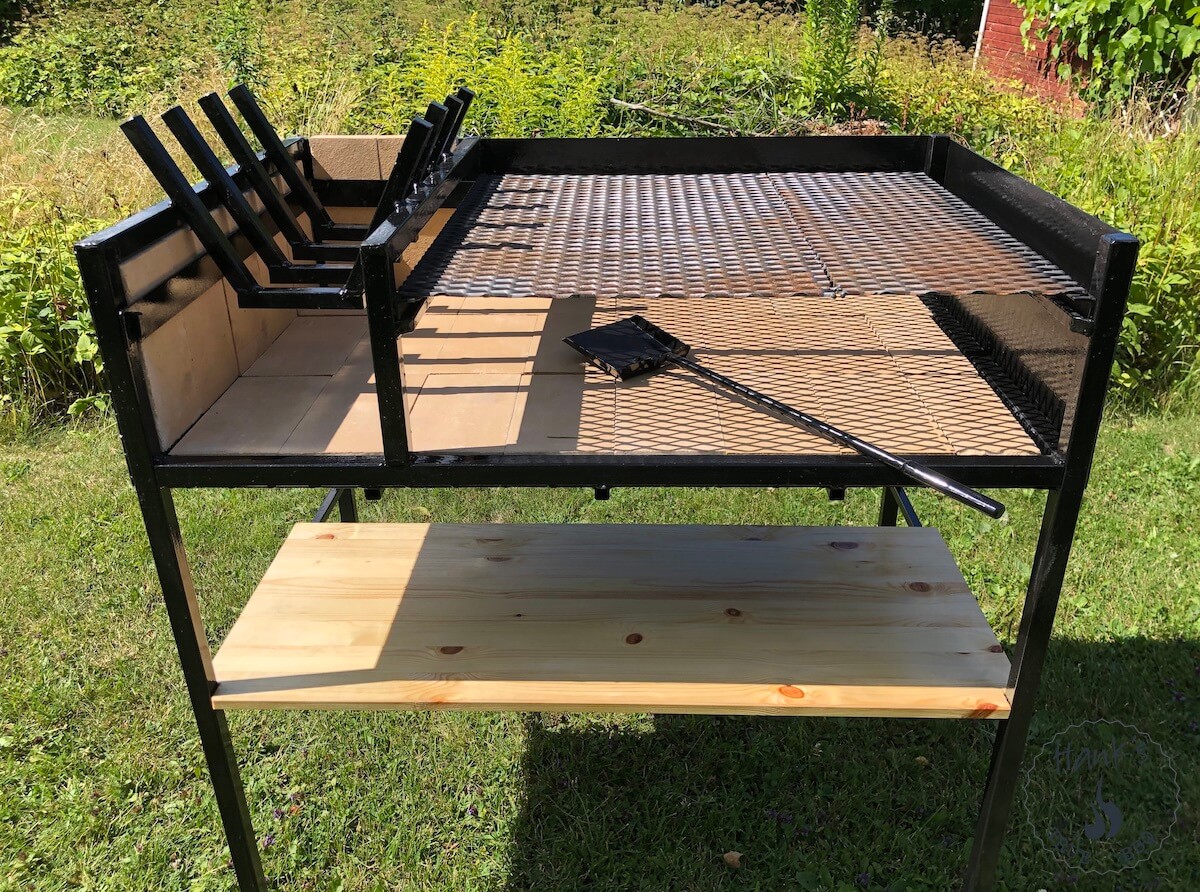
I have wanted an open fire cooker for a while. I dug around on Youtube and found Hankstruebbq.com videos of him making a parrilla. I have my buddy, who is a much better welder than I am, building me one now, just like this:
-
In Missouri all the state parks have a grate you can fold over half the fire. That makes it easier to cook. I always bring a bag of charcoal, which makes for good temp control for the CI dutch oven, which I use for bread.
I got a tripod for hanging meat over the fire. I've only used once and it took forever to cook a whole chicken that way.
Corn on the cob or sweet potato are easy camp fire veggies because you can throw them right on the coals.


Categories
- All Categories
- 184.1K EggHead Forum
- 15.8K Forum List
- 460 EGGtoberfest
- 1.9K Forum Feedback
- 10.4K Off Topic
- 2.2K EGG Table Forum
- 1 Rules & Disclaimer
- 9K Cookbook
- 13 Valentines Day
- 93 Holiday Recipes
- 224 Appetizers
- 520 Baking
- 2.5K Beef
- 88 Desserts
- 167 Lamb
- 2.4K Pork
- 1.5K Poultry
- 33 Salads and Dressings
- 324 Sauces, Rubs, Marinades
- 548 Seafood
- 175 Sides
- 122 Soups, Stews, Chilis
- 44 Vegetarian
- 102 Vegetables
- 313 Health
- 292 Weight Loss Forum