Welcome to the EGGhead Forum - a great place to visit and packed with tips and EGGspert advice! You can also join the conversation and get more information and amazing kamado recipes by following Big Green Egg to Experience our World of Flavor™ at:
Want to see how the EGG is made? Click to Watch
Facebook | Twitter | Instagram | Pinterest | Youtube | Vimeo
Share your photos by tagging us and using the hashtag #BigGreenEgg.
Share your photos by tagging us and using the hashtag #BigGreenEgg.
Want to see how the EGG is made? Click to Watch
Cast Iron frustration

erniemcclain
Posts: 505
Have two Lodge fry pans. 12” standard and maybe a 14 or 16 with two d handles. I have seasoned but everything still sticks. I read that the newer vs older are not as smooth. Used a electric hand sander on them until the gritty feeling was gone. Reseasoned. Multiple times. Have used grape seed oil, Wesson oil, flax seed oil, bacon grease. Everything except Mobil 1. My wife put on stove, added butter, warmed for a couple minutes. Add three eggs. All stuck like crazy. After getting them out, I ran hot water and scraped the crud off. Dried, put on burner to help open pores. More grape seed oil. Wipe. Send message about frustration. Signed, Cast in despair.
Ernie McClain
Scottsbluff, Nebraska
(in the extreme western panhandle of NE)
Comments
-
Eggs are a bad thing to start out with. Fry bacon, cook meats, etc in it for a bunch of times before graduating to eggs. Using plenty of grease - oil, bacon grease, butter - will help. Let the pan heat up good too. CI takes longer to heat up than your typical teflon. You could try carbon steel too. They hold heat like CI but are super smooth. So smooth that sometimes getting seasoning to stick to them early on can be challenging. I've used them for a couple of years now and absolutely love them.
-
Can you elaborate on add three eggs?
Just trying to fry 3 eggs? If scrambled was the plan, I highly recommend buying a non stick skillet.
Cast Iron is great but not the best at everything.
For frying eggs, it’s important to let them cook and set up before you start moving them around.Thank you,DarianGalveston Texas -
Agree with the other two folks here. I love my cast iron, and can cook eggs certain ways in certain pieces, but 95% of the time when I go to cook eggs I’m grabbing the one lone 8” non stick pan I own that is for that purpose and that purpose alone. If I have a desire to use one of my CI pieces to do eggs, it’s the one time I’ll “cheat” and use a cooking spray in them. Carbon steel is a nice compromise however.
-
When doing eggs also make sure your pan is not too hot.
“Reality is that which, when you stop believing in it, doesn't go away.” ― Philip K. Diçk -
Don’t worry about that gritty feeling on modern lodge cast iron. Just do a good seasoning and keep cooking and regular maintenance. It will get smooth as silk. Check out Jeff Rodgers method.
-
XLBGE, LBGE, MBGE, SMALL, MINI, 2 Kubs, Fire Magic Gasser
-
As others have said, eggs are the worst. I use non stick for eggs but @HeavyG might have the solution if you want to use cast iron.New Orleans LA
-
TD, this is one of those ask 10 people get 10 different answers type questions, but for mine if I start with a dirty pan, I make sure it has some heat in it, then rinse well with hot water, dump in some salt and use a scrub brush to remove leftover food bits. If there are some that are more tenacious I use a polycarbonate scraper (lodge sells these). Go back and forth on this until it’s clean. From there I dry it, put it back on the stove and crank the heat on med-high, rub it down with a thin coat of Crisco, let it go till I juuust can see it starting to smoke, turn it off and rub it once more to remove any leftover shortening but leave a thin sheen. Beyond that, I occasionally do a full on seasoning in the oven (3-4x yr for my pans that stay in rotation) very similar to the aforementioned Jeff Rogers technique. This has been a reliable routine for quite some years.td66snrf said: -
Basically the same method I use, except I use coarse kosher salt and then the super thin smear of Crisco. But then instead of the stove I put mine in the old oven, set the preheat to 350 which takes 11 minutes to reach and then I shut off the oven and leave the skillet in the oven to cool down slowly over night. Works for me!Tom_in_NC said:
TD, this is one of those ask 10 people get 10 different answers type questions, but for mine if I start with a dirty pan, I make sure it has some heat in it, then rinse well with hot water, dump in some salt and use a scrub brush to remove leftover food bits. If there are some that are more tenacious I use a polycarbonate scraper (lodge sells these). Go back and forth on this until it’s clean. From there I dry it, put it back on the stove and crank the heat on med-high, rub it down with a thin coat of Crisco, let it go till I juuust can see it starting to smoke, turn it off and rub it once more to remove any leftover shortening but leave a thin sheen. Beyond that, I occasionally do a full on seasoning in the oven (3-4x yr for my pans that stay in rotation) very similar to the aforementioned Jeff Rogers technique. This has been a reliable routine for quite some years.td66snrf said:Re-gasketing the USA one yard at a time -
I clean mine and Crisco it. Throw it in the Egg after shutdown and let go until the next day (or so).
-
One thing I’ve learned over collecting and using cast iron cookware is a good seasoning is just the start. I used to use crisco, flaxseed and all the common ones. Best thing I’ve ever used and still use is a product called crisbee.Best thing you can do is treat your pan to a lye bath and strip it of everything down to the bare iron. Then you give it a good wash with dish soap and dry it up right away. If there is any rusting you can then soak it in Evaporust.
When the pan is back to bare iron and you are happy with it’s appearance you can place it in an oven at 200 degrees. Let it slowly heat up for about 20 mins. Then after the pan is hot to the touch you apply the crisbee in a small amount and try to spread that little dab as far around the pan as possible..handle and all. Place it back in the oven upside down and turn it to 300. Before it gets to 300 take it out once more and use the towel again and run it over everything once again. This will be sure you have no drips and an even amount of spread covering the piece. Then it’s back in the oven at 400 for around an hour or so or until the piece stops smoking. You can repeat this until the piece no longer takes the crisbee. You will know you have reached this final stage when the crisbee beads up and no longer penetrates into the pores of the iron(think water on a waxed hood)
after this you are ready to cook and start enjoying it. Not so fast though..you will need to remember one key thing with any cast iron piece. Allow it to SLOWLY heat to the desired temp. You want to ease into it and get then add your eggs. A properly seasoned pan will look wet when it’s warm and that’s exactly what makes it non stick. You can always add a bit of butter to help you out at first and once it’s melted swirl it around and crack your egg and drop it in.When you are done be sure to whine the pan clean and bring it back to a low heat level and wipe it down with a tiny bit of seasoning. This will smoke a bit like the intital seasoning in the oven but this will ensure your piece is ready to rock and not stick the next time you decide to crack some eggs or whatever you want in it.Sorry for the long post but cast iron(especially antiques) is something I know quite a bit about and can help you with whenever you need advice -
@Tom_in_NC. I just wipe out the pan with a paper towel if nothing has stuck to it. I use a green pad and nothing more aggressive than that ever if. So wipe it out put it on the the stove on low put a little oil wipe it around and shut it off. Done
XLBGE, LBGE, MBGE, SMALL, MINI, 2 Kubs, Fire Magic Gasser -
That's the first time I have heard of using a lye bath or crisbee. Sounds interesting. Any particular type lye? My mom is cleaning up and gave me two old cast iron pans, a thin pan and a muffin pan this weekend that need some work. Will the lye react with a plastic tub if I soak them in that?JJensen said:One thing I’ve learned over collecting and using cast iron cookware is a good seasoning is just the start. I used to use crisco, flaxseed and all the common ones. Best thing I’ve ever used and still use is a product called crisbee.Best thing you can do is treat your pan to a lye bath and strip it of everything down to the bare iron. Then you give it a good wash with dish soap and dry it up right away. If there is any rusting you can then soak it in Evaporust.
When the pan is back to bare iron and you are happy with it’s appearance you can place it in an oven at 200 degrees. Let it slowly heat up for about 20 mins. Then after the pan is hot to the touch you apply the crisbee in a small amount and try to spread that little dab as far around the pan as possible..handle and all. Place it back in the oven upside down and turn it to 300. Before it gets to 300 take it out once more and use the towel again and run it over everything once again. This will be sure you have no drips and an even amount of spread covering the piece. Then it’s back in the oven at 400 for around an hour or so or until the piece stops smoking. You can repeat this until the piece no longer takes the crisbee. You will know you have reached this final stage when the crisbee beads up and no longer penetrates into the pores of the iron(think water on a waxed hood)
after this you are ready to cook and start enjoying it. Not so fast though..you will need to remember one key thing with any cast iron piece. Allow it to SLOWLY heat to the desired temp. You want to ease into it and get then add your eggs. A properly seasoned pan will look wet when it’s warm and that’s exactly what makes it non stick. You can always add a bit of butter to help you out at first and once it’s melted swirl it around and crack your egg and drop it in.When you are done be sure to whine the pan clean and bring it back to a low heat level and wipe it down with a tiny bit of seasoning. This will smoke a bit like the intital seasoning in the oven but this will ensure your piece is ready to rock and not stick the next time you decide to crack some eggs or whatever you want in it.Sorry for the long post but cast iron(especially antiques) is something I know quite a bit about and can help you with whenever you need advice -
Crisbee is a great product, I use it as well, typically when I'm doing those aforementioned 3-4x/yr full on oven re-seasonings. I have to do those sparingly because the smoke/odor it creates in the house is not my fiancee's most favorite thing to come home to lol. Theres another one that constantly pops up on my Instagram called Buzzywax, I imagine it's much the same.JJensen said:One thing I’ve learned over collecting and using cast iron cookware is a good seasoning is just the start. I used to use crisco, flaxseed and all the common ones. Best thing I’ve ever used and still use is a product called crisbee.Best thing you can do is treat your pan to a lye bath and strip it of everything down to the bare iron. Then you give it a good wash with dish soap and dry it up right away. If there is any rusting you can then soak it in Evaporust.
When the pan is back to bare iron and you are happy with it’s appearance you can place it in an oven at 200 degrees. Let it slowly heat up for about 20 mins. Then after the pan is hot to the touch you apply the crisbee in a small amount and try to spread that little dab as far around the pan as possible..handle and all. Place it back in the oven upside down and turn it to 300. Before it gets to 300 take it out once more and use the towel again and run it over everything once again. This will be sure you have no drips and an even amount of spread covering the piece. Then it’s back in the oven at 400 for around an hour or so or until the piece stops smoking. You can repeat this until the piece no longer takes the crisbee. You will know you have reached this final stage when the crisbee beads up and no longer penetrates into the pores of the iron(think water on a waxed hood)
after this you are ready to cook and start enjoying it. Not so fast though..you will need to remember one key thing with any cast iron piece. Allow it to SLOWLY heat to the desired temp. You want to ease into it and get then add your eggs. A properly seasoned pan will look wet when it’s warm and that’s exactly what makes it non stick. You can always add a bit of butter to help you out at first and once it’s melted swirl it around and crack your egg and drop it in.When you are done be sure to whine the pan clean and bring it back to a low heat level and wipe it down with a tiny bit of seasoning. This will smoke a bit like the intital seasoning in the oven but this will ensure your piece is ready to rock and not stick the next time you decide to crack some eggs or whatever you want in it.Sorry for the long post but cast iron(especially antiques) is something I know quite a bit about and can help you with whenever you need advice -
i dont usually wash the cast iron, just wipe it down with a dry paper towell and add more oil next time
 fromage omelette sans oeufs, cheese omelet no eggs on rooster sauce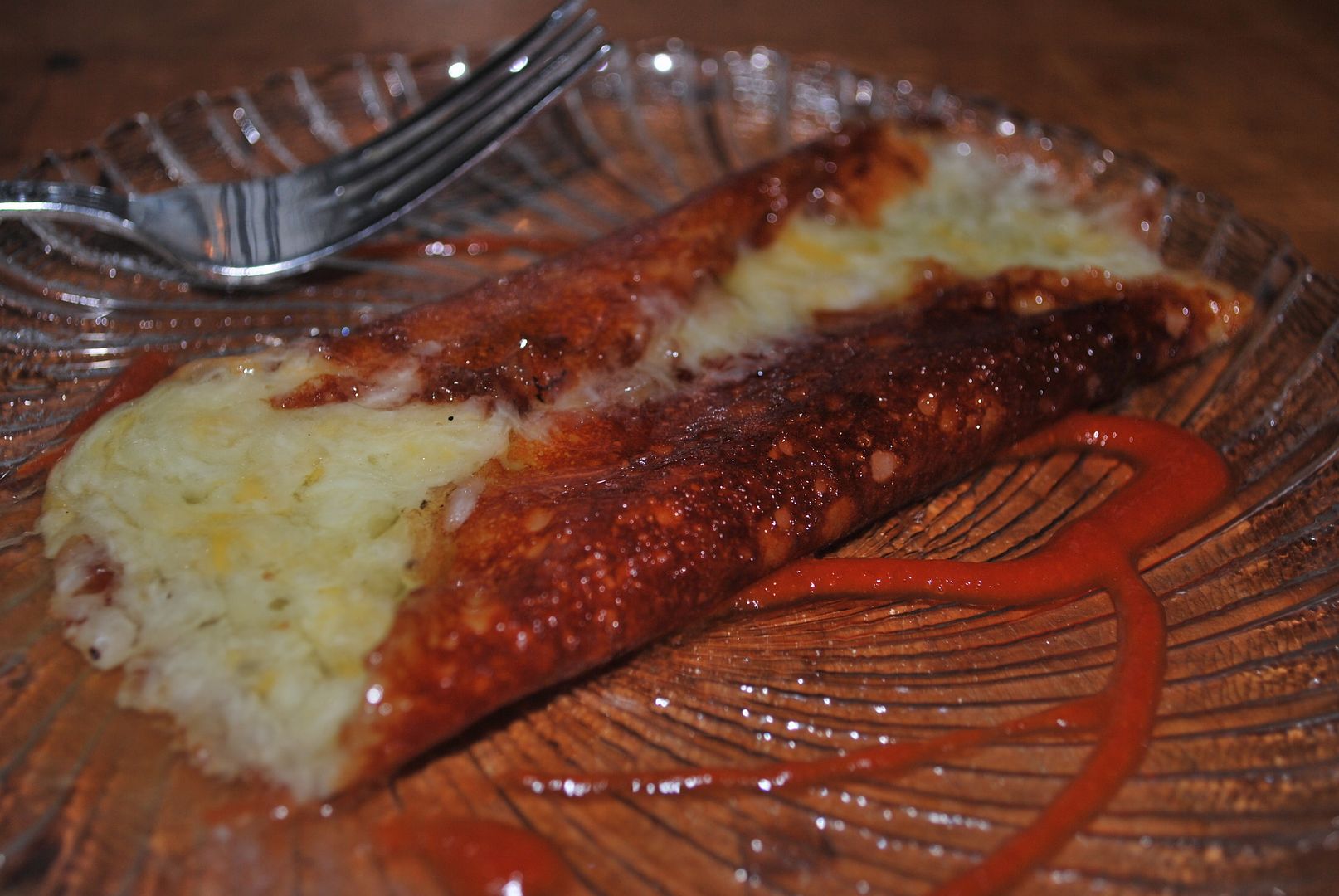
fukahwee maineyou can lead a fish to water but you can not make him drink it -
I use red devil 100% lye. You can get that from your local ace hardware. Just a standard Tupperware storage container is what I use. Make sure it’s big enough for multiple pieces if you have them.Lowcountrygamecock said:
That's the first time I have heard of using a lye bath or crisbee. Sounds interesting. Any particular type lye? My mom is cleaning up and gave me two old cast iron pans, a thin pan and a muffin pan this weekend that need some work. Will the lye react with a plastic tub if I soak them in that?JJensen said:One thing I’ve learned over collecting and using cast iron cookware is a good seasoning is just the start. I used to use crisco, flaxseed and all the common ones. Best thing I’ve ever used and still use is a product called crisbee.Best thing you can do is treat your pan to a lye bath and strip it of everything down to the bare iron. Then you give it a good wash with dish soap and dry it up right away. If there is any rusting you can then soak it in Evaporust.
When the pan is back to bare iron and you are happy with it’s appearance you can place it in an oven at 200 degrees. Let it slowly heat up for about 20 mins. Then after the pan is hot to the touch you apply the crisbee in a small amount and try to spread that little dab as far around the pan as possible..handle and all. Place it back in the oven upside down and turn it to 300. Before it gets to 300 take it out once more and use the towel again and run it over everything once again. This will be sure you have no drips and an even amount of spread covering the piece. Then it’s back in the oven at 400 for around an hour or so or until the piece stops smoking. You can repeat this until the piece no longer takes the crisbee. You will know you have reached this final stage when the crisbee beads up and no longer penetrates into the pores of the iron(think water on a waxed hood)
after this you are ready to cook and start enjoying it. Not so fast though..you will need to remember one key thing with any cast iron piece. Allow it to SLOWLY heat to the desired temp. You want to ease into it and get then add your eggs. A properly seasoned pan will look wet when it’s warm and that’s exactly what makes it non stick. You can always add a bit of butter to help you out at first and once it’s melted swirl it around and crack your egg and drop it in.When you are done be sure to whine the pan clean and bring it back to a low heat level and wipe it down with a tiny bit of seasoning. This will smoke a bit like the intital seasoning in the oven but this will ensure your piece is ready to rock and not stick the next time you decide to crack some eggs or whatever you want in it.Sorry for the long post but cast iron(especially antiques) is something I know quite a bit about and can help you with whenever you need adviceThen you always be sure to add the lye to the water and not the water to the lye! If you dump a bottle of lye to the dry container and add water it will foam and boil like no other. The water will also heat up when the lye is added. Be sure and wear rubber gloves when handling.





Categories
- All Categories
- 184.1K EggHead Forum
- 15.8K Forum List
- 460 EGGtoberfest
- 1.9K Forum Feedback
- 10.4K Off Topic
- 2.2K EGG Table Forum
- 1 Rules & Disclaimer
- 9K Cookbook
- 13 Valentines Day
- 93 Holiday Recipes
- 224 Appetizers
- 520 Baking
- 2.5K Beef
- 88 Desserts
- 167 Lamb
- 2.4K Pork
- 1.5K Poultry
- 33 Salads and Dressings
- 324 Sauces, Rubs, Marinades
- 548 Seafood
- 175 Sides
- 122 Soups, Stews, Chilis
- 44 Vegetarian
- 102 Vegetables
- 313 Health
- 292 Weight Loss Forum