Welcome to the EGGhead Forum - a great place to visit and packed with tips and EGGspert advice! You can also join the conversation and get more information and amazing kamado recipes by following Big Green Egg to Experience our World of Flavor™ at:
Want to see how the EGG is made? Click to Watch
Facebook | Twitter | Instagram | Pinterest | Youtube | Vimeo
Share your photos by tagging us and using the hashtag #BigGreenEgg.
Share your photos by tagging us and using the hashtag #BigGreenEgg.
Want to see how the EGG is made? Click to Watch
Dry aged steak: any special considerations?

Rezen73
Posts: 356
So, I've finally gotten the courage (and more importantly, patience) to attempt to dry age beef at home.
As a test, I've got a single prime cut of bone-in ribeye that's about 5 days in right now (I started it Thursday evening). It's already lost quite a bit of moisture. I'm planning on cooking it on Friday evening after work along with some asparagus.
So just wondering if there are any special considerations with regards to egging up dry aged beef as opposed to fresh beef, since there's less moisture involved? I'm guessing the sear is even more important on dry aged beef as opposed to fresh beef, so should I use a CI skillet? or the flat side of the CI grate? But perhaps the egg temperas that since the egg is very moisture friendly...
This is where my culinary inexperience really shines
I like my steaks medium-rare, with a slight leaning to rare if I had to make a choice. The steak is 1" thick.
Any advice is greatly appreciated
As a test, I've got a single prime cut of bone-in ribeye that's about 5 days in right now (I started it Thursday evening). It's already lost quite a bit of moisture. I'm planning on cooking it on Friday evening after work along with some asparagus.
So just wondering if there are any special considerations with regards to egging up dry aged beef as opposed to fresh beef, since there's less moisture involved? I'm guessing the sear is even more important on dry aged beef as opposed to fresh beef, so should I use a CI skillet? or the flat side of the CI grate? But perhaps the egg temperas that since the egg is very moisture friendly...
This is where my culinary inexperience really shines
I like my steaks medium-rare, with a slight leaning to rare if I had to make a choice. The steak is 1" thick.
Any advice is greatly appreciated
Comments
-
The short answer is cook the way you normally cook a steak IMO.
Suggestion - there is a lot info tucked away in the forum on dry aging. A search will turn up several posts. I have only dry aged one choice primal for 28 days and really liked it. We're only two and not huge steak eaters (split one every two weeks) so haven't tried another.
I have only seen one or two comments on dry aging a steak - most recommend dry aging a primal.
Stripstike and RRP are the two forum members that have more eggsperience with dry aging.
Good luck with it. -
If I'am reading it correct you have a single steak, not a big piece of meat like a primal. I wouldn't age a single steak. My guess that's a good way to waste a steak and take a chance of getting sick. You will get many answers on this one. Put me in your will for the egg before you eat the steak.

-
he's no more likely to get sick aging a single steak versus a whole sub-primal, he's just in danger of ruining it by overdrying.
alton brown did a show the other day where he "dry-aged" a steak for maybe 24 hours. i don't wanna go correcting alton, but that's more properly "drying" a steak, not aging.
the easiest way to keep this whole thing straight in one's head is to remember that drying and aging are two entirely unrelated processes that just happen to be taking place at the same time when you dry-age a steak. maybe we ought to write it like "dry/age" instead of "dry-age".
if you dry age a steak, you should stop after just a day or so, because basically you are allowing the air to dry it from the broad, cut sides of flesh. not good. that's how you make jerky.
and since you are only doing it (a steak) for a day or so, you really won't get any aging at all. aging is enzyme action unrelated to the air. you can wet age, never taking the primal (or in the case, steak) out of the plastic
the best way to age in my mind, is to do it the way they always did it. that IS what dry aging is, after all. take a subprimal, keep it in open air (cooler/fridge) for at least a week, or as much as 6 weeks in temperatures BELOW 40, ideally low 30s to mid 30s.
a subprimal has much less relative surface area, as well as a nice (usually) layer of fat surrounding most of it. this will allow it to dry without drying too fast. drying too fast means you have to take it out too soon, and the enzymes won't have had a chance to really do anything. for any real enzyme benefit, you need to really suck it up and go at least 14 days. i don't care what anmyone says, there's no such thing as "dry-aged" beef that's gone only 7 days. and to be a total pain in the snobbery, 21 days is usually minimum ante for anyone that seriously enjoys the stuff.
so why does AB suggest dry aging a steak all by itself? well, if you allow it to go only over night, you will lose moisture (water). that means the steak lost flavorless weight, and left behind a denser, more beefy (because it is condensed) product. but it didn't age, and the enzymes didn't have a chance to do anything much (tenderize and add flavorful esters as a by-product).
me? i'd eat the steak NOW. it's already probably curled up like a bowl from overdrying.
i always advise minimal (really, NO) trimming to an aged primal. but his steak is going to have a very dry hard upper and lower surface (the 'face' of the steak). i'd trim that. but at an inch thick, if you trim both faces off the steak, it might be so thin it only has one side.
trying not to be an utter pedantic putz here, but there are reasons it has been done a certain way for as long as it has... it works.
do not worry yourself when someone tells you you need "expensive, humidity controlled environments". that's voo-doo scaredy-cat horseh!t. those who dry-age commercially vary widely in what they define as "optimal". some go 40-50% relative humidity, some quite high. our home fridges are basically cold dehydrators... they are very dry. is that bad? no. actually reduces chances of mold (which isn't harmful anyway, as long as it is surface/green mold). it actually speeds drying, which can be a plus, but that means the enzymes don't get to hang out as long as a primal in a more humid environment could, before drying too much. and that extra time is extra enzyme work being done.
the dry bags (a recent forum-craze) may offer the benefit to a home ager of allowing him to age for 6 weeks or more without over-drying, because they seem to dry slightly more slowly than just leaving the beef in open air. but 4 to 5 weeks is fine for me, and in my fridge, there's no need for a sealer or bags.
to wrap up... hahaha
i'd say that a steak shouldn't be "aged" any longer than it takes to read this post.
just a warning. a dry-aged steak cooks more wuickly than a regular steak. and a 1" thick steak cooks fast too. be VERY craeful cooking this little experiment. it probably will still be great, but it has a good chance of being overcooked. i'd salt it, leave it out for an hour or more, then sear ONLY. and quickly. -
thats not the typical way to dry age but if it smells fine cook it. read stikes post and reread the last line, it cooks fast, twice as fast as your used tofukahwee maineyou can lead a fish to water but you can not make him drink it
-
this is a strip subprimal that i dry aged. before aging, i cut it in half, and brought the first (un-aged) half with us camping, for steaks to be cut on site.
i tossed the other half in the fridge, and let it age.
the near end in this photo is the end from cut side. you can see that exposed muscle will dry way too quickly. that is nothing more than jerky. it's not unsafe to eat, it's just dehydrated. i trim that off. it goes on with the steak, as my little treat. but much of it is too chewy to bother.
behind that is the protected and AGED meat.
basically, if you try to do a steak all by itself, you will have a thin steak with two sides just as dry as the end-trimming in this photo. not "good eats" (sorry alton).
but if you dry a steak for just a day, you will get a flavor bump from water loss. just as you do when you simmer stock in order to evaporate water -
it should smell fine... bacteria won't be somehow more attracted to a steak than a sub. heh heh heh.
but yeah, even properly aged a steak'll cook fast. this one, being thin to begin with and possibly over-dried, may only need to be microwaved. then you can paint grill marks on it with 'Kitchen Bouquet'. (kidding)
note to Rezen73: i'm not trying to be a wise-ass. if i were, i wouldn't have typed out the explanation, i'd have just made the joke and moved on. good luck. )
here's a tip... prime is great, but you can have monster success buying choice subprimals (rib-eye is my personal favorite) and aging them at home. a 5 or 6 week home-aged choice ribeye over charcoal will be as good or better than a 21-day prime restaurant ribeye. and far cheaper -
Before and after pics of my one and only dry aged ribeye primal. It was real good - went native - neaux bag.
Choice primal from Sam's - into da coola (it's a refrigerated drawer)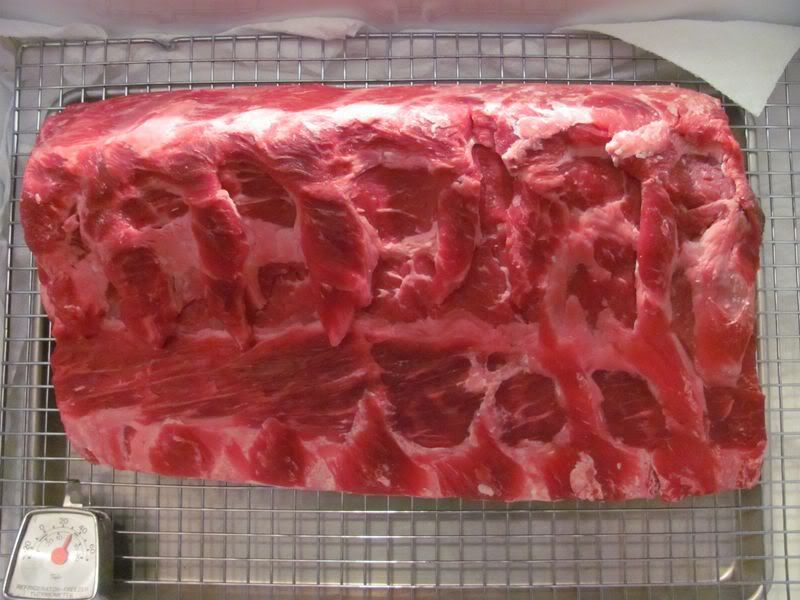
Day 28 in da coola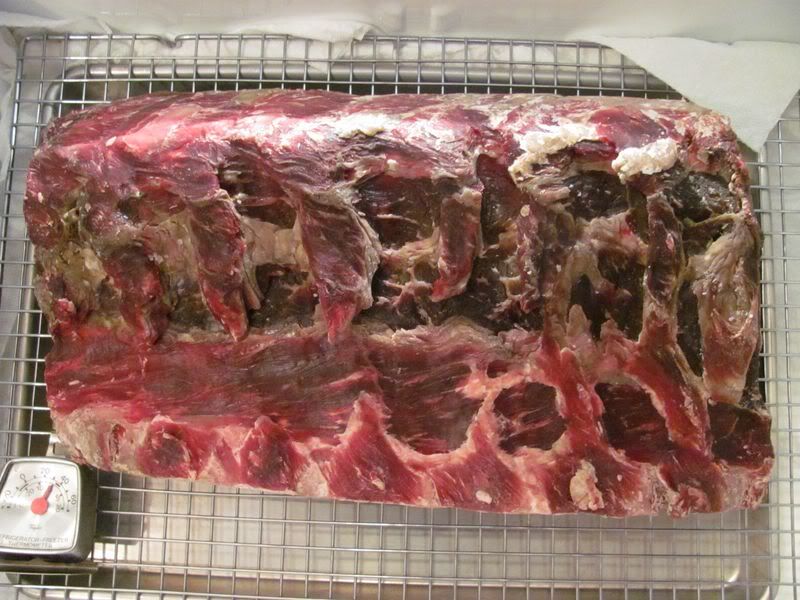
Vacuum packed 1-1/2" steaks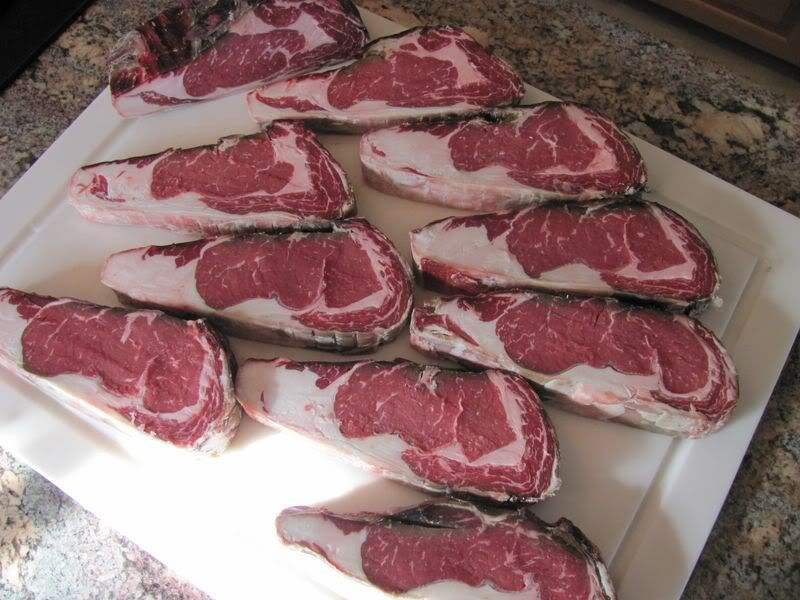
Mightyfine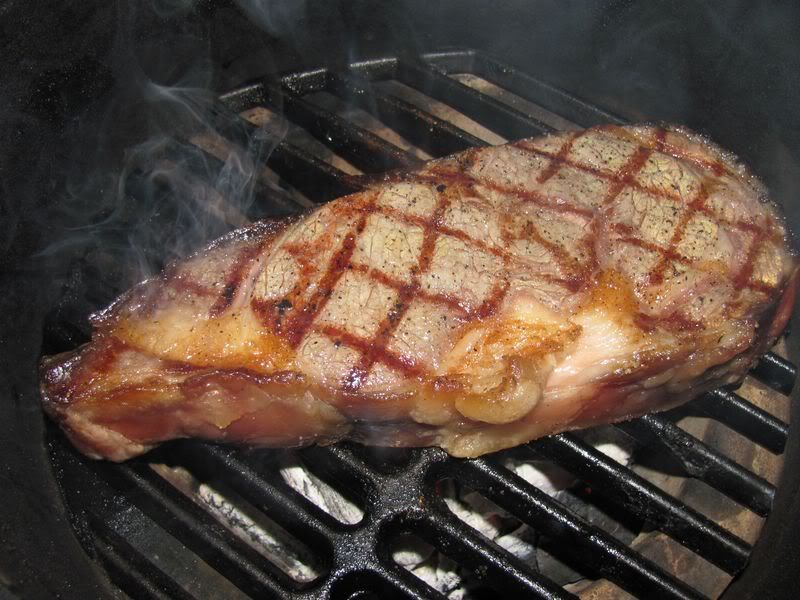
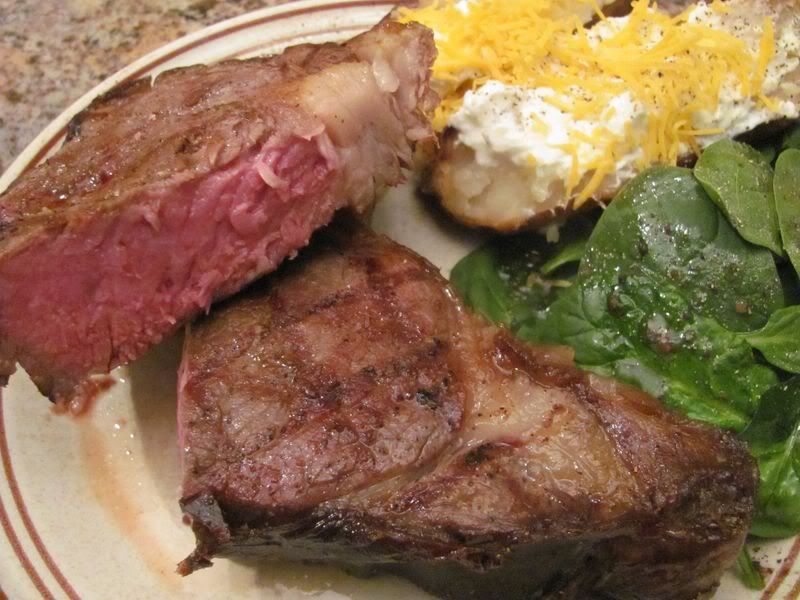
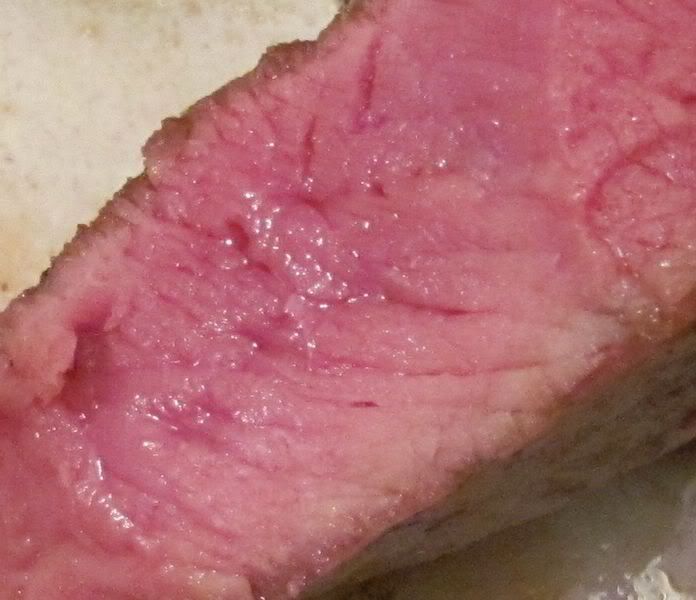
-
aaaaaah.
man after my own heart. ...cholesterol laden heart, but hey, what the heck, right?
...and thank you for being in the "no trim" minority.
:laugh: -
when you smell it and it smells fine it just builds your confidence
 it all made sense to me once when something i read said rotten meat wont kill you if it was handled properly at the right temps but contaminated will, made it feel safer anyways :laugh: easier for me to remember than all the stuff in your post :laugh: fukahwee maineyou can lead a fish to water but you can not make him drink it
 -
No trim on my half my traveling companion trims her half after cooking

Thanks for your tutorial/guidance that I found from a couple years ago - I don't understand the chemistry/process (and don't really need to) but know how to follow instructions (except when putting a bike together) but I like the outcome.
Come to think of it, I don't understand how a plane lands but like the outcome. :woohoo: -
thanks frank. i don't know the chemistry involved either. but i think the general concept is enough. that's why i trip over myself to try to explain the concept rather than the specifics. not so important to explain how the enzymes break down the meat, as it is to just say that the longer they do it, the more 'aged' it is.
i'm a conceptualist by training. concept first, then i delve into details. otherwise i can't keep things straight :laugh: -
i've said it before, and i'll say it again. there's is nothing at all unsafe about hanging raw meat from your basement ceiling, as long as you know how to do it and what to look for :laugh:
-
I don't have time to look for the link now, but I tried this. I used a ribeye. You load it up with kosher salt for about an hour. Both sides. Then rinse it off. It draws the moisture out. It worked good. I'll try to find the site that explains it and post it.
-
it draws the moisture out, but it also draws it back in. yeah, that method got some play around here a couple years ago i think. almost like a dry brine
aside from enhancing flavor, salting brings water soluble proteins to the surface too, makes for a great sear. but it won't appreciably dry the steak really. meaning, it won't condense the meat like air drying does. -
Thanks for the info everyone!
I'll be sure to take pics and post them up tomorrow, provided of course the steak is still edible


Categories
- All Categories
- 184K EggHead Forum
- 15.8K Forum List
- 459 EGGtoberfest
- 1.9K Forum Feedback
- 10.4K Off Topic
- 2.2K EGG Table Forum
- 1 Rules & Disclaimer
- 9K Cookbook
- 13 Valentines Day
- 93 Holiday Recipes
- 224 Appetizers
- 520 Baking
- 2.5K Beef
- 88 Desserts
- 167 Lamb
- 2.4K Pork
- 1.5K Poultry
- 33 Salads and Dressings
- 324 Sauces, Rubs, Marinades
- 548 Seafood
- 175 Sides
- 122 Soups, Stews, Chilis
- 44 Vegetarian
- 102 Vegetables
- 313 Health
- 292 Weight Loss Forum