Welcome to the EGGhead Forum - a great place to visit and packed with tips and EGGspert advice! You can also join the conversation and get more information and amazing kamado recipes by following Big Green Egg to Experience our World of Flavor™ at:
Want to see how the EGG is made? Click to Watch
Facebook | Twitter | Instagram | Pinterest | Youtube | Vimeo
Share your photos by tagging us and using the hashtag #BigGreenEgg.
Share your photos by tagging us and using the hashtag #BigGreenEgg.
Want to see how the EGG is made? Click to Watch
Not something you hear very often....

BobS
Posts: 2,485
I just received 3 pounds of duck fat in the mail. I think there is some confit in my future.
Comments
-
-
Quack, Quack. Was it a commercial source? If so where. If not I understand the secrecy of the event.
Groucho thanks you!
-
I found it at the link shown below. It is only $5.61/pound and I got a discount for 3 pounds, so it came out at $13 and change, but it cost $33 to ship it for arrival the second day.
It is important to note that this is raw duck fat, so you have to render it yourself, when you get it.
That is not a big problem, but helps explain the low price and it is an extra step.
http://www.tennesseegourmetfarms.com/catalog/duck?gclid=CMDal4jGj54CFYdd5Qod3zurog
Their prices for duck legs and thighs is not bad either, but you faced the same shipping costs. -
Thanks, When I am in the Atlanta area I go to the Dekalb Farmers market and they have great deals on duck breasts and thighs. Probably other parts also, but that is all I buy in duck to bring back to Florida. Every trip is $200-$300 and worth it. Spice selection is fantastic and reasonably priced.
Duck, Whole, Asian Duck Confit W/Roasted Duck Breast & Wasabi Sauce
Nature Boy (and others interested), here's an article from this Wednesday's New York Times that talks about preparing duck in an Asian style. I thought this would be right up your alley. I think it sounds oh so good.
INGREDIENTS:
1 4-5 Lbs Duck
Salt and freshly ground black pepper
2 cups duck fat, or a bit more
10 nickel-size slices ginger
3 cloves
5 star anise
3 sprigs thyme
1 Tbs plus 1 teaspoon extra virgin olive oil
1 small bunch watercress, stems removed
1 Tbs wasabi powder
3/4 cup duck or chicken stock
2 tsp soy sauce.
Procedure:
1 ONE of the French dishes that have always amazed me is duck confit. I loved it as soon as I first tasted it, in 1988 when I came to work at La Caravelle as a saucier. At my previous restaurant job the cooking was very high-end nouvelle, and I had never encountered anything as rustic as these slow-cooked duck legs. They were a revelation -- how could duck be so tender and crisp at the same time, and so wonderfully flavored, with nothing to it but meat?
2 Not long after that first taste I started trying to find a way to use the same concept in a dish with Asian flavors.
3 Duck, of course, is common in several Asian cuisines, but there is no tradition I know of where it is cooked like confit. The traditional French method of simmering duck legs in rendered fat tenderizes them. My method is not traditional, but it is easy -- you can almost ignore the bird as it simmers -- and after the duck has been refrigerated for a day, you can crisp the skin right before serving.
4 My technique differs from the classic French method, which calls for curing the meat in salt and spices like thyme and allspice for a day or more before cooking it. The salt cure preserves the duck, but I dispense with that step. The French idea is that the salting draws out unnecessary water, which is replaced first by salt and later by fat. But I think it also takes out some of the juices, and therefore some of the duck's natural flavor.
5 Instead, I simply season the duck, add the spices to the fat and cook it, which gives the meat plenty of flavor. Two of the classic French seasonings for confit, thyme and cloves, work perfectly in my Asian-oriented version. To those, I add two ingredients identified with Asian cooking, star anise and ginger. The ginger becomes the dominant flavor and really gives the confit spirit.
6 Many chefs use confited legs in one dish and the duck's breast in another, but I combine them. For one thing, it's much easier to buy a whole bird than parts. I prefer an ordinary Pekin duck for this dish, because more expensive ducks are no more flavorful in confit. You can use the fat and excess skin from the duck to make your own fat for the confit. Just combine them in a saucepan with a tablespoon or two of water to keep them from burning, and cook over low heat until the fat is mostly liquid, with a few pieces of skin floating in it. (Or you can buy duck fat at some markets.)
7 I bake the confit in a covered saucepan, because it's very easy to regulate oven heat. From that point on, the legs must be handled gently. If you refrigerate them in the fat, let them come to room temperature before reheating, so that the fat softens and the meat can be removed without falling apart.
8 The breast is already tender, and is best served medium-rare, so it doesn't make sense to confit it. I simply roast it on the bone, as I cook all my meat, so that it stays juicy. Since the breast takes only a few minutes to cook, the timing with the reheated confit is nearly perfect.
9 To make the Asian theme of this dish more complex, I create a quick sauce based on wasabi and watercress. The watercress mimics the wasabi flavor and some of the same heat, and their colors also match. Fresh wasabi is hard to find and very expensive; wasabi powder works fine. A touch of soy sauce completes the sauce, which cuts through the richness of the duck while intensifying its flavor.
10 We serve the duck with buckwheat spatzle, but any fresh egg noodles, tossed with a little butter, would be a lovely side dish.
11 Preheat oven to 200 degrees. Cut legs off duck. Cut off second and third joints of wings. Cut breast with its ribs off backbone. Cover, and place in refrigerator. (Discard wing tips and backbone, or use for stock.) Salt legs well, and put in a saucepan with duck fat, ginger, cloves, star anise and thyme. Bring to a boil. Make sure meat is submerged in fat (add more if necessary), then cover pan with foil and bake 4 to 5 hours, or until meat offers almost no resistance when pierced with a thin-bladed knife or skewer. Cool, then refrigerate, fat and all, for at least a day. Bring to room temperature before proceeding.
12 Preheat oven to 450 degrees. Score skin of breast in a crosshatch pattern at 1/4-inch intervals, and season well with salt and pepper. Put 1 tablespoon olive oil in an ovenproof skillet over high heat and wait a minute, then brown duck on skin side for about 2 minutes, moving it occasionally so that it doesn't stick. Transfer to oven. Roast, skin side up, for about 15 minutes, or until meat is medium-rare (an instant-read thermometer will register about 130 degrees). Keep warm.
13 While breast is roasting, make sauce: Blanch watercress in boiling salted water to cover for about 30 seconds. Drain, rinse in cold water and squeeze dry. Place in a blender with salt, pepper, wasabi, stock, soy sauce and remaining oil, and puree until smooth. Taste, and adjust seasoning -- it should be quite hot. Transfer to a small saucepan, and warm very gently; do not allow to boil.
14 Remove the legs from the fat, and brown the skin under the broiler or in a skillet over medium-high heat, less than 5 minutes. Cut the breasts off the bone, and slice thin. Arrange on a plate with some of the confit, and spoon the wasabi sauce around.
Yield: 2 to 4 servings.
Recipe Type
Main Dish, Poultry
Recipe Source
Source: BGE Forum, Cornfed, 2000/01/21
THE CHEF: The Most Succulent --- This is the third of eight columns by Tadashi Ono, the chef at Sono in By Tadashi Ono in Dining In, Dining Out/Style Desk; Section F; Page 1, Column 2 c. 2000 New York Times Company, By Tadashi Ono -
That does sound wonderful.
-
Something else for me to do!!
Ross -
Here are four nice duck, leg/thigh combos that I just coated with a mix of salt, garlic, thyme and black pepper. This will cure until tomorrow and I will slow cook them in the rendered duck fat.
You cook them for something like 4 hours at about 200F until the meat is basically falling off the bone.
Traditionally you let the duck cool submerged in the fat and then you can store it up to 6 months in the refrigerator. Then you warm them up take them out of the fat and sear the skin in a hot skillet.
I am going to do the sear on my grill and serve slices as a side to a Caesar Salad.
More pictures tomorrow.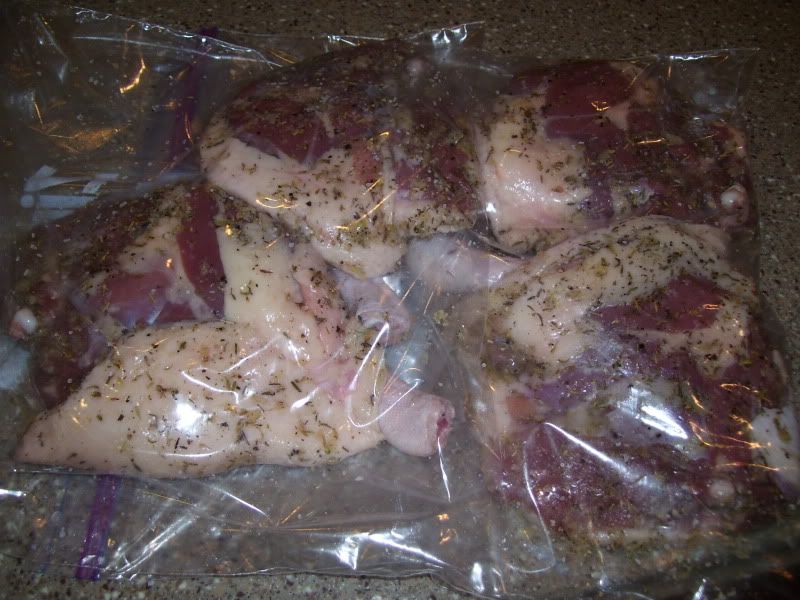
You can strain the duck fat and save it for another cook. Since the legs have a lot of fat in them, you actually start building your inventory of duck fat.


Categories
- All Categories
- 184K EggHead Forum
- 16.1K Forum List
- 461 EGGtoberfest
- 1.9K Forum Feedback
- 10.5K Off Topic
- 2.4K EGG Table Forum
- 1 Rules & Disclaimer
- 9.2K Cookbook
- 15 Valentines Day
- 118 Holiday Recipes
- 348 Appetizers
- 521 Baking
- 2.5K Beef
- 90 Desserts
- 167 Lamb
- 2.4K Pork
- 1.5K Poultry
- 33 Salads and Dressings
- 322 Sauces, Rubs, Marinades
- 548 Seafood
- 175 Sides
- 122 Soups, Stews, Chilis
- 40 Vegetarian
- 103 Vegetables
- 315 Health
- 293 Weight Loss Forum