



@SciAggie thanks much, as usual. The analogy is spot on and is a keeper. And you answered my next question: what about stabilization with a fast cook? So thanks for that too.
The great thing about the egg so far is that despite temperature blips and non-optimal cooks, the food has been good. So far.
Welcome to the EGGhead Forum - a great place to visit and packed with tips and EGGspert advice! You can also join the conversation and get more information and amazing kamado recipes by following Big Green Egg to Experience our World of Flavor™ at:
Want to see how the EGG is made? Click to Watch
Facebook | Twitter | Instagram | Pinterest | Youtube | Vimeo
Share your photos by tagging us and using the hashtag #BigGreenEgg.
Share your photos by tagging us and using the hashtag #BigGreenEgg.
Want to see how the EGG is made? Click to Watch
Spatchcocked and Then Pulled Chicken + Temp Question

bjeans
Posts: 191
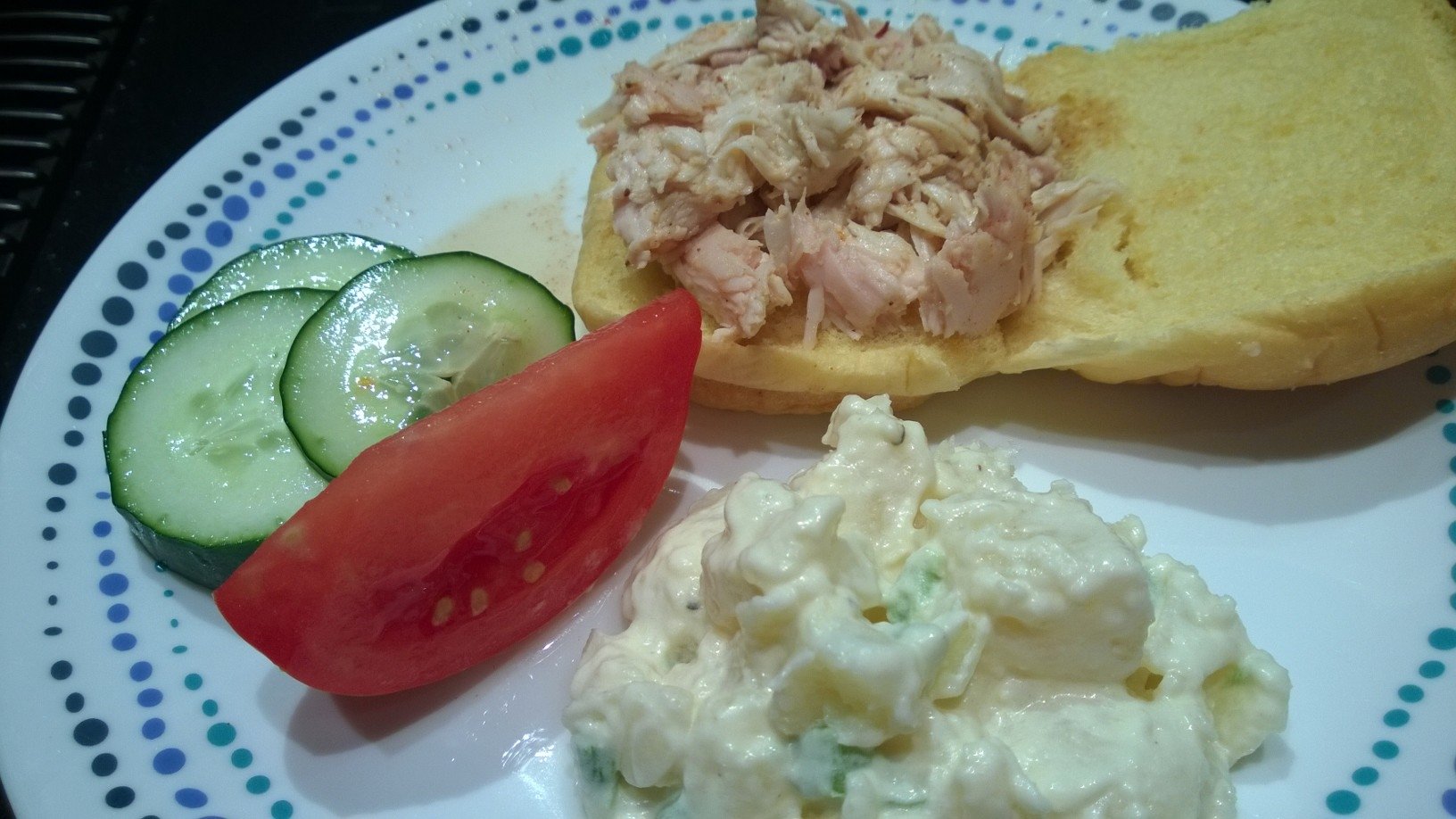
So another newbie cook, this time spatchcocked chicken (bought poultry shears!) with Dizzy Pig Tsunami Spin, and then pulled the chicken for eastern Carolina BBQ sauce I had made previously. Tomatoes and cucumbers were just in vinegar/sugar/water in the frig a couple hours, plus store bought (!!) potato salad. Large egg, platesetter with drip pan with a little water in it, grid on top.
I'd had temps drop and take a long time to get back to target temp, so this time I stabilized at 350 for 20 minutes before putting the chicken on. (And it had taken a long time to get there. Maybe I closed the dome too soon, though so far I've always closed it quickly.) Temp dropped to just under 300 but was back to 350 in about 3 minutes. Much better, thanks to the advice from a bunch of you!
But 12 minutes later the temp suddenly dropped to 340 and then 330, so I opened the vent and daisy wheel a bit (changed from petals open to pushing the whole wheel 1/2 way open, and the vent from about 1" to 1.5").
Temp went back to 350, so closed daisy wheel to where it had been (petals open), but left bottom vent at 1.5" - though that seemed a little too open? Stayed at 350 on the nose for a long time.
BUT - at 50/55 minutes jumped to 375 and a little later almost 400. No harm done, but curious if 1) I bet maybe I shouldn't have adjusted/chased it when it was dropping? Or if 2) since I use one BGE fire starter in the middle, if suddenly the fire got bigger, expanded.
BTW, the legs were at 195 when the breast was at 145, so I flipped and turned the chicken in case the heat was uneven. Got to use a Thermopen for the first time.
Beth
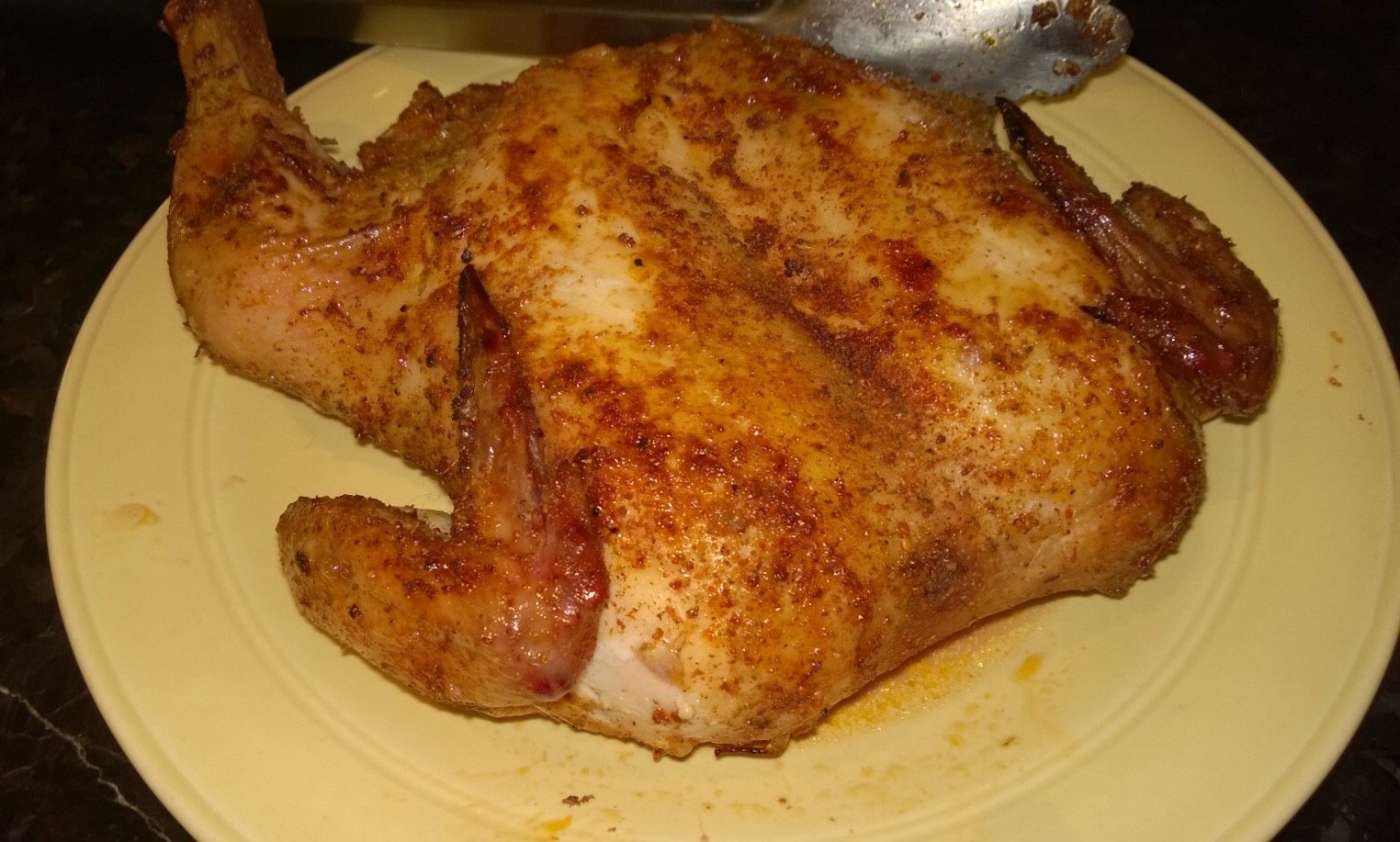
I'd had temps drop and take a long time to get back to target temp, so this time I stabilized at 350 for 20 minutes before putting the chicken on. (And it had taken a long time to get there. Maybe I closed the dome too soon, though so far I've always closed it quickly.) Temp dropped to just under 300 but was back to 350 in about 3 minutes. Much better, thanks to the advice from a bunch of you!
But 12 minutes later the temp suddenly dropped to 340 and then 330, so I opened the vent and daisy wheel a bit (changed from petals open to pushing the whole wheel 1/2 way open, and the vent from about 1" to 1.5").
Temp went back to 350, so closed daisy wheel to where it had been (petals open), but left bottom vent at 1.5" - though that seemed a little too open? Stayed at 350 on the nose for a long time.
BUT - at 50/55 minutes jumped to 375 and a little later almost 400. No harm done, but curious if 1) I bet maybe I shouldn't have adjusted/chased it when it was dropping? Or if 2) since I use one BGE fire starter in the middle, if suddenly the fire got bigger, expanded.
BTW, the legs were at 195 when the breast was at 145, so I flipped and turned the chicken in case the heat was uneven. Got to use a Thermopen for the first time.
Beth
Ex LBGE owner and current BGE liker
Comments
-
Try this. Get your egg to idle at around 400-425. Dry drip pan no water. No daisy wheel on top. With no water in the pan egg won't have to fight off the ballast and with no daisy you won't have to chase temps. I Find once yet get your temp set, letting it burn for 15 minutes or so before putting the food on, the temp will "lock" in.
-
First off bird looks tasty. 2nd forget the water in the drip pan. All it does is provide a heat sink that as it evaporates the temp in the egg will increase. Water in the pan is not needed in the egg unless you are trying to rapidly drop temps.
I would suggest letting the egg stabilize at the desired temp a little longer. Maybe 30mins - 1hr. On a stabilized egg I don't see much of a temp drop from just one average size chicken. If it's stabilized the temp with come back with no adjustments after the protein had been on for 30mins or so.-----------------------------------------analyze adapt overcome2008 -Large BGE. 2013- Small BGE and 2015 - Mini. Henderson, Ky. -
The chicken looks great. Patience and baby steps with the vents. Little moves and give the temp a chance to adjust
-
So the water evaporating could explain the sudden rise after 50 minutes. What would have caused the drop after 12? It only took 3 minutes for the temp to pop back to 350 after putting the chicken on, so I thought I was home free. But if more stabilization time is the answer, I'll go with it.Mattman3969 said:First off bird looks tasty. 2nd forget the water in the drip pan. All it does is provide a heat sink that as it evaporates the temp in the egg will increase. Water in the pan is not needed in the egg unless you are trying to rapidly drop temps.
I would suggest letting the egg stabilize at the desired temp a little longer. Maybe 30mins - 1hr. On a stabilized egg I don't see much of a temp drop from just one average size chicken. If it's stabilized the temp with come back with no adjustments after the protein had been on for 30mins or so.
And are you saying sometime there are adjustments for the first 30 minutes or so after putting the protein on? Sorry, not clear on that @Mattman3969
And thanks for your help.
Ex LBGE owner and current BGE liker -
So much for finding a recipe saying by adding water you avoid any unpleasant smoke. Good though - I'm all for eliminating steps. Thanks!Powak said:Try this. Get your egg to idle at around 400-425. Dry drip pan no water. No daisy wheel on top. With no water in the pan egg won't have to fight off the ballast and with no daisy you won't have to chase temps. I Find once yet get your temp set, letting it burn for 15 minutes or so before putting the food on, the temp will "lock" in.Ex LBGE owner and current BGE liker -
@bjeans By giving the egg longer to settle you are allowing the ceramic to absorb thermal energy. Think of the following scenario. Imagine dripping one drop of boiling water on the back of your hand. Now imagine spilling five gallons of boiling water on your hand. In both cases the water was 212 degrees. With the drop you only had a minor sting. With the other you have a nightmarish burn. The difference was in the amount of water that was at 212 degrees.
It's the same with the egg. The thermometer tells you the air temperature in the dome. It doesn't indicate the amount of energy absorbed by the ceramic. If you put food on too early when roasting then it's like the drop of water and the temperature can fluctuate. If the egg is saturated with energy then it's like the five gallons of boiling water and the temperature changes very little when you add your protein.
By the way, that's the trouble with water pans. Water requires a great deal of energy to change temperature. When a water pan is in a cooker it absorbs energy like a sponge. When the water finally evaporates - the "energy sponge" goes away. At that point all of the energy that was previously going into the water now goes into the egg and the temperature of the egg jumps dramatically.
Only a bit of experience will teach you how long to let the egg settle in to a desired temperature. If you are cooking a fast cook and relying on radient heat from the lump you can cook soon after you come to temp. If it's a longer cook you may want to give it more time. Hang in there. You'll figure it out.Coleman, Texas
Large BGE & Mini Max for the wok. A few old camp Dutch ovens and a wood fired oven. LSG 24” cabinet offset smoker. There are a few paella pans and a Patagonia cross in the barn. A curing chamber for bacterial transformation of meats...
"Bourbon slushies. Sure you can cook on the BGE without them, but why would you?"
YukonRon -
Categories
- All Categories
- 183.9K EggHead Forum
- 15.8K Forum List
- 459 EGGtoberfest
- 1.9K Forum Feedback
- 10.4K Off Topic
- 2.2K EGG Table Forum
- 1 Rules & Disclaimer
- 9K Cookbook
- 13 Valentines Day
- 93 Holiday Recipes
- 224 Appetizers
- 520 Baking
- 2.5K Beef
- 88 Desserts
- 167 Lamb
- 2.4K Pork
- 1.5K Poultry
- 33 Salads and Dressings
- 324 Sauces, Rubs, Marinades
- 548 Seafood
- 175 Sides
- 122 Soups, Stews, Chilis
- 44 Vegetarian
- 102 Vegetables
- 313 Health
- 292 Weight Loss Forum