Welcome to the EGGhead Forum - a great place to visit and packed with tips and EGGspert advice! You can also join the conversation and get more information and amazing kamado recipes by following Big Green Egg to Experience our World of Flavor™ at:
Want to see how the EGG is made? Click to Watch
Facebook | Twitter | Instagram | Pinterest | Youtube | Vimeo
Share your photos by tagging us and using the hashtag #BigGreenEgg.
Share your photos by tagging us and using the hashtag #BigGreenEgg.
Want to see how the EGG is made? Click to Watch
Reverse seared CAB Ny Strip

Lo_Gear
Posts: 108

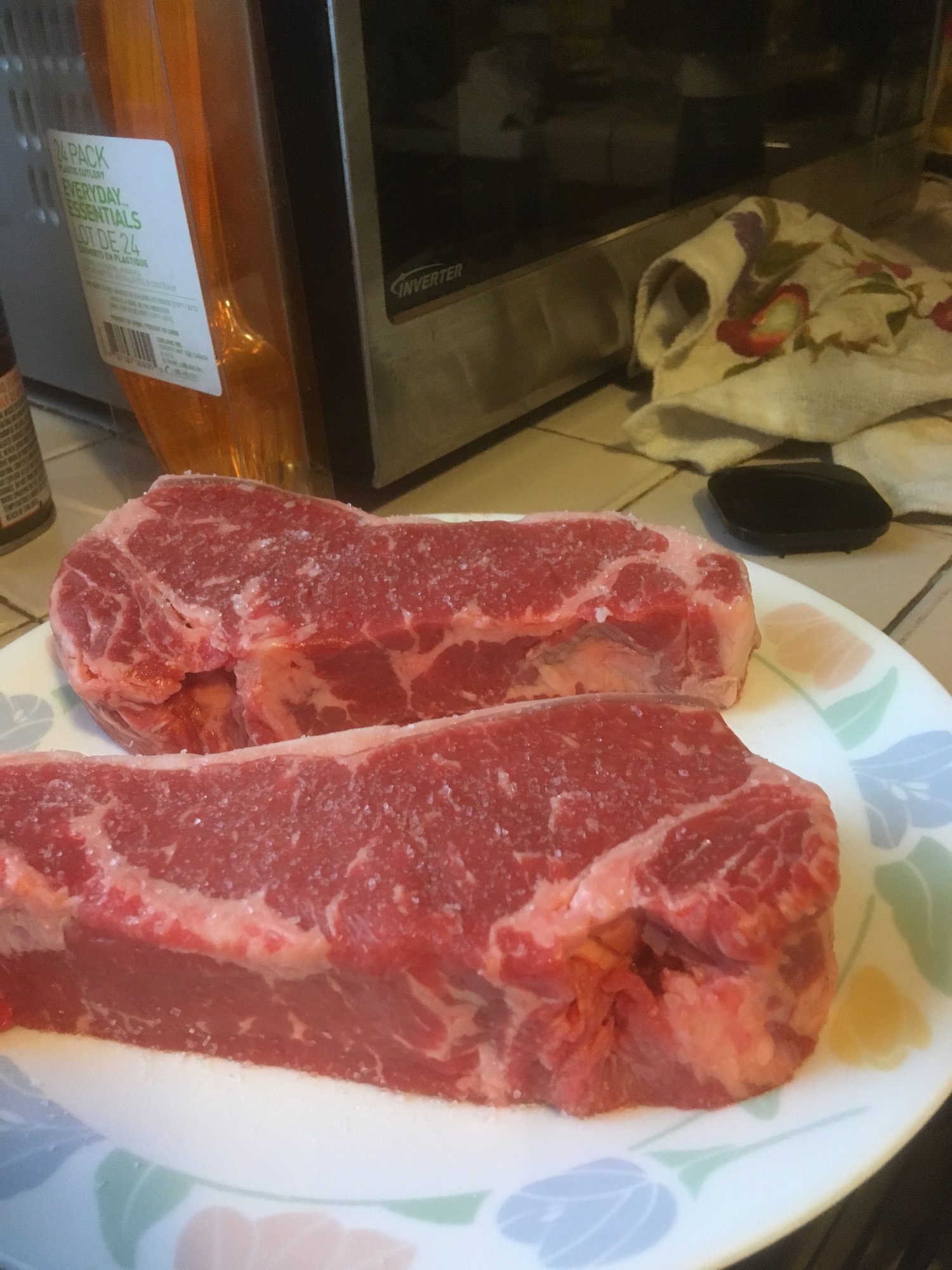

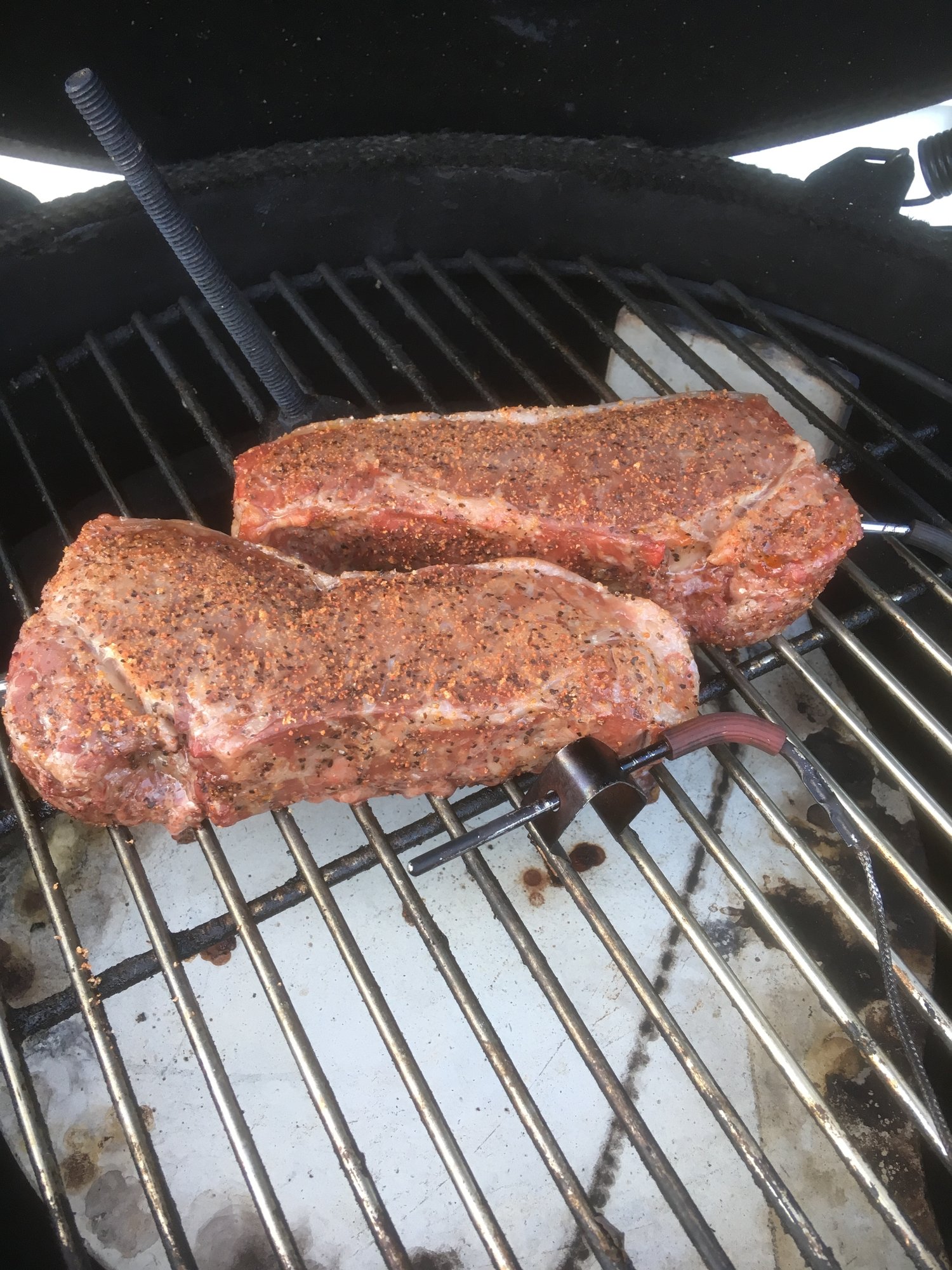
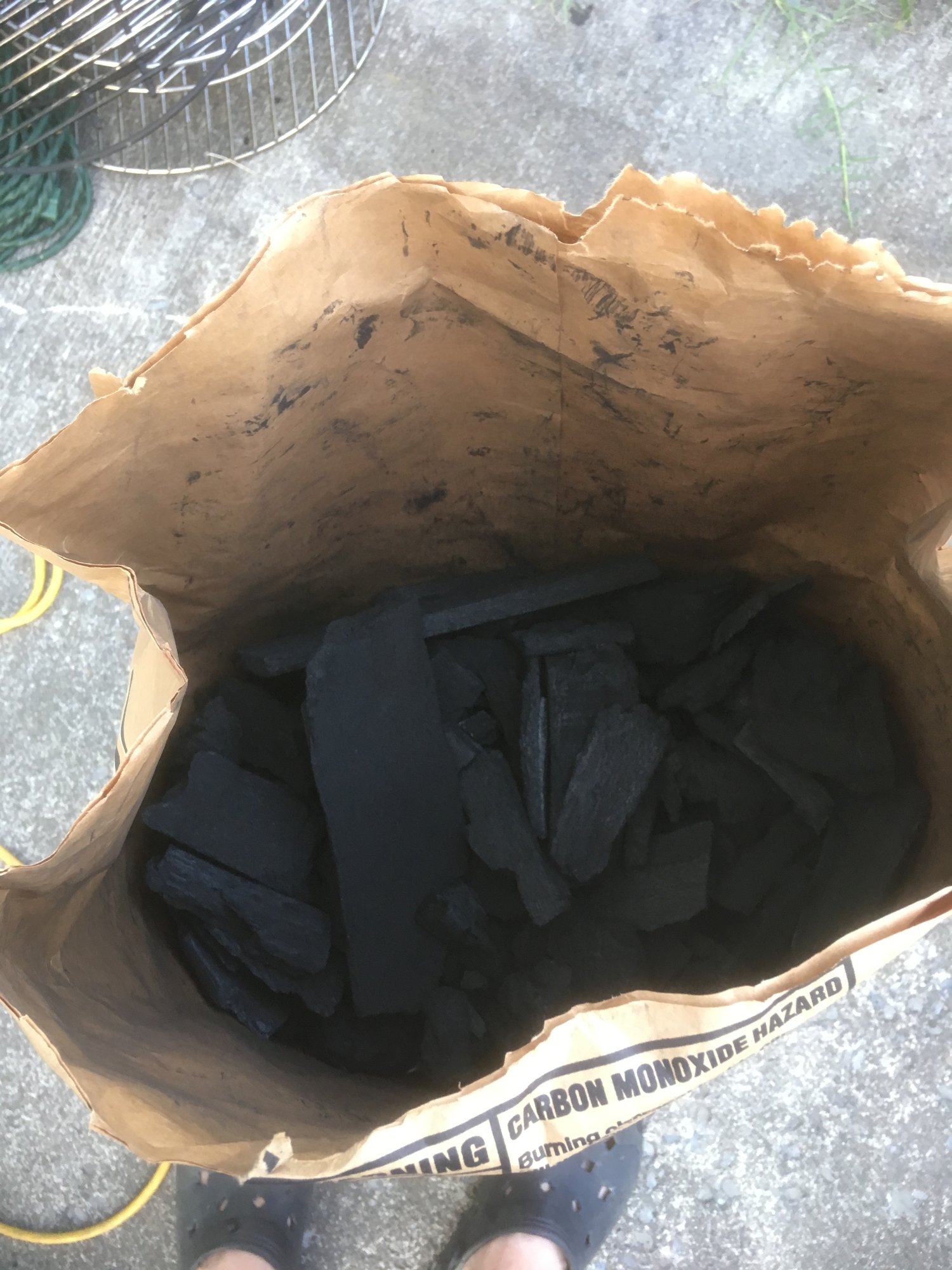
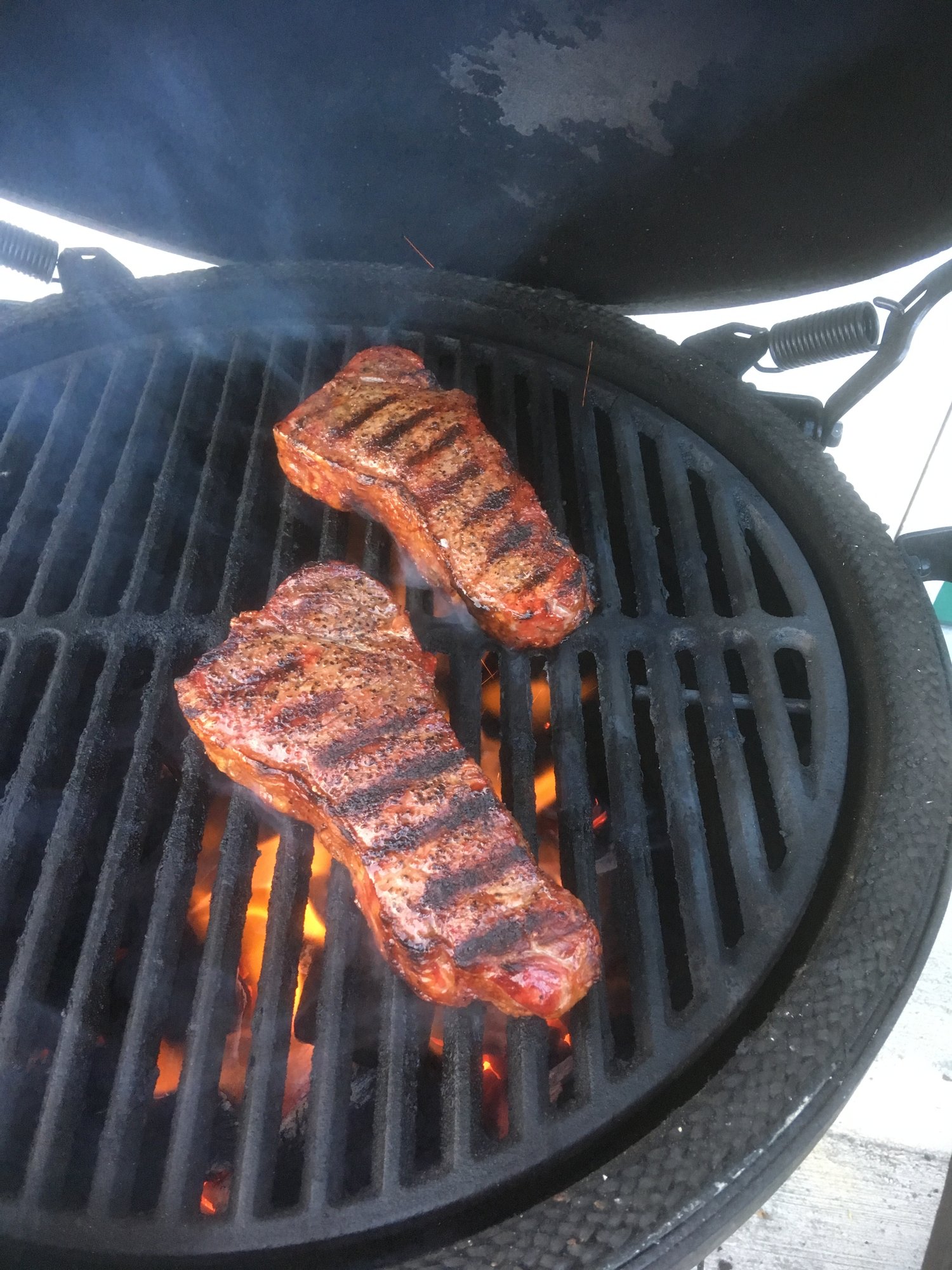

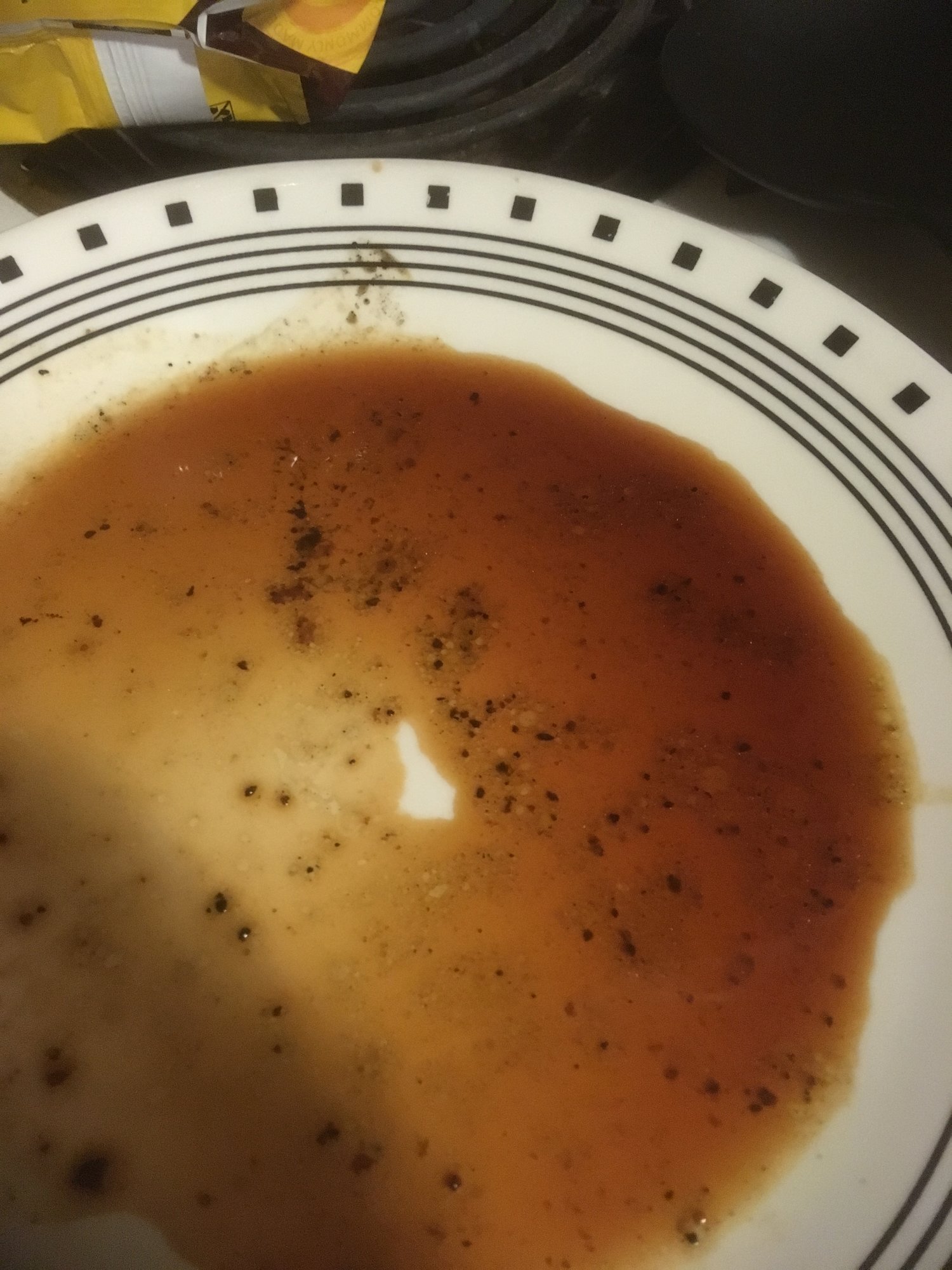 Indirect to 125, then seared, wish I had pulled around 120, still extremely juicy. Simple sides of corn and broccoli.Sorry for no sliced pics dinner ran late and we were famished. At least included a pic of the juice that came out after I finished my steak. Also first time using Rockwood, very impressed with it thus far, not sure if it's gonna permanently convert me from royal oak simply because of the price difference. Might keep a bag on standby for low and slows.
 Comments
-
Rockwood = A+ That meal = A+ Royal Oak = .... Not A+Snellville, GA
-
True but for quick grilling it's fine after the bad smoke has burned off for a bit. So far Rockwood is very good, I just wish it was cheaper. Get what you pay for I guess lol
-
-
I'm a little confused - what's the purpose of bringing the steaks to 120 indirect instead of raised direct?
Seems an extra pain in the a$s step to remove the plate setter before opening vents to sear temp... or do you get a more "all around" warming up to 120 with an indirect set up?
I like the probe at grill level, was there a big difference between that and the dome temp indirect?
What do you use for raised direct?... I see the iron grate at gasket level but I can't see what it's sitting on.
Obviously, I need to change how I reverse sear, I'm getting inconsistent results.Indianapolis, IN
BBQ is a celebration of culture in America. It is the closest thing we have to the wines and cheeses of Europe.
Drive a few hundred miles in any direction, and the experience changes dramatically.
-
I bought the grid raiser from smoke ware.com for raised direct. For thick cuts like that I always reverse sear it just gives me better control, although next time I'll pull 5 degrees earlier because I think I had some carry over cooking. The dome temp and grate temp are around 15 degrees different but if I do a long cook they usually equal out. I think I paid around 25 bucks for that grid raiser
-
I like to pull and rest my thick steaks at around 115* as I raise temps for the final sear. I like a longer sear on the presentation side and like my steaks rare/med rare.LBGE/Weber Kettle/Blackstone 36" Griddle/Turkey Fryer/Induction Burner/Royal Gourmet 24" Griddle/Cuisinart Twin Oaks/Pit Boss Tabletop pellet smoker/Instant Pot
BBQ from the State of Connecticut!
Jim -
That's the route I'm going from here on out
-
Buy going indirect you are slow roasting the steak vs raised direct, which is still grilling. Convection vs radiant/conductive heating. So yeah, more all-around gentle heating.DieselkW said:I'm a little confused - what's the purpose of bringing the steaks to 120 indirect instead of raised direct?
Seems an extra pain in the a$s step to remove the plate setter before opening vents to sear temp... or do you get a more "all around" warming up to 120 with an indirect set up?
I like the probe at grill level, was there a big difference between that and the dome temp indirect?
What do you use for raised direct?... I see the iron grate at gasket level but I can't see what it's sitting on.
Obviously, I need to change how I reverse sear, I'm getting inconsistent results. -
I used to reverse sear and wanting a more consistent, easier process I now sous vide 1.5-2.0 hours at 131 degrees then 60 seconds per side on a ripping hot fire. They come out the same every time.
Lenoir City, TN - Bama fan in Tenn Vol's backyard.
LBGE, Weber Spirit


Categories
- All Categories
- 184K EggHead Forum
- 16.1K Forum List
- 461 EGGtoberfest
- 1.9K Forum Feedback
- 10.5K Off Topic
- 2.4K EGG Table Forum
- 1 Rules & Disclaimer
- 9.2K Cookbook
- 15 Valentines Day
- 118 Holiday Recipes
- 348 Appetizers
- 521 Baking
- 2.5K Beef
- 90 Desserts
- 167 Lamb
- 2.4K Pork
- 1.5K Poultry
- 33 Salads and Dressings
- 322 Sauces, Rubs, Marinades
- 548 Seafood
- 175 Sides
- 122 Soups, Stews, Chilis
- 40 Vegetarian
- 103 Vegetables
- 315 Health
- 293 Weight Loss Forum