Welcome to the EGGhead Forum - a great place to visit and packed with tips and EGGspert advice! You can also join the conversation and get more information and amazing kamado recipes by following Big Green Egg to Experience our World of Flavor™ at:
Want to see how the EGG is made? Click to Watch
Facebook | Twitter | Instagram | Pinterest | Youtube | Vimeo
Share your photos by tagging us and using the hashtag #BigGreenEgg.
Share your photos by tagging us and using the hashtag #BigGreenEgg.
Want to see how the EGG is made? Click to Watch
First pizzas: hit & miss

sheetmetalpete
Posts: 280
Tried my hand at pizza tonight. Used a store bought frozen dough (Rhodes, I think). Being the 2nd time handling pizza dough I have much to learn it seems. First 2 pizzas were really thick. The 3rd one was getting there.
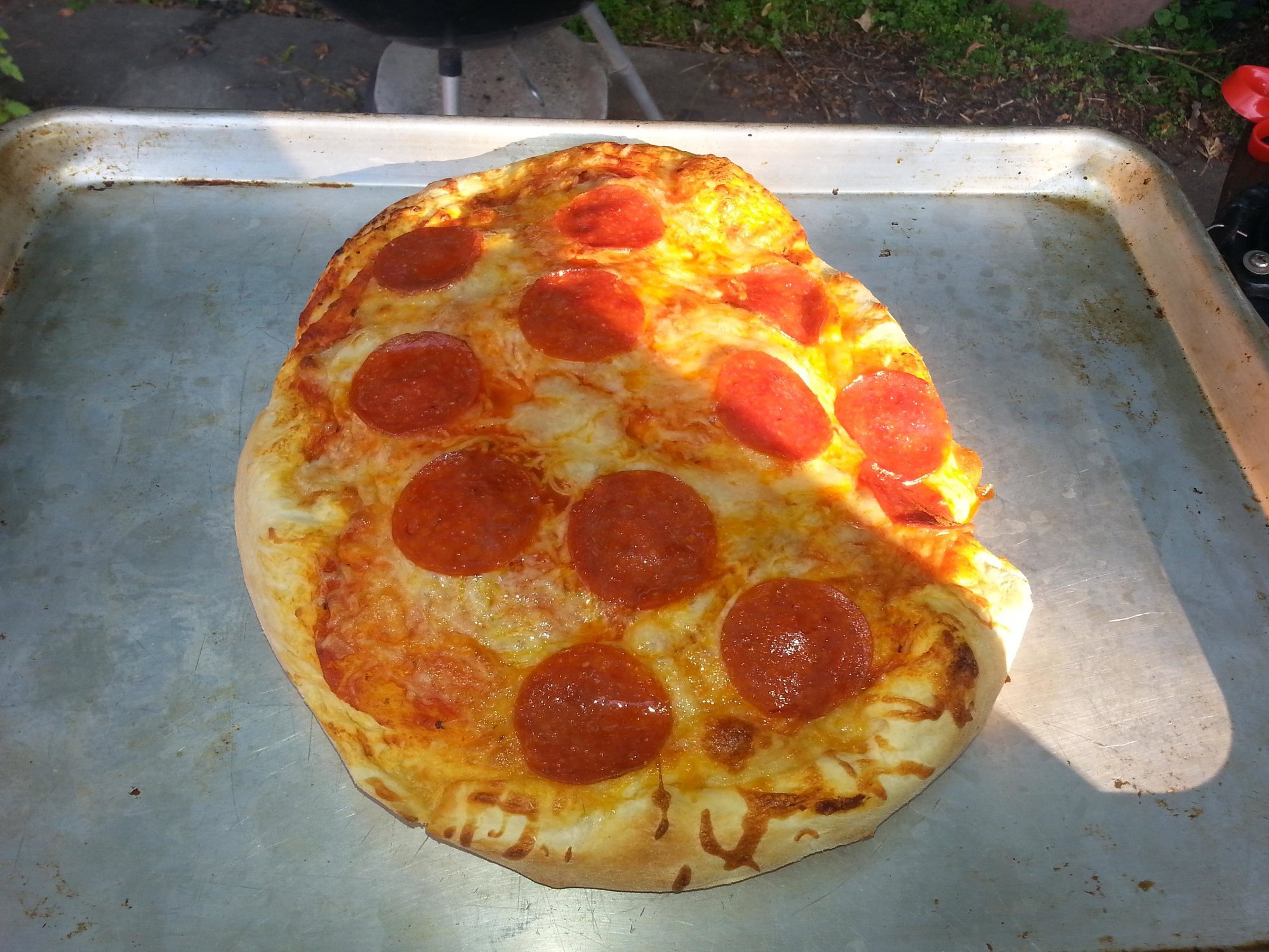
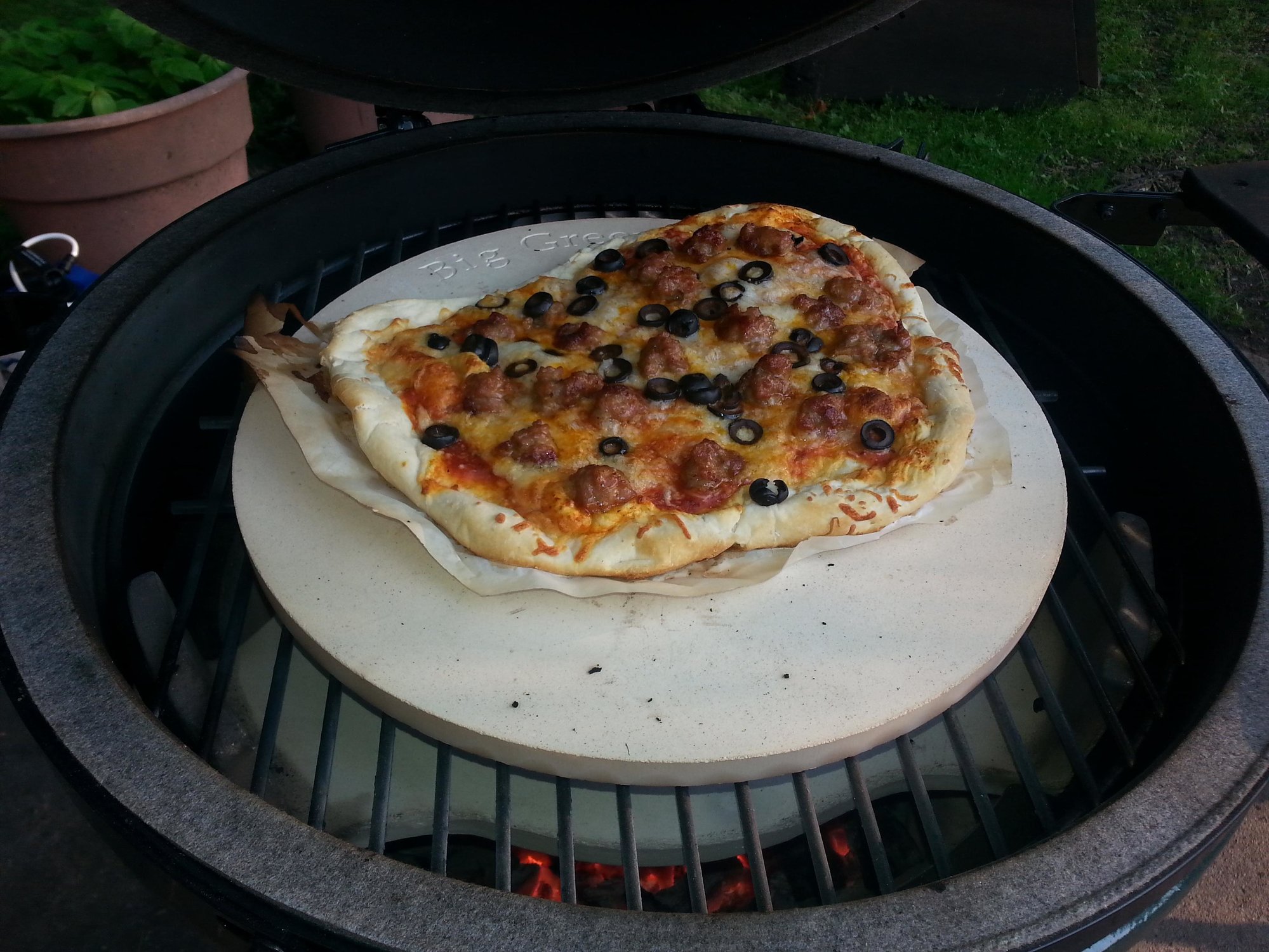
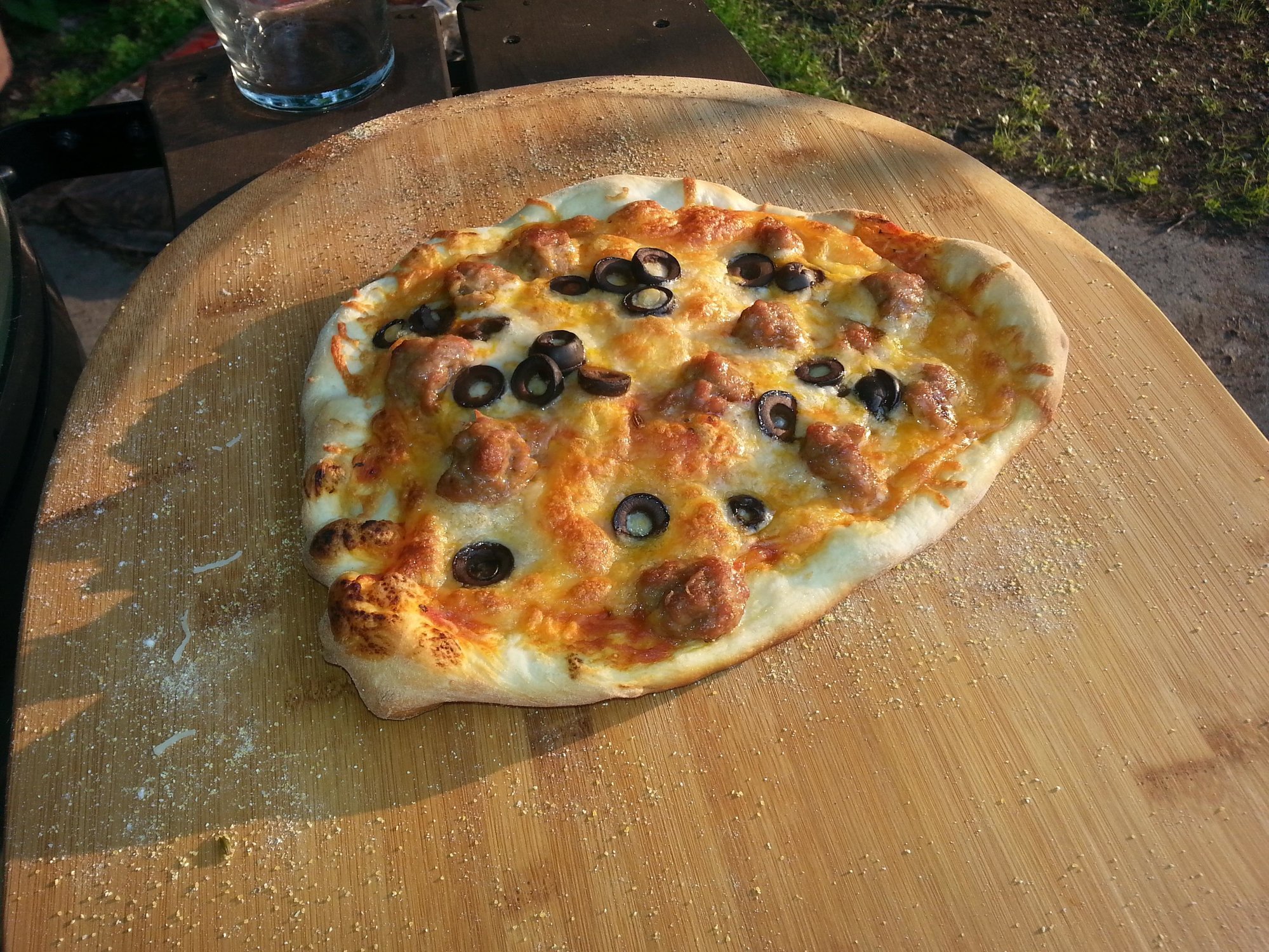
Here's the crust on the 3rd one. No burned taste but it was on the ragged edge.
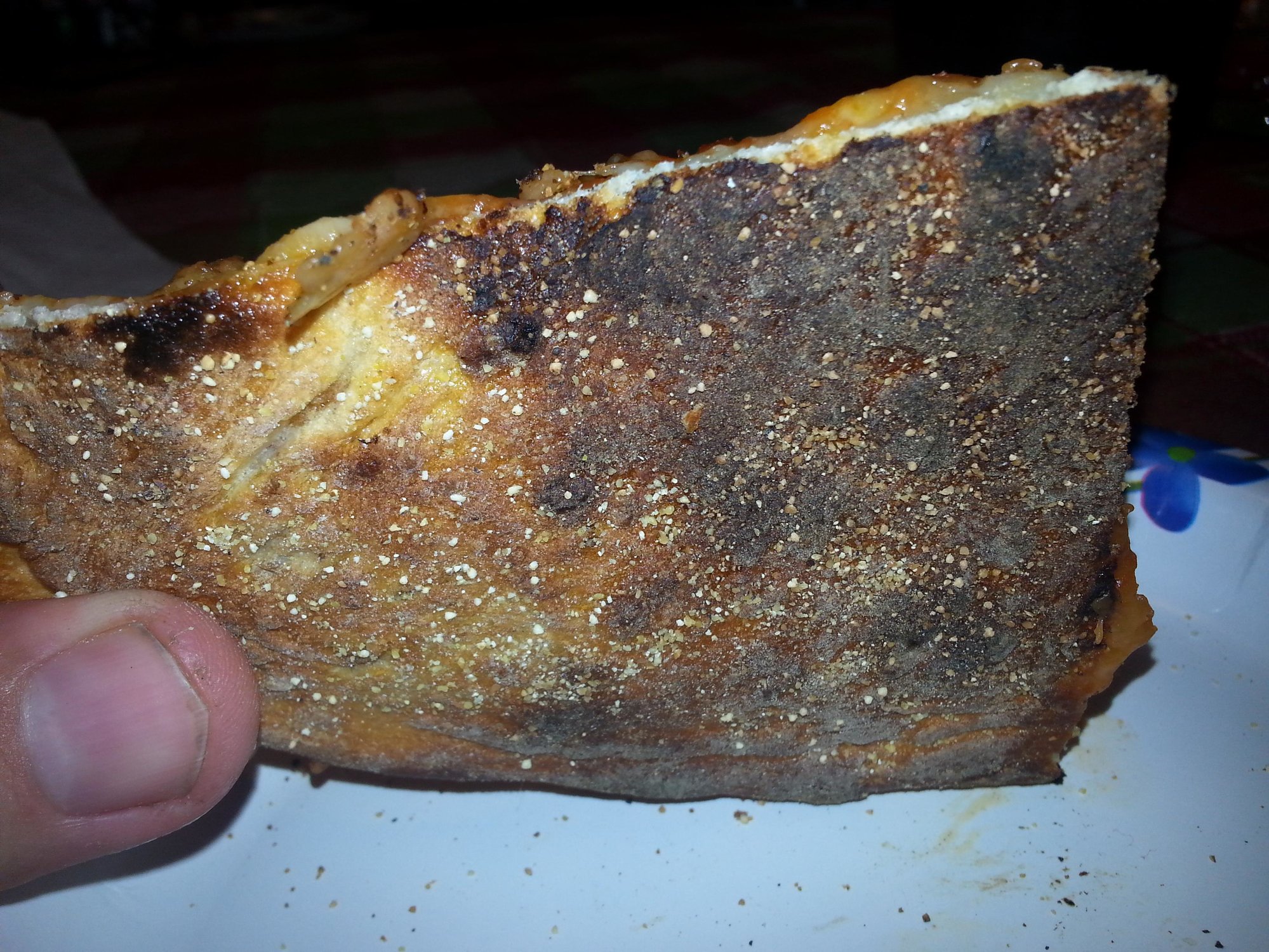
I cooked them at a bit over 500 degrees. Temperature stalled out and wouldn't climb any higher. Because I had different crust thickness I went by the seat of my pants on cook times from one to the next.
I tried parchment paper on the first two. It didn't release on the 2nd one so my chickens ate well tonight.
I'd like to try pizza again next weekend for friends but I'm hesitant because of my inconsistencies. Thoughts or suggestions for next time?
Here's the crust on the 3rd one. No burned taste but it was on the ragged edge.
I cooked them at a bit over 500 degrees. Temperature stalled out and wouldn't climb any higher. Because I had different crust thickness I went by the seat of my pants on cook times from one to the next.
I tried parchment paper on the first two. It didn't release on the 2nd one so my chickens ate well tonight.
I'd like to try pizza again next weekend for friends but I'm hesitant because of my inconsistencies. Thoughts or suggestions for next time?
Glencoe, Minnesota
Comments
-
Leave the thawed dough out (not in the bag) for at least an hour in order to let it rise a bit. There are several videos on YouTube that show how to properly stretch the dough and get it to the appropriate size and thickness. I like to stretch mine out and then toss it a few times to get it nice and thin; with a little practice it's really easy.
I personally like to give mine a roll in some semolina flour which has no taste at all but will help immensely with the transfer from the peel. Some people use corneal but it has a definite taste and a texture as well. The semolina is far superior.
I also have a product?called a super peel (http://www.superpeel.com) which is fantastic. It's a bit pricey but you will never have a messed up or weird looking pizza due to a poor transfer again. I make the pizza right on the peel which happens to be the perfect size for the stone and then I roll it right onto the stone. They have some videos on their site as well that demonstrates how it works if you are interested.
I'm am not sure why you would be stalled out at *500. In my experience the eggs are like Farari's and they will blast through right through*700 pretty easily if you are not careful. You may want to look into that aspect of your issue some more. In any case *500 is fine but I think most people are cooking pizzas between 550-650. Once you get the consistency of the dough figured out I would get the egg stabilized in the 500-550ish range to start (indirect), get the stone in there and let the stone acclimate in the heat for 30min. This is when you can be building your pizza.
Once the stone is ready it's time to throw the pizza on. Timing can vary a bit depending on the sugar content of the dough. Until you know the tendencies of the specific dough you are using I would check it at 5 min but it will probably take closer to 7min. In the future you want to be checking it closer to the time it will be done so you can keep the lid closed and get the top cooked. It will also help to cook pizza higher in the dome to get it cooked evenly. Felt line or higher is best but it looks like you may already be set up to do that.
Hope this helps. This is just a few pointers and my 2¢. It looks like there is a ton of good info on pizza's on the egg in the forum. Just keep at it and each time it get's better and better. We don't even order pizza anymore because of how good it is at home.
Good luck!LBGE- Charleston, SC -
Why are you looking for over 500? It looks like the bottom of the pie got a bigger shot of heat than the top. Going higher with that dough would do the same thing, just much quicker. You've got to equalize that heat on top and bottom. Its not popular to say here, but kamados do not shine when baking pizza IMO. Kamados are a jet engine on the bottom heat side, and not so much from the top. Before I stopped making pizzas on the egg, I would put 2-3 stones down so that the bottom of the pizza had a chance while I got the top the way that I wanted. Also moving higher into the dome will help. On my XL I would actually put the XL platesetter in there, with the small platesetter on top of that. Then I would put 1-2 stones on the small PS. I would get the egg around 650-700 and drop the pie in. The extra mass under the pizza, and the proximity to the dome caused a heat balance making for a better pizza baking environment. But the dough I used was made for that heat. A little higher hydration, lower sugar and oil, and 00 caputo flour would help. My friend works at Rhodes (small company based here in Salt Lake City, UT), and he does not use their dough in his backyard pizza oven. Its my understanding it would do fine as a standard pizza dough, but its not standard once you start going too much north of 450-500.
Keep experimenting, many ways to get it done. The bonus is sampling the experiments along the way. I am sure more opinions will arrive soon. -
Thanks for the replies. They were helpful. I'll keep at it.

Glencoe, Minnesota -


Categories
- All Categories
- 184K EggHead Forum
- 16.1K Forum List
- 461 EGGtoberfest
- 1.9K Forum Feedback
- 10.5K Off Topic
- 2.4K EGG Table Forum
- 1 Rules & Disclaimer
- 9.2K Cookbook
- 15 Valentines Day
- 118 Holiday Recipes
- 348 Appetizers
- 521 Baking
- 2.5K Beef
- 90 Desserts
- 167 Lamb
- 2.4K Pork
- 1.5K Poultry
- 33 Salads and Dressings
- 322 Sauces, Rubs, Marinades
- 548 Seafood
- 175 Sides
- 122 Soups, Stews, Chilis
- 40 Vegetarian
- 103 Vegetables
- 315 Health
- 293 Weight Loss Forum