Share your photos by tagging us and using the hashtag #BigGreenEgg.
Want to see how the EGG is made? Click to Watch
Pizza Dough Plan

Procedures
What am I drinking now? Woodford....neat
Comments
-
There are lots of differing recipes for pizza dough. Please report back how well this one works. It does seem like the initial room temp rise is very long. I usually see a first rise of 1-2 hours for doughs that will be refrigerated for a slow rise.Southeast Florida - LBGE
In cooking, often we implement steps for which we have no explanations other than ‘that’s what everybody else does’ or ‘that’s what I have been told.’ Dare to think for yourself. -
Will do. Thanks for the reply.Joe - I'm a reformed gasser-holic aka 4Runner Columbia, SC Wonderful BGE Resource Site: http://www.nakedwhiz.com/ceramicfaq.htm and http://www.nibblemethis.com/ and http://playingwithfireandsmoke.blogspot.com/2006/02/recipes.html
What am I drinking now? Woodford....neat -
I do what this guy says. He's clearly spend his life mastering pizza making.
http://www.varasanos.com/PizzaRecipe.htm
Here's the part of pizza making that I pay most attention to:Autolyse - Autolyse is a fancy word that just means one simple thing. The flour and water should sit together for at least 20 minutes before kneading begins. It's a CRITICAL step. Some say that you should mix just the flour and water together, then after 20 minutes add the salt and yeast, then mix. Others say you can add all the ingredients at the beginning. I have found very little difference.
Pour all the ingredients into the mixer, except just use 75% of the flour for now. So all of the water, salt, Instant dry Yeast (if used) and 75% of the flour are put into the mixer. Everything should be room temperature or a bit cooler.
There is no need to dissolve the yeast in warm water or feed it sugar. 'Proofing' the yeast was probably required decades ago, but I've never had yeast that didn't activate. The yeast feeds on the flour so you don't need to put in sugar. The proofing step that you see in many recipes is really an old wives tale at this point.
Mix on lowest speed for 1-2 minutes or until completely blended. At this stage you should have a mix that is drier than a batter, but wetter than a dough. Closer to batter probably.
Cover and Let it rest for 20 minutes. One of the most important things I've found is that these rest periods have a huge impact on the final product. I've seen so much arguing online about the proper flour for making pizza. "You need super high protein flour to get the right structure for a pizza dough". People argue endlessly about brands and minor changes in flour blends, types of water, etc. A lot of this is myth and a big waste of time. The autolyse period is FAR more important to creating structured gluten development than is the starting protein percentage. Autolyse and knead properly and AP flour will produce a great pizza with a lot of structure. Do these steps poorly and bread or high gluten flour will not help you at ALL. This step reminds me of mixing pie dough. After you add the water to pie dough, it's crumbly. But after sitting for 20 minutes, it's a dough. The water takes time to soak in, and when it does it transforms the pie dough. It's really a similar thing here with pizza dough
Packerland, Wisconsin -
When do you add the final 25%?LBGE (still waitin' for my free T-Shirt), DIgiQ DX2 (In Blue, cause it's the fastest), Heavy Duty Kick Ash Basket, Mc Farland, WI.


If it wasn't for my BGE I'd have no use for my backyard... -
Thanks for the info but what @XC242 posted??. Thanks again.Joe - I'm a reformed gasser-holic aka 4Runner Columbia, SC Wonderful BGE Resource Site: http://www.nakedwhiz.com/ceramicfaq.htm and http://www.nibblemethis.com/ and http://playingwithfireandsmoke.blogspot.com/2006/02/recipes.html
What am I drinking now? Woodford....neat -
and the rest of the story. Got it from the link provided.
Wet Kneading
Start Mixing on Low speed for 8 minutes. 5 minutes into it start adding flour gradually.
This part is critical and it's something that I did not understand at all until relatively recently: Even if the dough is very sticky - that is it does not have enough flour in it to form a ball and it is still halfway between a batter and a dough - it is still working. This is where MOST of the kneading occurs. The gluten IS working at this point even though it's not a dough yet.
If you are using a KA, and you lift the hook, the dough should fall off by itself. The hook should look like its going through the dough, and not pushing the dough around. It should be that wet until nearly the end.
With the DLX you can play with the scrapper and the roller, pressing them together to allow the dough to extrude through the gaps. This really works the dough. The DLX mechanism is totally different than a regular mixer.
After the first 6-8 minutes increase the speed of the mixer slightly. I never go higher than 1/3 of the dial on my mixer. Keep in mind that in the old days they mixed this by hand (Anthony at Una Pizza Napoletana in NYC still does). You should add most of the remaining flour. But you still want a very wet dough, so don't go crazy.
At some point during this process the dough should be getting much firmer and should form more of a ball. Mix another minute or so a this stage You may find that the dough is sticking to the roller /hook and not really working too much at this point. This is why it's so important to do most of the mixing at the earlier, wetter stages. Once the dough is at this point, it is done. My recommendation is this: DON'T BE A SLAVE TO RECIPES AND PERCENTAGES. It's fine to use the spreadsheet or other measures as a guideline, but you have to judge how much flour goes into the dough by feeling it. Do NOT force more flour into the mix just to reach a number. If the dough feels good and soft and you still have flour you have not put in, don't sweat it. Leave it out. In the end you need a wet dough. In fact, even the dough has formed more of ball, if you let it sit, it should spread out a little and look a little limp. This is what you want, not a tight ball, but a slack, wet soft dough.
One of the best ways to see how your dough is doing is to sprinkle a little flour on in and just feel it. It should feel baby bottom soft. If you don't sprinkle flour it will just feel sticky and not look smooth. But sprinkle a tiny bit of flour and now its soft and smooth. This is what you want. This is a much gentler recipe than most and it shows in the final dough.
With Hi Gluten flours a commercial mixer and a dry dough, you will find that the dough is tough to work and consequently both the machine and the dough will get very hot. Commercial bakers compensate by starting with cool water and by measuring the temperature of the dough as they go. The procedures I'm outlining don't require this. The wet knead technique and the lower protein all but eliminates the friction. You can expect the dough to heat only about 3-4 F while mixing, so it's not an issue.
Joe - I'm a reformed gasser-holic aka 4Runner Columbia, SC Wonderful BGE Resource Site: http://www.nakedwhiz.com/ceramicfaq.htm and http://www.nibblemethis.com/ and http://playingwithfireandsmoke.blogspot.com/2006/02/recipes.html
What am I drinking now? Woodford....neat -
And that site is bookmarked @ChokeOnSmoke thanks for sharing.Joe - I'm a reformed gasser-holic aka 4Runner Columbia, SC Wonderful BGE Resource Site: http://www.nakedwhiz.com/ceramicfaq.htm and http://www.nibblemethis.com/ and http://playingwithfireandsmoke.blogspot.com/2006/02/recipes.html
What am I drinking now? Woodford....neat -
Hope it helps. It's definitely helped me. These "wetter" doughs allow me to crank my egg up to 750-850F (with my pizza stone in the 600+ range) and not burn the bottom of the pie at all. I'm still experimenting and every time I make a pizza I go hotter (and more importantly, let my stone heat up more/longer). I'm starting to make some pretty good stuff.4Runner said:And that site is bookmarked @ChokeOnSmoke thanks for sharing.
Good luck!Packerland, Wisconsin -
Do you mind sharing your measurements with me?ChokeOnSmoke said:
Hope it helps. It's definitely helped me. These "wetter" doughs allow me to crank my egg up to 750-850F (with my pizza stone in the 600+ range) and not burn the bottom of the pie at all. I'm still experimenting and every time I make a pizza I go hotter (and more importantly, let my stone heat up more/longer). I'm starting to make some pretty good stuff.4Runner said:And that site is bookmarked @ChokeOnSmoke thanks for sharing.
Good luck!Joe - I'm a reformed gasser-holic aka 4Runner Columbia, SC Wonderful BGE Resource Site: http://www.nakedwhiz.com/ceramicfaq.htm and http://www.nibblemethis.com/ and http://playingwithfireandsmoke.blogspot.com/2006/02/recipes.html
What am I drinking now? Woodford....neat -
This will make one 12" pie:4Runner said:
Do you mind sharing your measurements with me?ChokeOnSmoke said:
Hope it helps. It's definitely helped me. These "wetter" doughs allow me to crank my egg up to 750-850F (with my pizza stone in the 600+ range) and not burn the bottom of the pie at all. I'm still experimenting and every time I make a pizza I go hotter (and more importantly, let my stone heat up more/longer). I'm starting to make some pretty good stuff.4Runner said:And that site is bookmarked @ChokeOnSmoke thanks for sharing.
Good luck!
1.25 cups flour
1/2 cup water
3/4 teaspoon salt
1 teaspoon instant yeast
Combine 75% flour, water, salt & yeast.
Mix on lowest speed for 1-2 minutes (Should be wet, consistency of batter).
Cover and let sit for 20 minutes.
Now mix on low for 5 minutes.
Start adding the remaining 25% flour for the next 3 minutes with increased speed to 1/3 power.
Let rest 20 minutes.
Hand kneed into a ball and chill overnight or up to 6 days.
Take out of fridge 90 minutes before use.
* this is my summary of what I learned from that site and adjusted for one pizza. I'm still experimenting so I'm sure I'll be modifying slightly as I go...
Happy cooking!
Packerland, Wisconsin -
Thanks. I'm going to times 4 it.ChokeOnSmoke said:
This will make one 12" pie:4Runner said:
Do you mind sharing your measurements with me?ChokeOnSmoke said:
Hope it helps. It's definitely helped me. These "wetter" doughs allow me to crank my egg up to 750-850F (with my pizza stone in the 600+ range) and not burn the bottom of the pie at all. I'm still experimenting and every time I make a pizza I go hotter (and more importantly, let my stone heat up more/longer). I'm starting to make some pretty good stuff.4Runner said:And that site is bookmarked @ChokeOnSmoke thanks for sharing.
Good luck!
1.25 cups flour
1/2 cup water
3/4 teaspoon salt
1 teaspoon instant yeast
Combine 75% flour, water, salt & yeast.
Mix on lowest speed for 1-2 minutes (Should be wet, consistency of batter).
Cover and let sit for 20 minutes.
Now mix on low for 5 minutes.
Start adding the remaining 25% flour for the next 3 minutes with increased speed to 1/3 power.
Let rest 20 minutes.
Hand kneed into a ball and chill overnight or up to 6 days.
Take out of fridge 90 minutes before use.
* this is my summary of what I learned from that site and adjusted for one pizza. I'm still experimenting so I'm sure I'll be modifying slightly as I go...
Happy cooking!Joe - I'm a reformed gasser-holic aka 4Runner Columbia, SC Wonderful BGE Resource Site: http://www.nakedwhiz.com/ceramicfaq.htm and http://www.nibblemethis.com/ and http://playingwithfireandsmoke.blogspot.com/2006/02/recipes.html
What am I drinking now? Woodford....neat -
Let me know how it work for you. Feedback is always good.Packerland, Wisconsin
-
So far so good @ChokeOnSmoke I took your measurements and made 4 pizza balls. I think my dough could be a bit wetter but seems like a good first effort. I'll post pick soon.ChokeOnSmoke said:
This will make one 12" pie:4Runner said:
Do you mind sharing your measurements with me?ChokeOnSmoke said:
Hope it helps. It's definitely helped me. These "wetter" doughs allow me to crank my egg up to 750-850F (with my pizza stone in the 600+ range) and not burn the bottom of the pie at all. I'm still experimenting and every time I make a pizza I go hotter (and more importantly, let my stone heat up more/longer). I'm starting to make some pretty good stuff.4Runner said:And that site is bookmarked @ChokeOnSmoke thanks for sharing.
Good luck!
1.25 cups flour
1/2 cup water
3/4 teaspoon salt
1 teaspoon instant yeast
Combine 75% flour, water, salt & yeast.
Mix on lowest speed for 1-2 minutes (Should be wet, consistency of batter).
Cover and let sit for 20 minutes.
Now mix on low for 5 minutes.
Start adding the remaining 25% flour for the next 3 minutes with increased speed to 1/3 power.
Let rest 20 minutes.
Hand kneed into a ball and chill overnight or up to 6 days.
Take out of fridge 90 minutes before use.
* this is my summary of what I learned from that site and adjusted for one pizza. I'm still experimenting so I'm sure I'll be modifying slightly as I go...
Happy cooking!Joe - I'm a reformed gasser-holic aka 4Runner Columbia, SC Wonderful BGE Resource Site: http://www.nakedwhiz.com/ceramicfaq.htm and http://www.nibblemethis.com/ and http://playingwithfireandsmoke.blogspot.com/2006/02/recipes.html
What am I drinking now? Woodford....neat -
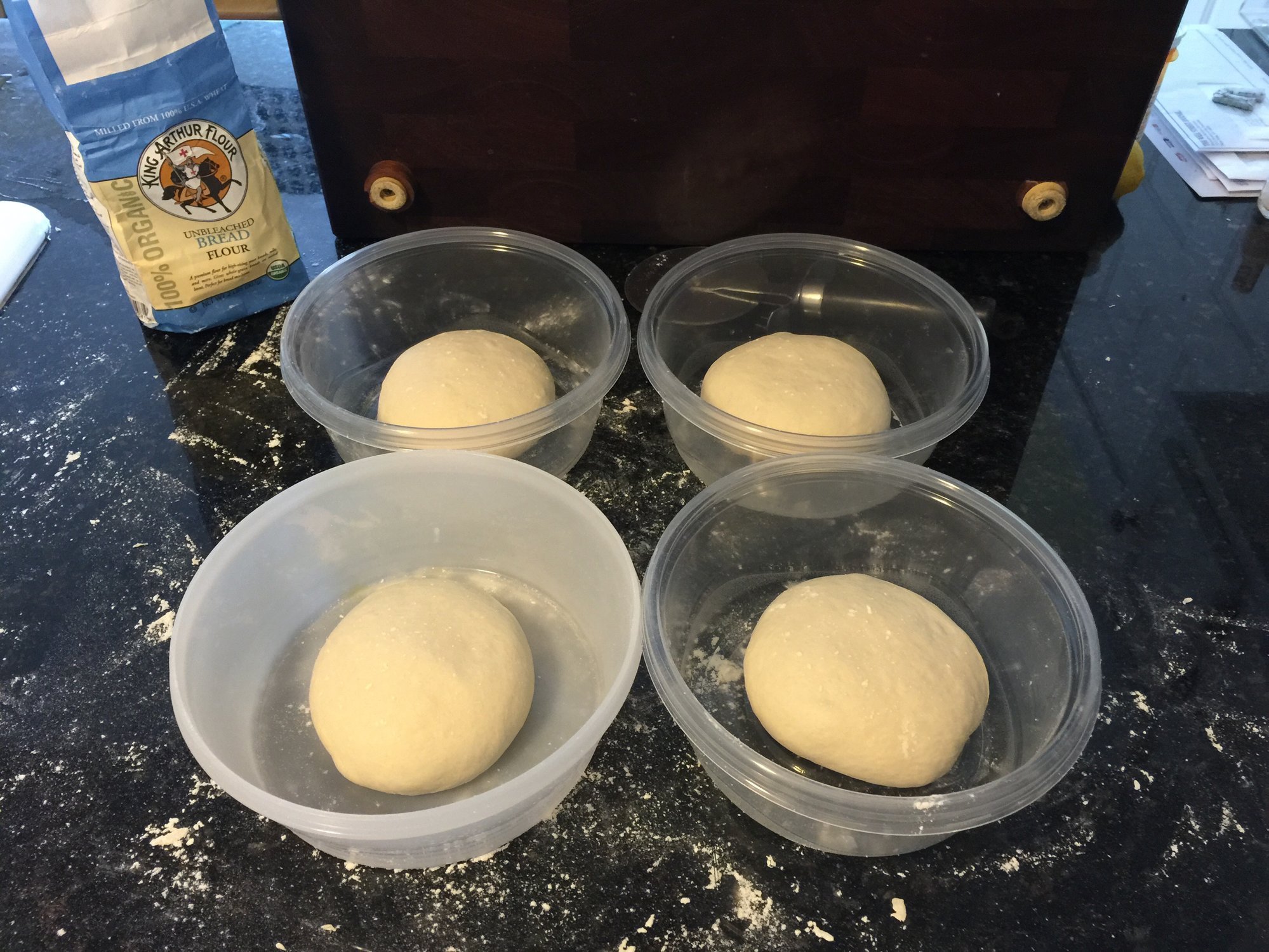 Joe - I'm a reformed gasser-holic aka 4Runner Columbia, SC Wonderful BGE Resource Site: http://www.nakedwhiz.com/ceramicfaq.htm and http://www.nibblemethis.com/ and http://playingwithfireandsmoke.blogspot.com/2006/02/recipes.html
What am I drinking now? Woodford....neat -
ChokeOnSmoke said:I do what this guy says. He's clearly spend his life mastering pizza making.
http://www.varasanos.com/PizzaRecipe.htm
Here's the part of pizza making that I pay most attention to:Autolyse - Autolyse is a fancy word that just means one simple thing. The flour and water should sit together for at least 20 minutes before kneading begins. It's a CRITICAL step. Some say that you should mix just the flour and water together, then after 20 minutes add the salt and yeast, then mix. Others say you can add all the ingredients at the beginning. I have found very little difference.
Pour all the ingredients into the mixer, except just use 75% of the flour for now. So all of the water, salt, Instant dry Yeast (if used) and 75% of the flour are put into the mixer. Everything should be room temperature or a bit cooler.
There is no need to dissolve the yeast in warm water or feed it sugar. 'Proofing' the yeast was probably required decades ago, but I've never had yeast that didn't activate. The yeast feeds on the flour so you don't need to put in sugar. The proofing step that you see in many recipes is really an old wives tale at this point.
Mix on lowest speed for 1-2 minutes or until completely blended. At this stage you should have a mix that is drier than a batter, but wetter than a dough. Closer to batter probably.
Cover and Let it rest for 20 minutes. One of the most important things I've found is that these rest periods have a huge impact on the final product. I've seen so much arguing online about the proper flour for making pizza. "You need super high protein flour to get the right structure for a pizza dough". People argue endlessly about brands and minor changes in flour blends, types of water, etc. A lot of this is myth and a big waste of time. The autolyse period is FAR more important to creating structured gluten development than is the starting protein percentage. Autolyse and knead properly and AP flour will produce a great pizza with a lot of structure. Do these steps poorly and bread or high gluten flour will not help you at ALL. This step reminds me of mixing pie dough. After you add the water to pie dough, it's crumbly. But after sitting for 20 minutes, it's a dough. The water takes time to soak in, and when it does it transforms the pie dough. It's really a similar thing here with pizza dough
Do you think this recipe would work with the Caputo 00 flour?Northern Colorado Egghead since 2012.
XL BGE and a KBQ.
-
Yes. He addresses flour and you may be surprised with his opinion. Give it a read.Joe - I'm a reformed gasser-holic aka 4Runner Columbia, SC Wonderful BGE Resource Site: http://www.nakedwhiz.com/ceramicfaq.htm and http://www.nibblemethis.com/ and http://playingwithfireandsmoke.blogspot.com/2006/02/recipes.html
What am I drinking now? Woodford....neat -
I use Caputo 00, but acccording to Jeff's research, it doesn't seem to make a huge difference which one you use.QDude said:ChokeOnSmoke said:I do what this guy says. He's clearly spend his life mastering pizza making.
http://www.varasanos.com/PizzaRecipe.htm
Here's the part of pizza making that I pay most attention to:Autolyse - Autolyse is a fancy word that just means one simple thing. The flour and water should sit together for at least 20 minutes before kneading begins. It's a CRITICAL step. Some say that you should mix just the flour and water together, then after 20 minutes add the salt and yeast, then mix. Others say you can add all the ingredients at the beginning. I have found very little difference.
Pour all the ingredients into the mixer, except just use 75% of the flour for now. So all of the water, salt, Instant dry Yeast (if used) and 75% of the flour are put into the mixer. Everything should be room temperature or a bit cooler.
There is no need to dissolve the yeast in warm water or feed it sugar. 'Proofing' the yeast was probably required decades ago, but I've never had yeast that didn't activate. The yeast feeds on the flour so you don't need to put in sugar. The proofing step that you see in many recipes is really an old wives tale at this point.
Mix on lowest speed for 1-2 minutes or until completely blended. At this stage you should have a mix that is drier than a batter, but wetter than a dough. Closer to batter probably.
Cover and Let it rest for 20 minutes. One of the most important things I've found is that these rest periods have a huge impact on the final product. I've seen so much arguing online about the proper flour for making pizza. "You need super high protein flour to get the right structure for a pizza dough". People argue endlessly about brands and minor changes in flour blends, types of water, etc. A lot of this is myth and a big waste of time. The autolyse period is FAR more important to creating structured gluten development than is the starting protein percentage. Autolyse and knead properly and AP flour will produce a great pizza with a lot of structure. Do these steps poorly and bread or high gluten flour will not help you at ALL. This step reminds me of mixing pie dough. After you add the water to pie dough, it's crumbly. But after sitting for 20 minutes, it's a dough. The water takes time to soak in, and when it does it transforms the pie dough. It's really a similar thing here with pizza dough
Do you think this recipe would work with the Caputo 00 flour?Packerland, Wisconsin -
Packerland, Wisconsin
-
Bookmarked. Lots of great dough advice!!XL, Small, Mini & Mini Max Green Egg, Shirley Fab Trailer, 6 gal and 2.5 gal Cajun Fryers, BlueStar 60" Range, 48" Lonestar Grillz Santa Maria, Alto Shaam 1200s, Gozney Dome, Gateway 55g Drum
-
Is this a cold fermentation process?
Northern Colorado Egghead since 2012.
XL BGE and a KBQ.
-
Yes.Joe - I'm a reformed gasser-holic aka 4Runner Columbia, SC Wonderful BGE Resource Site: http://www.nakedwhiz.com/ceramicfaq.htm and http://www.nibblemethis.com/ and http://playingwithfireandsmoke.blogspot.com/2006/02/recipes.html
What am I drinking now? Woodford....neat -
@ChokeOnSmoke - I'm just going to pretend my pizza cook last night never happened. I have 4 new ones in the container now. I upped the water, reduced the flour and yeast a bit. Will see how it goes this round.Joe - I'm a reformed gasser-holic aka 4Runner Columbia, SC Wonderful BGE Resource Site: http://www.nakedwhiz.com/ceramicfaq.htm and http://www.nibblemethis.com/ and http://playingwithfireandsmoke.blogspot.com/2006/02/recipes.html
What am I drinking now? Woodford....neat -
Let me be the next to thank you for posting this link. I have been wanting to up my game with my pizza dough for a while. Thus far I have been nibbling around the edges, making a few small modifications, without any significant changes in the end product. I've been reading another forum on pizza making and they are really fanatical about certain things that this guy says aren't as important as some would say they are. Some of it seemed a bit ridiculous but I was actually considering buying a scale to make sure my measurements are perfect. It sounds like that is a bit over the top.ChokeOnSmoke said:I do what this guy says. He's clearly spend his life mastering pizza making.
http://www.varasanos.com/PizzaRecipe.htm
Here's the part of pizza making that I pay most attention to:Autolyse - Autolyse is a fancy word that just means one simple thing. The flour and water should sit together for at least 20 minutes before kneading begins. It's a CRITICAL step. Some say that you should mix just the flour and water together, then after 20 minutes add the salt and yeast, then mix. Others say you can add all the ingredients at the beginning. I have found very little difference.
Pour all the ingredients into the mixer, except just use 75% of the flour for now. So all of the water, salt, Instant dry Yeast (if used) and 75% of the flour are put into the mixer. Everything should be room temperature or a bit cooler.
There is no need to dissolve the yeast in warm water or feed it sugar. 'Proofing' the yeast was probably required decades ago, but I've never had yeast that didn't activate. The yeast feeds on the flour so you don't need to put in sugar. The proofing step that you see in many recipes is really an old wives tale at this point.
Mix on lowest speed for 1-2 minutes or until completely blended. At this stage you should have a mix that is drier than a batter, but wetter than a dough. Closer to batter probably.
Cover and Let it rest for 20 minutes. One of the most important things I've found is that these rest periods have a huge impact on the final product. I've seen so much arguing online about the proper flour for making pizza. "You need super high protein flour to get the right structure for a pizza dough". People argue endlessly about brands and minor changes in flour blends, types of water, etc. A lot of this is myth and a big waste of time. The autolyse period is FAR more important to creating structured gluten development than is the starting protein percentage. Autolyse and knead properly and AP flour will produce a great pizza with a lot of structure. Do these steps poorly and bread or high gluten flour will not help you at ALL. This step reminds me of mixing pie dough. After you add the water to pie dough, it's crumbly. But after sitting for 20 minutes, it's a dough. The water takes time to soak in, and when it does it transforms the pie dough. It's really a similar thing here with pizza dough
One stupid question I have: What do you do to take the pizza on and off the egg? I typically cook around 450 or 500, using a baking stone, and I load up the pizza on the stone before I put it on the grill, then remove it along with the baking stone. If I try to cook my next pie at 600 or higher, I think the stone will be too hot to handle. So I have considered buying a pizza peel, but I have worried about transitioning the pizza from the peel to the hot grill without it falling apart. I also bought one of those perforated metal plates to cook on, my first attempt with that method was OK but not really an improvement on what I usually do.
Just curious to hear from you and others as to how you approach this.XL BGE, egghead since 2010
Favorites: Beer Butt Chicken, Paella, ABT's, Prime Rib
-
Pizza peel. If you want the easiest way you can use parchment paper. I cook all my pizzas with parchment. Build them on it, trim the edges and throw it right on the stone. Cook the whole way with it there. I usually have some burn up around the pizza but the ashes don't hurt anything.XL, Small, Mini & Mini Max Green Egg, Shirley Fab Trailer, 6 gal and 2.5 gal Cajun Fryers, BlueStar 60" Range, 48" Lonestar Grillz Santa Maria, Alto Shaam 1200s, Gozney Dome, Gateway 55g Drum
-
You need to use a pizza peel to slide the pizza onto the preheated stone. The stone needs to be throughly preheated before cooking on it. Never handle a hot pizza stone. The pizza will slide off the peel - it just takes a little practice and something between the dough and the peel to reduce the drag (semolina, cornmeal, or parchment paper).Southeast Florida - LBGE
In cooking, often we implement steps for which we have no explanations other than ‘that’s what everybody else does’ or ‘that’s what I have been told.’ Dare to think for yourself. -
@4Runner Sorry to hear that. Burned the crap out of the bottom? Keep trying, its worth the effort in the end!4Runner said:@ChokeOnSmoke - I'm just going to pretend my pizza cook last night never happened. I have 4 new ones in the container now. I upped the water, reduced the flour and yeast a bit. Will see how it goes this round.Packerland, Wisconsin -
I use a wooden pizza peel. Slap some flour on it and rub it in with your hand. I don't use parchment paper as I've never had one stick. As long as you have your ingredients all cut up and ready to go and assemble your pie in a few minutes time, you should be fine. I give the peel a little shake ever so often just to make sure it's not sticking. Once assembled, slide it right onto the hot pizza stone. You want to preheat your stone for a while before putting the wet dough on it (then it won't stick). I'm up to 45 minutes of preheating before I slide the uncooked pizza on.TTUEgghead said:One stupid question I have: What do you do to take the pizza on and off the egg? I typically cook around 450 or 500, using a baking stone, and I load up the pizza on the stone before I put it on the grill, then remove it along with the baking stone. If I try to cook my next pie at 600 or higher, I think the stone will be too hot to handle. So I have considered buying a pizza peel, but I have worried about transitioning the pizza from the peel to the hot grill without it falling apart. I also bought one of those perforated metal plates to cook on, my first attempt with that method was OK but not really an improvement on what I usually do.
Just curious to hear from you and others as to how you approach this.Packerland, Wisconsin -
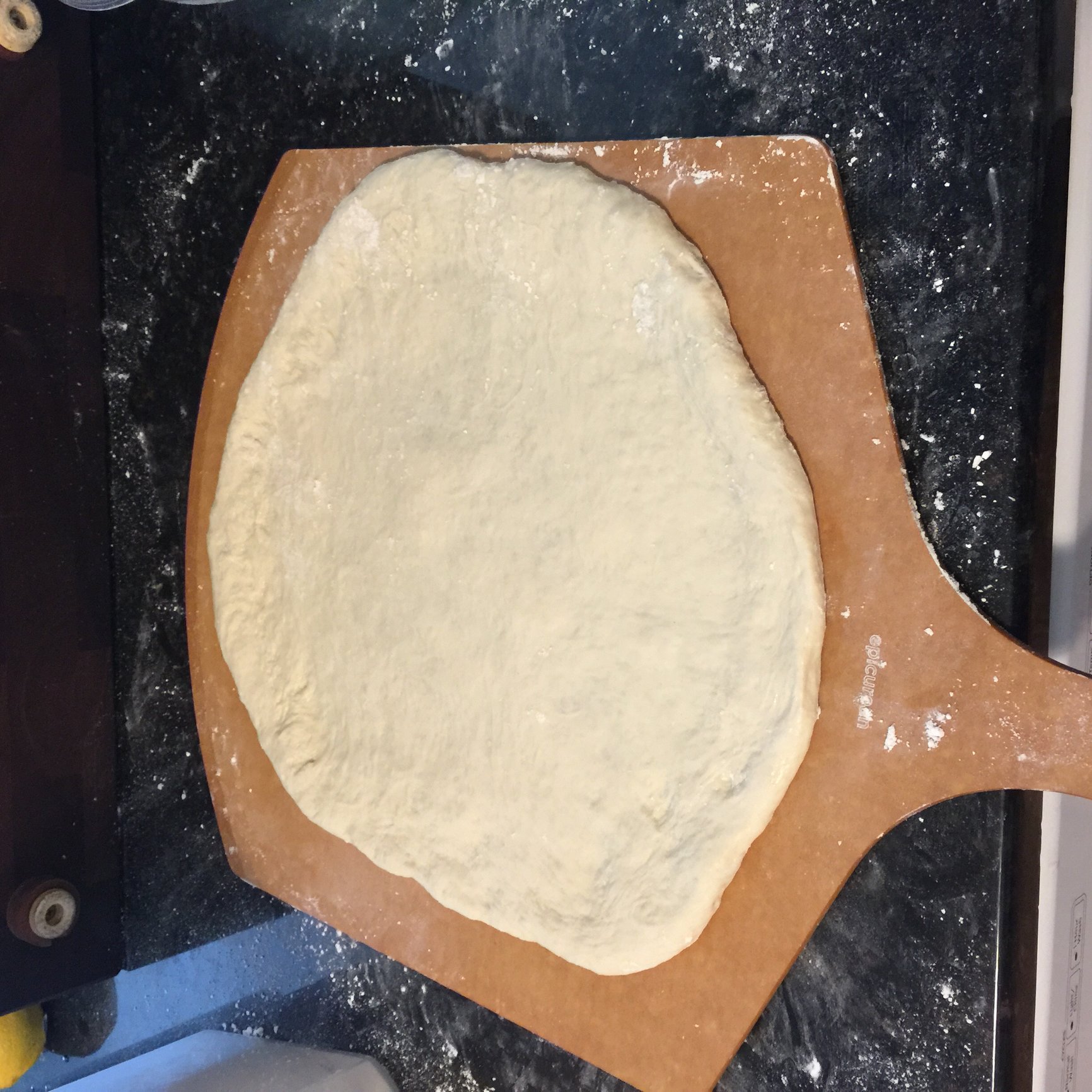
@ChokeOnSmoke - making progress. The dough and I didn't get along the first go. I just couldn't manipulate it the way I wanted too. I did produce 1 pie that my wife ate and she liked it. The second one I burned the crap out of the parchment paper and the crust. No more parchment paper for me. Old school from here on out. Then, all the crap stuck on the stone and that was when we punted. Made a second batch of dough with the plan to just shape and not cook. First two dough balls didn't work. I did them on separate days. I just worked the last two today, so these sat in the fridge the longest, and they were much more manageable. I actually made a 12" pie. Success! Now, according to Jeff's website, mine are waaaaaay over rising. See the pic on his site of over risen dough in the container and that is exactly what mine looks like....first and second batch. No clue on what to do about that. I'm taking baby steps. I'm going to attempt another batch of dough and see if I can end up with dough that I can stretch to a 12" pie. If so, then I will be ready for a production run. I'll keep you posted. Appreciate the comments.ChokeOnSmoke said:
@4Runner Sorry to hear that. Burned the crap out of the bottom? Keep trying, its worth the effort in the end!4Runner said:@ChokeOnSmoke - I'm just going to pretend my pizza cook last night never happened. I have 4 new ones in the container now. I upped the water, reduced the flour and yeast a bit. Will see how it goes this round.Joe - I'm a reformed gasser-holic aka 4Runner Columbia, SC Wonderful BGE Resource Site: http://www.nakedwhiz.com/ceramicfaq.htm and http://www.nibblemethis.com/ and http://playingwithfireandsmoke.blogspot.com/2006/02/recipes.html
What am I drinking now? Woodford....neat -
Here was my success.
Joe - I'm a reformed gasser-holic aka 4Runner Columbia, SC Wonderful BGE Resource Site: http://www.nakedwhiz.com/ceramicfaq.htm and http://www.nibblemethis.com/ and http://playingwithfireandsmoke.blogspot.com/2006/02/recipes.html
What am I drinking now? Woodford....neat -
That crust looks good, how'd the cook go?4Runner said:Here was my success.Packerland, Wisconsin


Categories
- All Categories
- 184K EggHead Forum
- 16.1K Forum List
- 461 EGGtoberfest
- 1.9K Forum Feedback
- 10.5K Off Topic
- 2.4K EGG Table Forum
- 1 Rules & Disclaimer
- 9.2K Cookbook
- 15 Valentines Day
- 118 Holiday Recipes
- 348 Appetizers
- 521 Baking
- 2.5K Beef
- 90 Desserts
- 167 Lamb
- 2.4K Pork
- 1.5K Poultry
- 33 Salads and Dressings
- 322 Sauces, Rubs, Marinades
- 548 Seafood
- 175 Sides
- 122 Soups, Stews, Chilis
- 40 Vegetarian
- 103 Vegetables
- 315 Health
- 293 Weight Loss Forum