Share your photos by tagging us and using the hashtag #BigGreenEgg.
Want to see how the EGG is made? Click to Watch
Father's Day brisket and ribs...

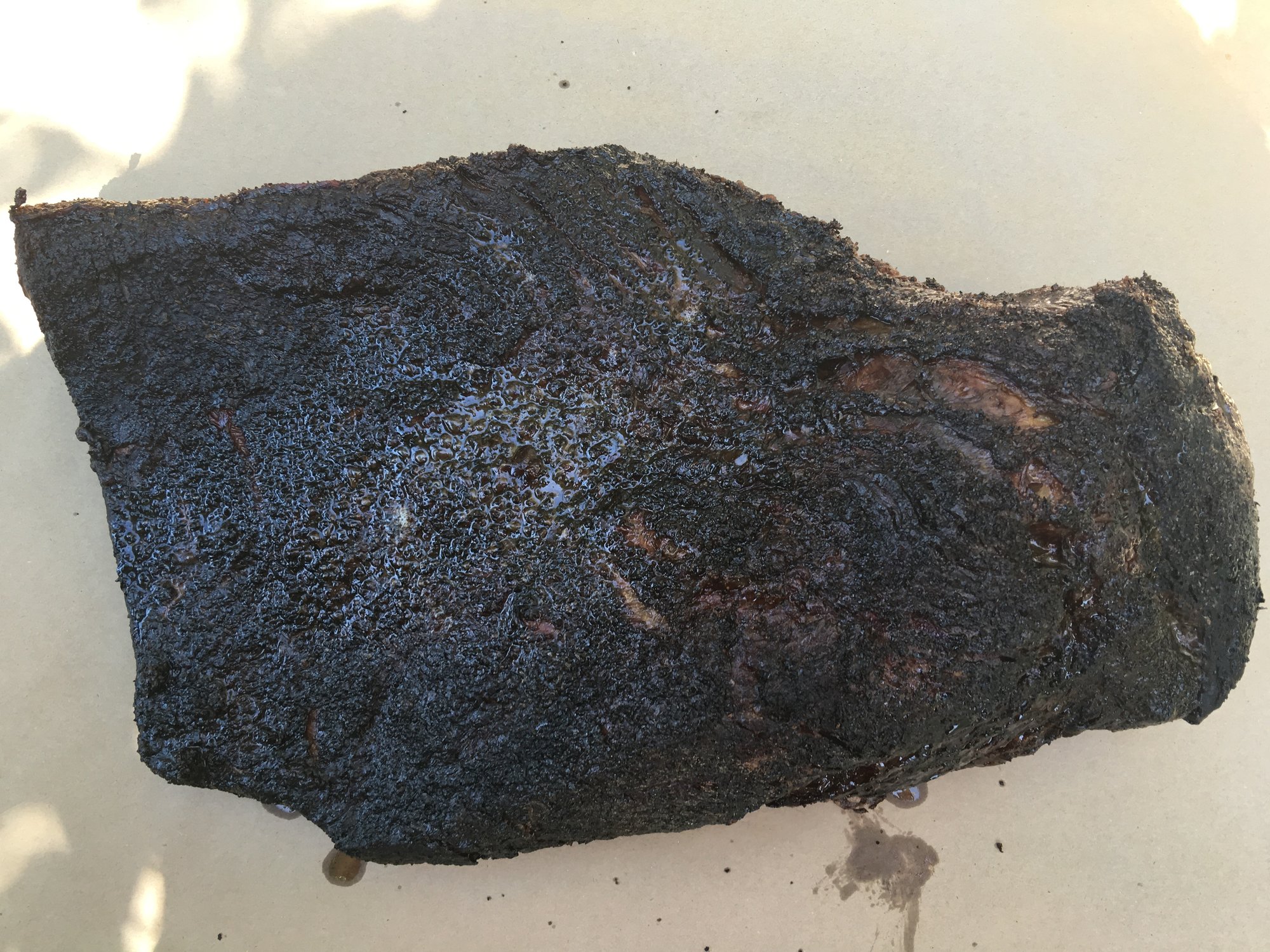
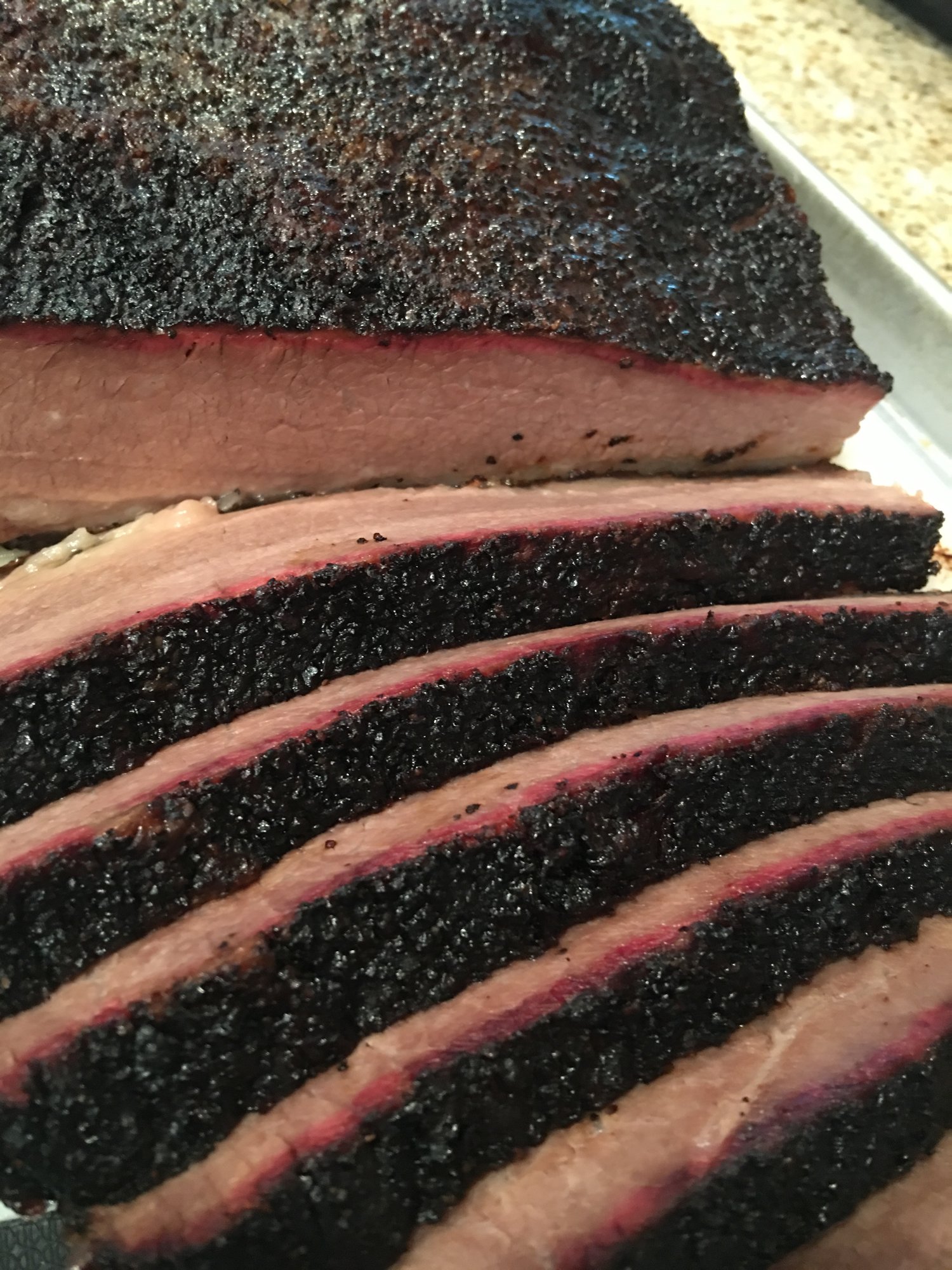
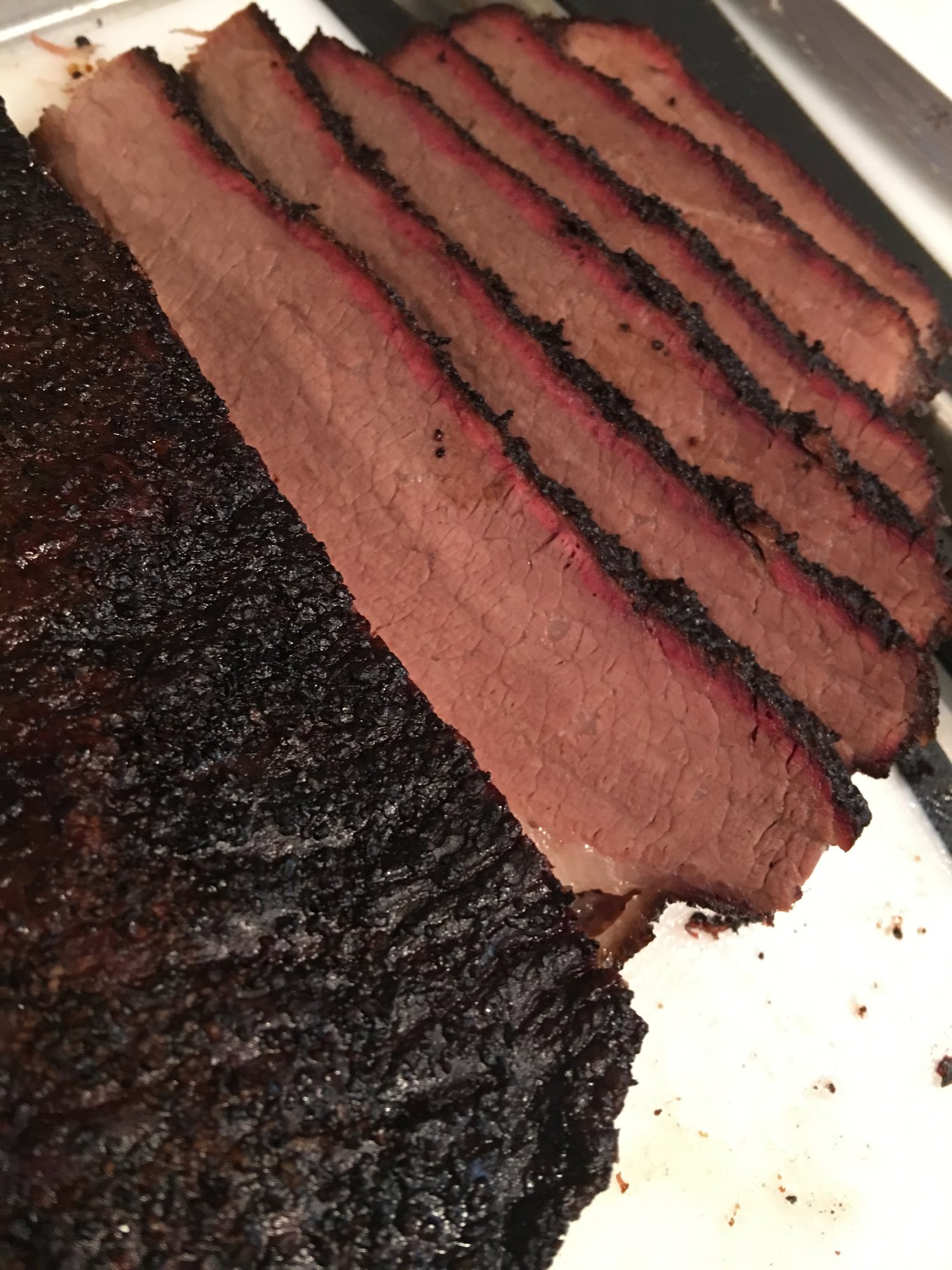
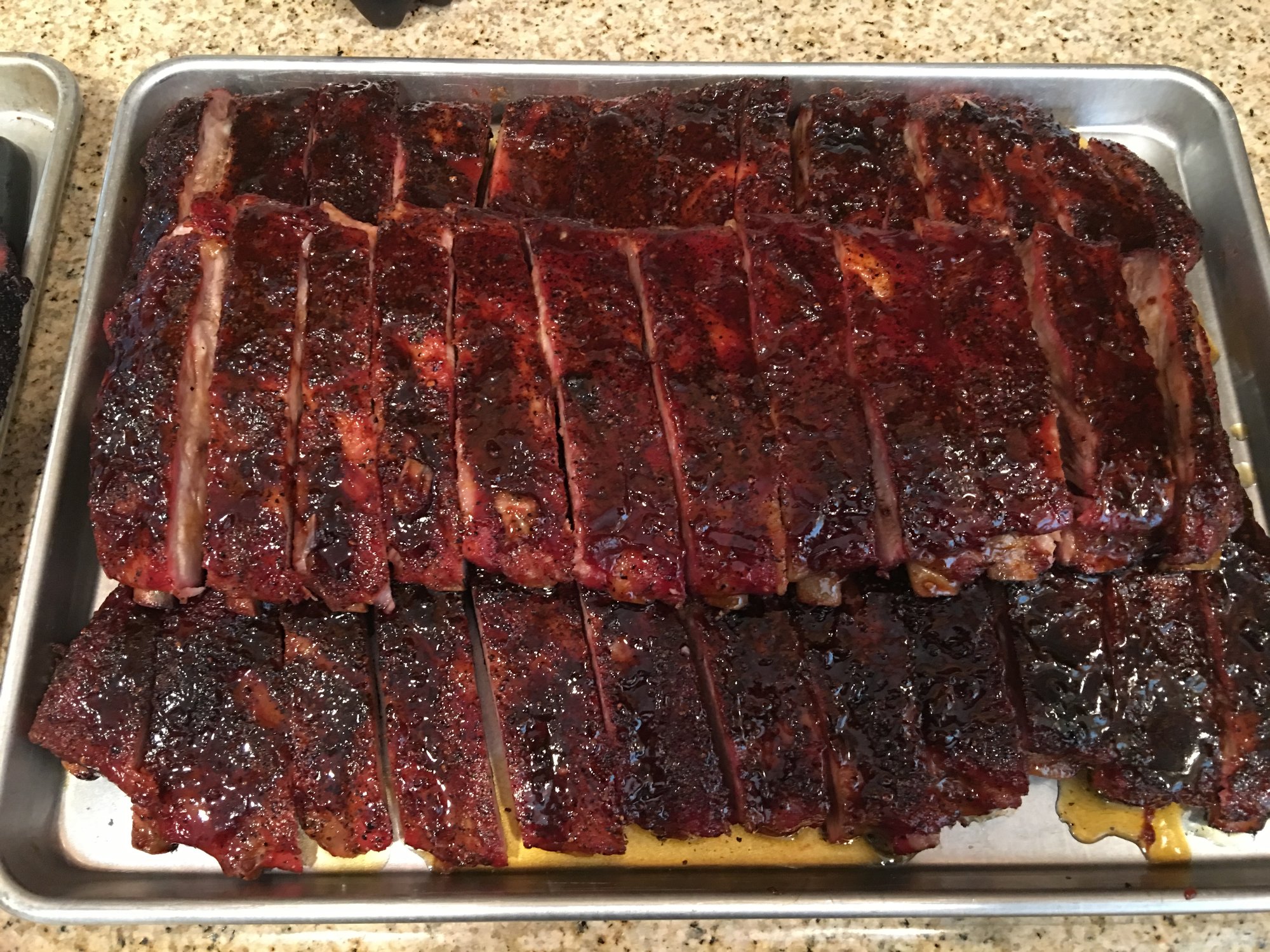
And now the details...
--- Brisket ---
Step 1: Cook whole brisket at 250 degrees F indirect for as long as it takes (fat side down on a BGE).
Step 2: At some point after the brisket forms an adequate bark and/or takes on the desired color, a decision has to be made regarding wrapping… Are you going to wrap and if so, what are you going to wrap with:
- Unwrapped - Longest cook time, hardest bark, most smoke flavor.
- Foil - Shortest cook time, softest bark, least smoke flavor.
- Butcher paper - Medium cook time, medium bark, medium smoke flavor.
Step 3: At or around two-thirds of the expected cook time (based on 60-75 minutes per pound) or approximately 180 degrees F internal temperature start probing the brisket for tenderness. Remove the brisket when you're either happy with the tenderness or by 205 degrees F internal temperature, whichever happens first.
Step 4: Let the brisket rest for at least 1 hour, but ideally 2-4 hours. As long as internal temperature stays above 140 degrees F there is no food safety issue. Foil, towel, cooler (FTC) is a popular method for resting a brisket.
Notes:
- Due to the variance in briskets (i.e. whole vs flat vs point, overall weight, fat content, how much fat was trimmed, etc), it's difficult to cook based on time or internal temperature. For best results, cook to tenderness; which is most reliably obtained by probing the thickest part of the flat.
- Fat side up/down is based on where the heat is coming from… Basically, you want to use fat to protect the meat from heat. For example, on a BGE the fire is below so the fat side should be facing down. Likewise, in an offset cooker the fire is offset, so the point should be placed closest to the heat source and the fat side should be up.
- Foil vs butcher paper… Foil expedites the cook time and retains moisture, but it does so at the expense of the bark. Butcher paper is more breathable; which means it doesn't moisten the bark as much, but still expedites cook time and retains moisture.
- Beware of the stall…
- Trimming fat…. Remove all hard far and trim excess fat to a uniform 1/4" for the entire fat cap.
- This particular brisket finished cooking in only 11:15 and it probed like butter at 197 degrees F. I wrapped in butcher paper for 3:45 minutes before serving.
--- Ribs ---
Step 1: Cook slabs at 250 degrees F indirect for 3 hours (meat side up).
Step 2: Wrap slabs individually in foil w/ butter, honey, and brown sugar mixture. Cook slabs at 250 degrees F indirect for 1 hour (meat side down).
Step 3: Remove slabs from heat and rest them while increasing cooking temperature to 275 degrees F. Collect liquid when removing slabs from foil as this will be used as sauce later.
Step 4: Apply sauce to slabs. Cook slabs at 275 degrees F indirect for 1 hour (meat side up).
Step 5: Remove slabs from heat, wrap slabs individually in plastic (if necessary), let slabs rest for 30 minutes before serving. Finish meat w/ additional sauce and/or collected liquid from Step 3 above.
Notes:
- Use foil to protect any exposed edges of slabs to prevent burning.
- Slice slab into individual ribs w/ meat side down.
- Internal temperature of 190-195 degrees F (at the end of the 3 hour cook) is ideal.
"Life is about experiences... And one of my absolute favorite experiences is FOOD!"
Categories
- All Categories
- 184K EggHead Forum
- 16.1K Forum List
- 461 EGGtoberfest
- 1.9K Forum Feedback
- 10.5K Off Topic
- 2.4K EGG Table Forum
- 1 Rules & Disclaimer
- 9.2K Cookbook
- 15 Valentines Day
- 118 Holiday Recipes
- 348 Appetizers
- 521 Baking
- 2.5K Beef
- 90 Desserts
- 167 Lamb
- 2.4K Pork
- 1.5K Poultry
- 33 Salads and Dressings
- 322 Sauces, Rubs, Marinades
- 548 Seafood
- 175 Sides
- 122 Soups, Stews, Chilis
- 41 Vegetarian
- 103 Vegetables
- 315 Health
- 293 Weight Loss Forum